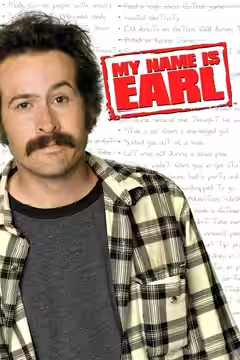
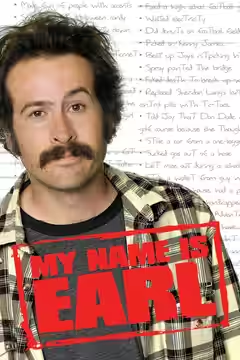
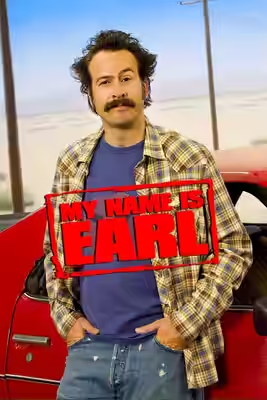
Greg Garcia’s sitcom about a petty thief working through a list of his sins is sunnier and better written than its premise suggests, and Jason Lee, Ethan Suplee and Jaime Pressly carry it a long way. The formula starts to show by the fourth season.
Greg Garcia’s premise fits on a scratch card. Earl Hickey, a small-time crook, decides that karma is to blame for everything that has gone wrong for him, and that the only cure is to go back and make up for everything he has done to other people. That is a sitcom engine with its own episode supply: one wrong a week, 92 episodes across four seasons, and the job still not done. It is a good engine. The series is funny, warm about people television usually sneers at, and sharper in its writing than a show about a man in a flannel shirt has any need to be. The engine starts to knock in the last season, and we will come to that.
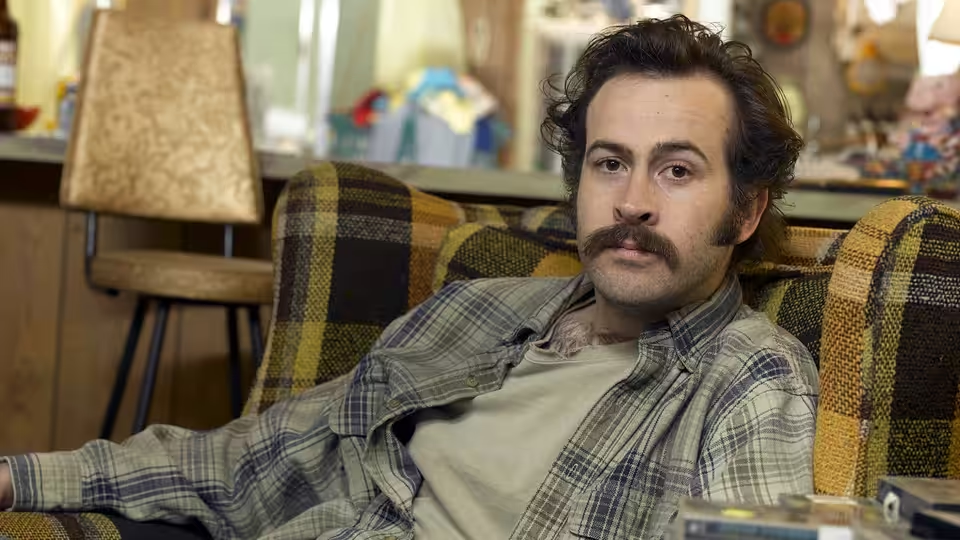
Garcia, who created it and wrote and directed episodes himself, builds each episode on a cutaway. The original crime, usually five seconds long and usually the funniest thing in the episode, is shown in full, and then the camera comes back to Earl’s face while he takes in what he did. When the wrong goes back far enough, Noah Crawford plays Earl as a boy, with the same expression and a smaller moustache. The town is motels, trailers and a bar, and it is shot in hard daylight that makes everyone look slightly sunburnt. Nobody has decorated anything. The directors, among them Marc Buckland, Millicent Shelton and Craig Zisk, keep the camera still and let the cutting do the jokes.
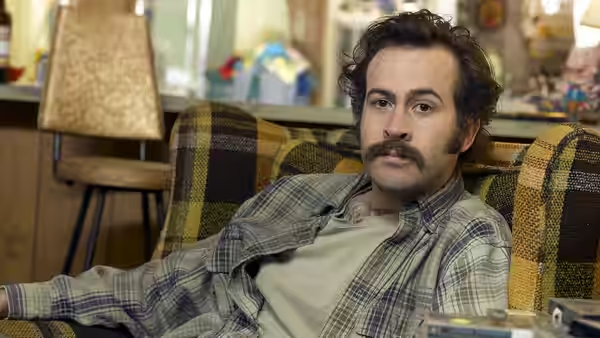
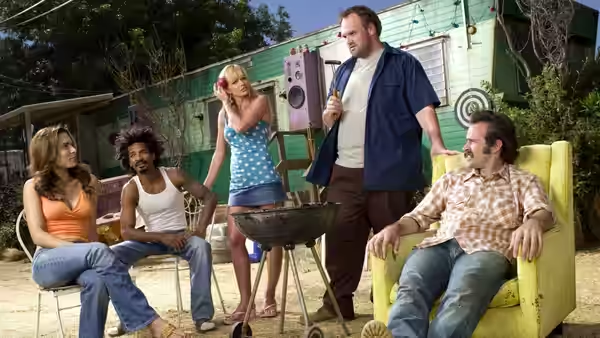
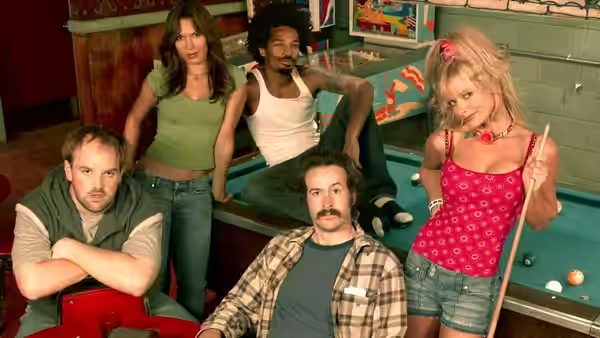
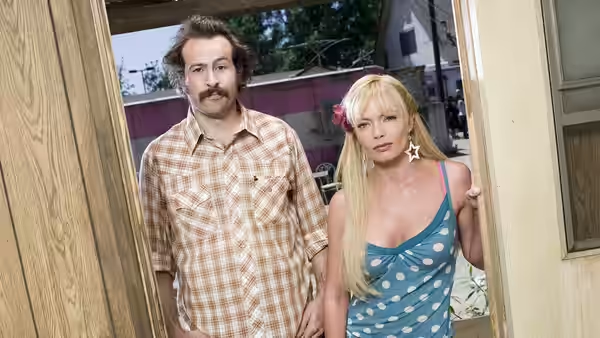
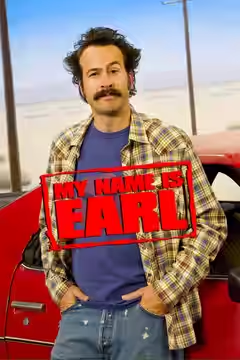
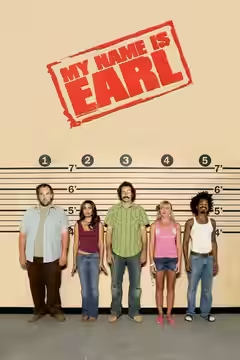
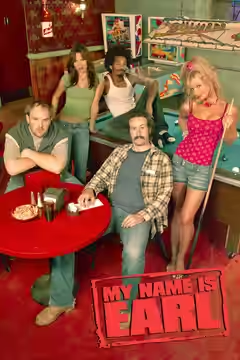
Ethan Suplee’s Randy is the performance that stays with us. Randy follows his brother everywhere, misunderstands most of what is said to him and is never once used as a joke at his own expense. We laughed at him for most of an episode and then found we would have been upset if anyone on screen had been unkind to him. That is the show’s trick, and Suplee does it with his face alone, which is wide and open and takes a long time to arrive at anything. Lee, by contrast, plays Earl small. He is not clever, he knows it, and he is trying anyway, and Lee never asks for credit for the effort.
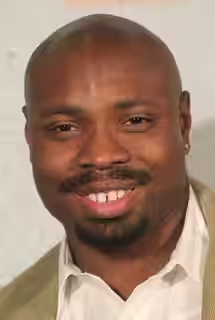
Jaime Pressly’s Joy is the loud one, and the 15 certificate is largely for her mouth. Beside her is Darnell Turner (Eddie Steeples), who says less in a season than Joy does in a scene. Pressly plays her as a woman who has never once considered that she might be wrong, and she is handed the hardest lines in the series, the ones about race and class and other people’s children, which the writers could not give to anyone they wanted you to like. We laughed at a few of them and then felt slightly ashamed of ourselves, which is a feeling the show produces on purpose and knows exactly how to time. Nadine Velazquez’s Catalina is given a good deal of standing around in the first season and more to do later. Bobby Bowman and Timothy Stack, who write and produce, are part of a room that keeps the jokes short and the sentiment shorter.
The flaws are the ones you would guess. One good deed a week is a format, and formats wear. By the fourth season, which runs to 27 episodes, the list has become a pretext, and the writers reach for guest stars and running gags that were funnier the first time. There is a stretch in the third season, which we will not describe, where the show changes its own rules, and it does not entirely come off. And the cutaways, the best thing in the first year, are doing the writers’ work for them by the last: a flashback tells us what Earl has learned where the scene in front of us used to show it.
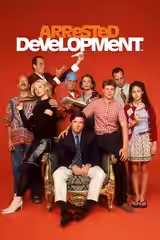
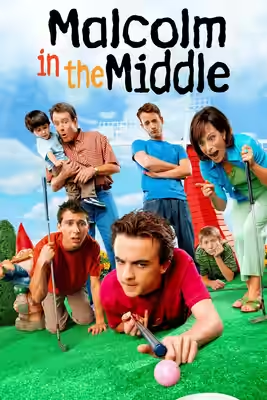
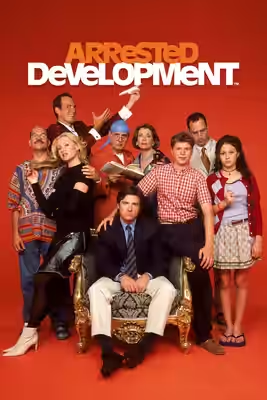
Against the American sitcoms of its decade it sits comfortably in the upper middle. It has none of the clockwork of Arrested Development and none of its cruelty either. It is nearer to Malcolm in the Middle, with which it shares a patience for stupid people and a refusal to tidy them up. It is also one of the few shows of its time to spend four years with people who live badly and work for other people without once suggesting they deserve to.
Watch the first two seasons in whatever order the evening allows; the episodes stand on their own, and that is the point of them. After that, carry on if Randy has got to you. He got to us.