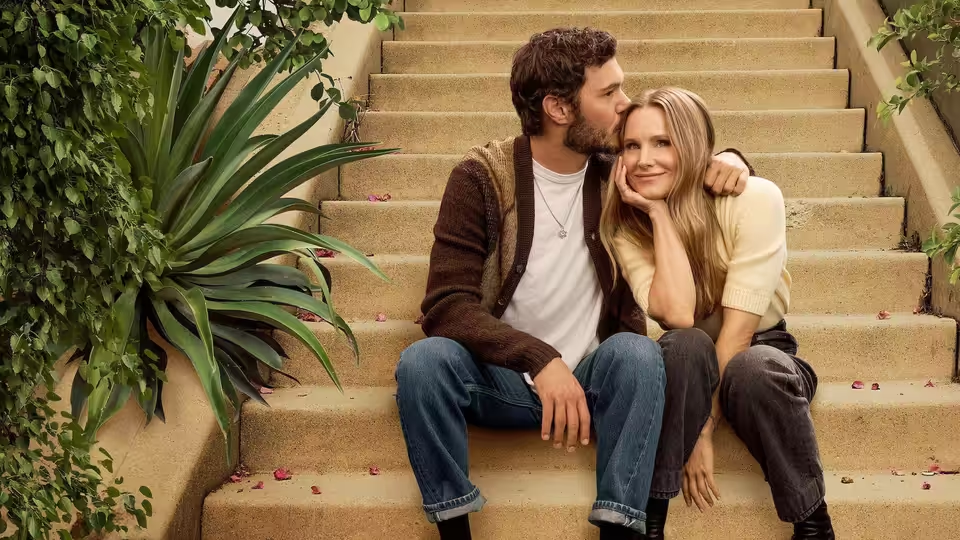
Kristen Bell and Adam Brody make Nobody Wants This an easy romantic comedy to enjoy. Their attraction feels convincing, and the supporting cast is funny, but the writing makes too little of the religious differences it puts between them.
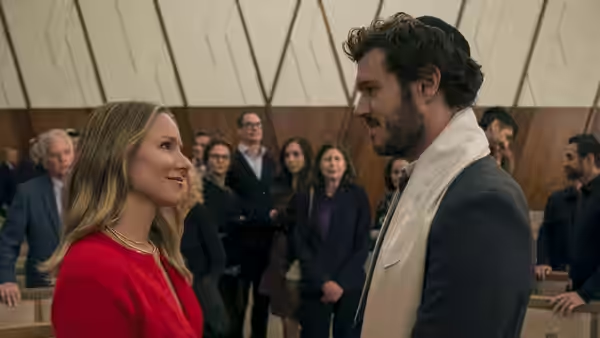
Nobody Wants This is a good romantic comedy with a clear limitation: it is much more interested in getting its couple together than examining what might keep them apart. Kristen Bell plays Joanne, an agnostic podcaster, opposite Adam Brody’s Noah Roklov, a rabbi. The first series gives them ten episodes in which attraction, family and belief can jostle for attention. The attraction wins easily, which is mostly a pleasure, though the religious questions deserve more of a hearing.
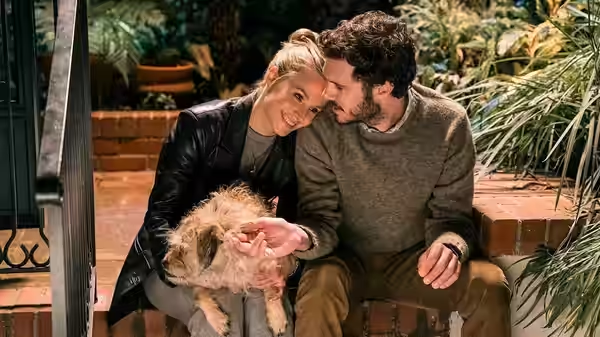
Bell and Brody make the basic requirement of the genre look simple: we want these people to spend more time together. Bell puts an edge on the dialogue without making Joanne exhausting, and Brody makes Noah’s attention feel warm and unforced. We smiled simply watching them talk. The pleasure comes from how readily they respond to each other; neither performance needs to announce that this is supposed to be a significant romance.
The supporting cast helps keep the couple from being the only enjoyable company. Justine Lupe’s Morgan and Timothy Simons’s Sasha Roklov are funny enough to make the surrounding conversations worth staying for, even when the central courtship is not the subject. The family comedy also gives the relationship some social consequences. At its best, the writing lets other people’s opinions be amusing without pretending that a couple can simply stop caring what everyone thinks.
The visual finish is glossy, with cinematography by Wes Cardino and Adrian Peng Correia and production design by Claire Bennett. That polish suits the ease of the courtship, although it contributes to the sense that nothing here will become too uncomfortable. The editing team, including Varun Viswanath and Jen Rosenthal, keeps the dialogue moving without making the attraction feel hurried. Duncan Blickenstaff’s music supports the gentle romantic mood, but it does not add much that Bell and Brody have not already supplied.
The trouble is that faith keeps promising to become more difficult than the series allows it to be. Erin Foster is among the writers, and the scripts are alert to how dating becomes material for discussion, particularly through the podcast. They are less searching about what religious commitment asks of a person, or what compromise might cost. We do not need a lecture, but making Noah a rabbi ought to produce more than an interesting variation on familiar romantic obstacles.
A few of the cruder jokes are less funny than the ordinary awkwardness around them. The podcast can be useful, but it is not always convincing as work that exists outside the needs of the comedy. These weaknesses matter because the programme is otherwise good at making conversation feel personal. When it leans on a ready-made joke or tidies away a disagreement, the writing becomes more noticeable than the people delivering it.
Romantic comedy is allowed to make us happy, and this one does so often enough to earn its familiar turns. Against the genre’s basic test of making us care about a courtship, Bell and Brody give it a firm advantage. The reservation is how little resistance that courtship sometimes meets. Save it for an evening when a convincing flirtation will do.