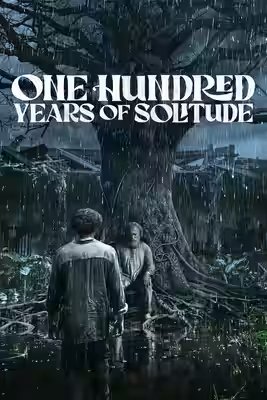
García Márquez’s novel gets the long, Spanish-language, made-in-Colombia treatment it always needed, and a Macondo built to grow old on camera. It is often beautiful, and it has a narrator reading the book over the pictures, which we think is a loss of nerve.
Gabriel García Márquez’s novel spent decades being called unfilmable. This version has been made properly: in Spanish, in Colombia, with Colombian actors, over sixteen episodes in two parts of eight, the first released on 10 December 2024 and the second in August 2026. It is handsome, patient and careful with the strange parts. It is also more obedient to the book than it needed to be, and that is where it goes wrong.
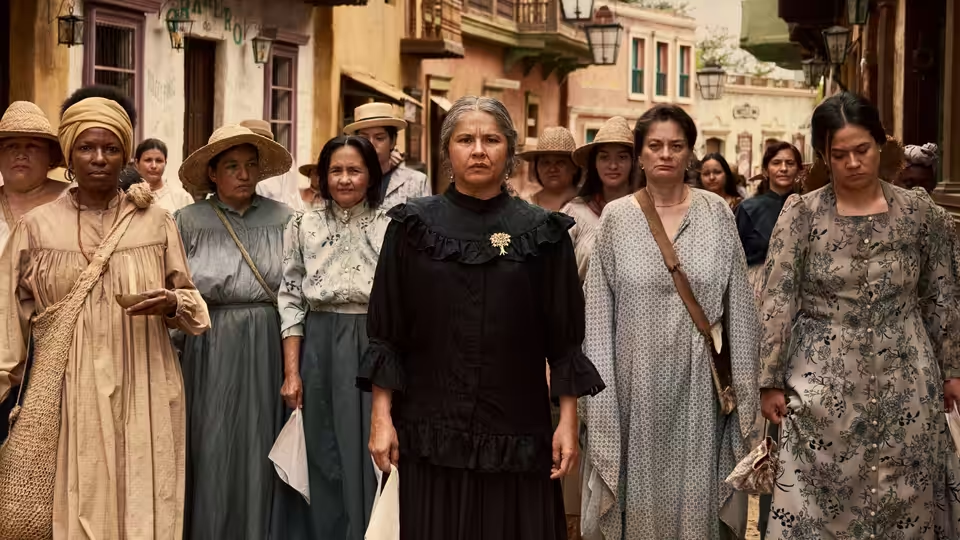
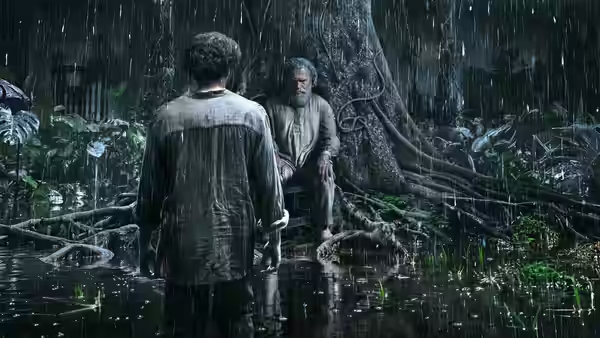
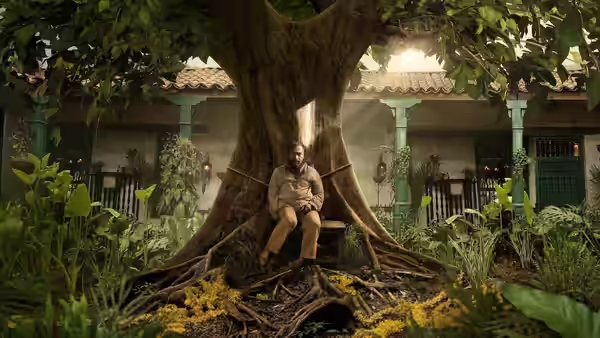
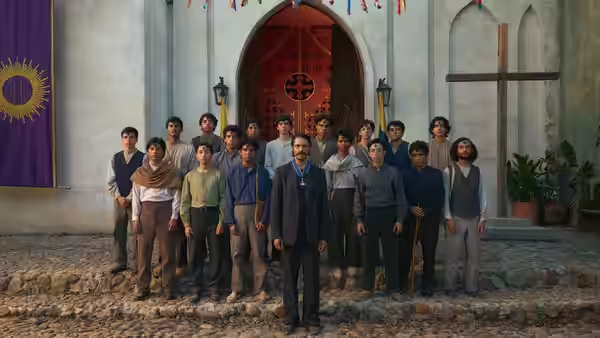
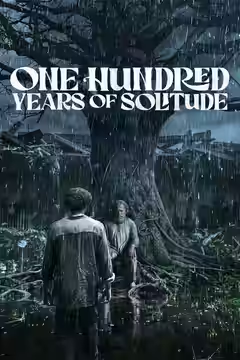
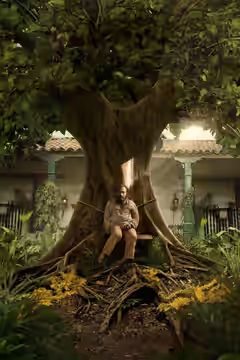
The best decision was to build Macondo and let it grow old. Production designers Eugenio Caballero and Bárbara Enríquez start with mud and cane on a riverbank and add to it as the family does: whitewash, roof tiles, a magistrate’s house, a street of almond trees. The Buendía house gains a room each time it gains a child, and you can see the joins. Catherine Rodríguez’s costumes make the same journey, from homespun to starch. Paulo Perez shoots most of it in flat, hot daylight and saves the trickery for the long takes, in which the camera walks in at the front door, goes down a corridor and comes out with the children grown. Those shots are the programme’s one real idea about time.
The magic is done without a raised eyebrow. Melquíades’s magnets drag pots off shelves; a dead man stands in the kitchen with a cloth to his throat, asking for water; a block of ice is shown to a child, who takes it for a miracle. What got at us most was the insomnia plague. Nobody in Macondo can sleep, then nobody can remember, so they write the names of things on the things, until a cow wears a sign explaining that she is a cow and must be milked. The directors, Alex Garcia Lopez, Carlos Moreno and Laura Mora Ortega, play it straight, with no music and no wonder on anybody’s face, and we found it more upsetting than we expected. Camilo Sanabria and Juancho Valencia’s music keeps out of these scenes, and when the yellow flowers fall they fall to almost nothing.
Then there is the voice. A narrator reads the book to us, and not sparingly: whole paragraphs laid over scenes that were already doing the work. When the camera has shown Úrsula counting the coins, the voice tells us Úrsula counted the coins. The writers, José Rivera and María Camila Arias among them, have kept García Márquez’s sentences because they are wonderful sentences. But a programme is not a reading, and by the fourth episode we were bored by the voice, and then cross with ourselves for being bored by prose we love. Most critics have counted this as fidelity. We think it is a loss of nerve.
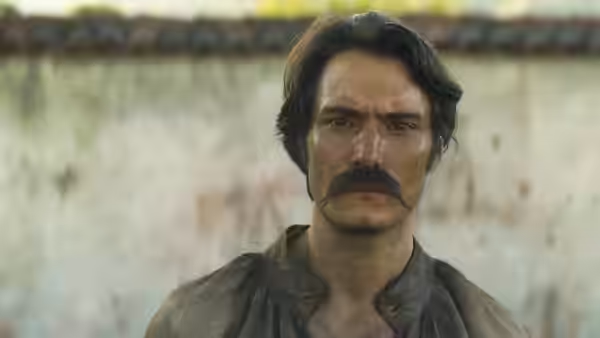
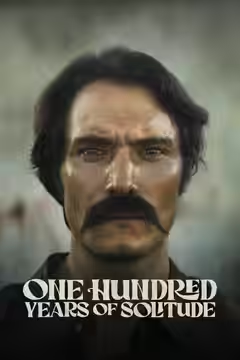
The recasting across the decades is handled well. Pilar Ternera, the card-reader, is Viña Machado in her prime and Obeida Benavides later; Fernanda del Carpio passes from Laura Taylor to Carla Baratta the same way. Claudio Cataño plays Colonel Aureliano Buendía as a man who watches everything and says little, which is right and makes him easy to lose in a crowded house. Emmanuel Restrepo’s José Arcadio is a walking appetite. Úrsula, played at more than one age, is the spine of it, and whoever was on screen as her, we believed she had been there for a century.
The book’s habits with women have come across intact. Pilar takes the Buendía boys to bed when they are barely boys; Aureliano falls for a girl who has not stopped playing with dolls, and the courtship is filmed with the same tenderness as everything else. The novel narrates these things flatly and lets the chill in. The series has a narrator, could have used him here, and does not.
Eight hours for half a book is a lot of hours, and the middle episodes know it: scenes run past their point. It is more honest than most literary adaptations, with no English, no famous faces and no shortcut through the difficult chapters. Watch it in Spanish with the subtitles on and give it three episodes. If the ice has you, the rest will keep you. It is an 18 certificate, and it earns it inside the first hour.