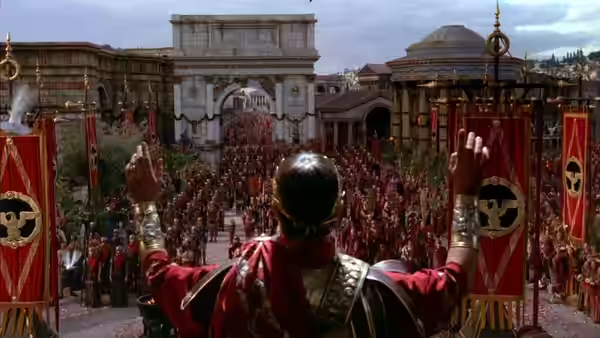
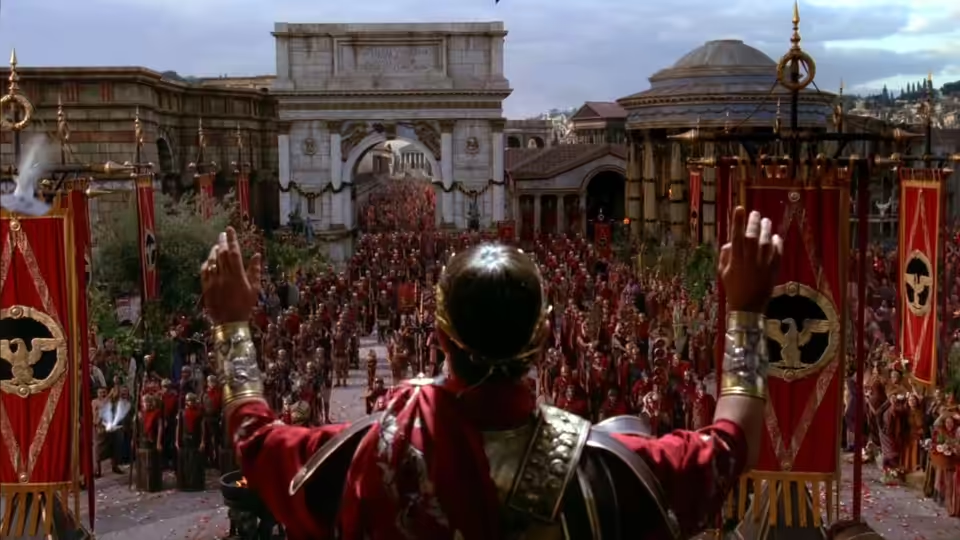
A Roman commander with raised arms overlooks a vast crowd in the forum
Series review

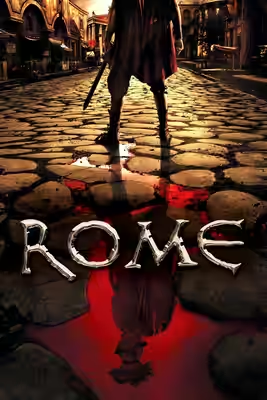
Rome

2005 · Created by Bruno Heller, John Milius, William J. MacDonald · Series · Statens medieråd Från 15 år

In a sentenceAncient Rome offers plenty of company and almost nobody worth inviting home

Rome follows Lucius Vorenus (Kevin McKidd) and Titus Pullo (Ray Stevenson), two soldiers whose lives run alongside the affairs of the city’s ruling families. Julius Caesar (Ciarán Hinds) and Mark Antony (James Purefoy) move among the political elite, while Atia of the Julii (Polly Walker) and Servilia of the Junii (Lindsay Duncan) pursue their own interests. The struggle for power reaches into households as well as public life, entangling private loyalties with political ambitions. Soldiers and aristocrats negotiate a society in which rank and violence shape their choices.

Plays from YouTube when you press play; nothing loads from them until then.

Fi1m review

Ray Stevenson gives Rome the warmth it needs to make its brutal ancient society worth spending time in. We recommend it, provided an uneven opening and plentiful cruelty do not put you off.

We recommend Rome, with patience for an opening that takes time to settle. Creators Bruno Heller, John Milius and William J. MacDonald set ordinary soldiers alongside the people competing for power. The appeal is watching how political ambition enters people’s daily lives, including those without much say in how the city is run. The historical drama works because it makes room for friendship, resentment and domestic trouble alongside the pursuit of power.

Kevin McKidd and Ray Stevenson do much of the work. McKidd gives Lucius Vorenus a stiffness that can be hard going, but it makes a useful counterweight to Stevenson’s much easier company as Titus Pullo. Stevenson is funny without turning Pullo into a visitor from the present, and his appeal survives behaviour that ought to make us withdraw it. We warmed to Pullo more quickly than we expected, because Stevenson’s humour makes the soldiers’ company so inviting. Their everyday acceptance of brutality makes that warmth uncomfortable.

Ciarán Hinds gives Julius Caesar the authority the part needs without making every appearance feel like an announcement. James Purefoy’s Mark Antony brings a welcome appetite for the business of being powerful, which is more entertaining than another solemn account of duty. Polly Walker’s Atia and Lindsay Duncan’s Servilia keep the political manoeuvring interesting at household level. We care about who resents whom, even before we have untangled everybody’s position. The ensemble makes the private disputes worth following in their own right.

Michael Apted’s direction helps establish a city that does not seem to have been tidied for a historical drama. The attention to ordinary life gives the scenes of privilege something to be measured against. April Ferry’s costume design makes social position readable without requiring another explanation of the hierarchy. Jeff Beal’s music is most useful when it gives a private dispute the seriousness the characters attach to it. These contributions help us follow a crowded story without having to stop and identify everybody’s rank.

The important choice is to let the customs remain uncomfortable. Rome does not constantly reassure us that its people think as we do, and the brutality is disturbing partly because it belongs to daily life. Historical drama becomes more interesting when it allows people to behave in ways we struggle to understand, without pausing to explain our objections back to us. There are passages in which the appetite for sex and violence threatens to crowd out the people involved, but the return to household tensions usually restores some proportion.

The opening is less assured about how much explanation we need. Political and domestic concerns compete for attention, and the movement between them can feel like being introduced to another set of people just as the previous group has become interesting. The writing improves as those relationships become easier to follow, but that is a real demand to make on an audience. We would not blame anyone for finding the early going busy rather than gripping.

Once the ensemble settles, the series finds plenty to do without depending on the next grand battle. A conversation between people who need something from one another can be enough, particularly when Walker or Stevenson is involved. We would choose Rome for those performances and for its willingness to make ancient life unpleasant without making everyone in it dull. Give it time to establish the households; the soldiers are worth staying for.

Critical consensus AI synthesised

69
Positive
4
Mixed
1
Negative
1

Most critics like Rome, and the praise gathers around the same thing: an ancient city that is brutal, dirty and strange rather than the familiar marble version, built with enough detail to feel lived in. The soldiers get the warmest notices. Reviewers keep returning to Vorenus and Pullo, and to Ray Stevenson in particular, as the reason the scheming among the elite lands at all. Several also credit the series with pointing the way for the expensive, bloody period drama that followed it.

The reservations are about focus. Early episodes are found uneven, and the second series is thought to suffer from too many writers and directors pulling in different directions. The spread is wide. The Guardian is the lone outright dissenter, finding it shouty, sweaty and pleased with itself, with silly dialogue and a fixation on brawling and sex. Collider notes the show improves after a retooling, so patience through the opening hours is a recurring piece of advice.

Variety
15 August 2005 · Brian Lowry
90*

The review calls the HBO series a lavish, lusty production with many pleasures, comparing it favorably to Deadwood for its intricate world-building and pay-cable debauchery. It singles out the vivid direction by Michael Apted, strong performances (especially Ray Stevenson), and the shift from grand battles to intimate political and domestic drama.

Read the full review →
Empire
1 July 2006 · William Thomas
80*

The critic praises the series for portraying ancient Rome as a brutal, alien world rather than a familiar one, highlighting its rich historical texture and focus on ordinary soldiers alongside scheming elites. The longer HBO cut is noted as an improvement that adds useful context without slowing the pace.

Read the full review →
The Hollywood Reporter
11 January 2007
65*

The review finds the second season of the HBO series a stylish, graphic, and bold production that captures the depravity of ancient Rome in an elaborate, randy manner. It singles out the committee of writers and directors for diluting focus and cohesion in an otherwise impressive but uneven spectacle.

Read the full review →
The Guardian
6 November 2005
30*

The critic disliked the series from the opening minutes, finding it sweaty, shouty, and aimed at a male audience that enjoys Gladiator-style action, with too much brawling, noise, sex, and blood. They singled out its self-pleased tone and silly dialogue lines as major flaws, calling it gauche and vulgar overall.

Read the full review →
Paste
11 December 2020 · Lacy Baugher Milas
85*

The critic praises Rome as an ahead-of-its-time, violent yet fun period drama that humanizes legendary history through ordinary soldiers and paved the way for shows like Game of Thrones. They single out the deep emotional bond between Vorenus and Pullo for particular praise.

Read the full review →
Collider
26 August 2005 · Steven Weintraub
70*

The critic finds the early episodes uneven but praises the series after it was retooled, calling it intelligent and hooked after watching the first six episodes. He singles out the authentic, non-politically correct depiction of ancient Roman customs and life for making the world believable.

Read the full review →

Straight answers AI written, from our review

Is Rome worth watching?
Rome is worth watching for anyone who wants a historical drama with real warmth among its brutality, and we scored it 82. Ray Stevenson and Kevin McKidd as two ordinary soldiers carry it, alongside a strong ensemble of scheming aristocrats. The opening is busy rather than gripping, so give it a few episodes to settle.
How long is Rome, and what is it rated?
Rome is rated Från 15 år by the Statens medieråd in Sweden. It is an action & adventure and drama series.
Where can I watch Rome in Sweden?
Rome is streaming on HBO Max and Amazon Prime Video in Sweden, and it is also available to buy from Amazon Prime Video. Availability is checked daily; the links above go straight to each service.
How violent or frightening is Rome, and is it suitable for children?
Rome is an 18 certificate and not suitable for children. Brutality is treated as part of ordinary daily life, and the appetite for sex and violence sometimes threatens to crowd out the people involved. Squeamish viewers and younger teenagers should look elsewhere; adults who can take cruelty presented without reassurance will find it disturbing but purposeful.
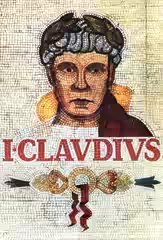
How does Rome compare to I, Claudius?
Rome is the broader and more physical of the two, following soldiers as well as ruling families, while I, Claudius keeps its power struggles almost entirely to poisonous conversation among relatives. The earlier series has aged sets and stagier acting but sharper writing; Rome offers a fuller, dirtier city and warmer company. Choose I, Claudius for wit, Rome for immersion.
What should I watch after Rome?
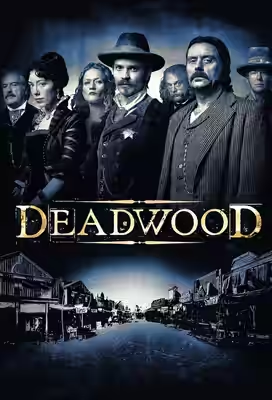
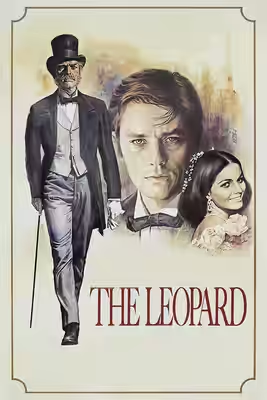
After Rome, try I, Claudius (1976, Fi1m 90): For Roman power struggles conducted through family grievances and poisonous conversation. Then Deadwood (2004, Fi1m 91): For another crowded, violent town whose inhabitants make marvellous, difficult company; and The Leopard (1963, Fi1m 88): For aristocrats trying to protect their standing while the country changes.

Cast

If you liked this, try…

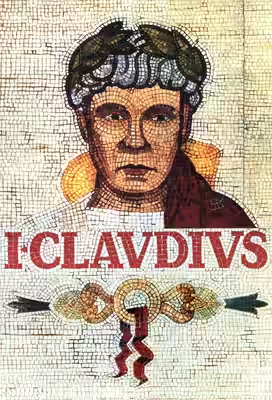
  1. I, Claudius (1976, Fi1m 90)For Roman power struggles conducted through family grievances and poisonous conversation.

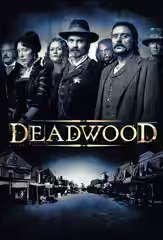
  2. Deadwood (2004, Fi1m 91)For another crowded, violent town whose inhabitants make marvellous, difficult company.

  3. The Leopard (1963, Fi1m 88)For aristocrats trying to protect their standing while the country changes.

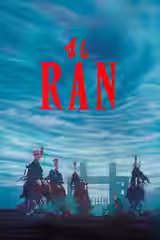
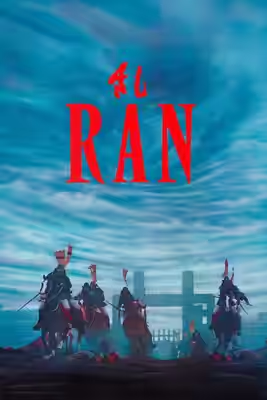
  4. Ran (1985, Fi1m 92)Family rivalry and political ambition become harder to separate as violence spreads.

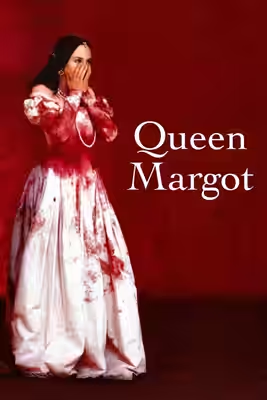
  5. Queen Margot (1994) · not reviewed yetFor court politics, religious violence and marriages with little room for affection.

Free account

Know what to watch tonight

Two lists that know where things are streaming, collections you can share, your own score beside ours, and Discover that remembers what you have seen.

  • Want to see, sorted by what is streaming now
  • Seen, with your score out of ten
  • No adverts, ever