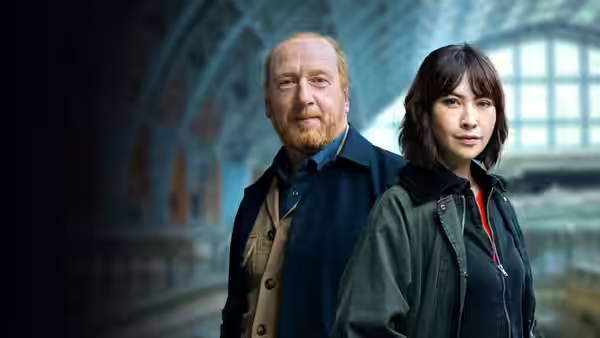
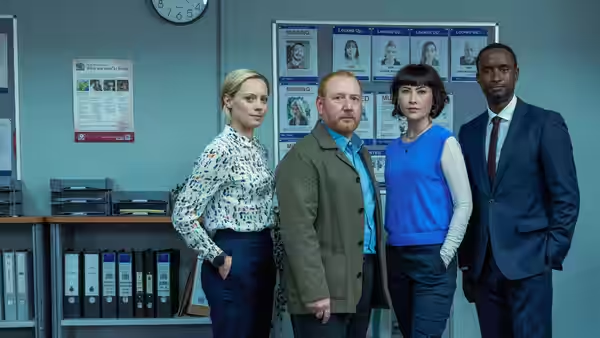
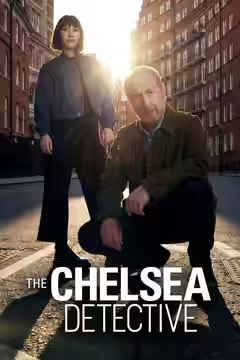
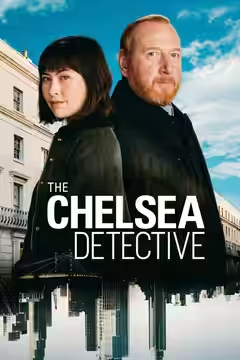
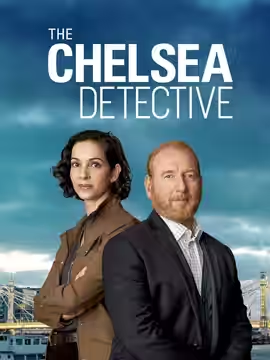
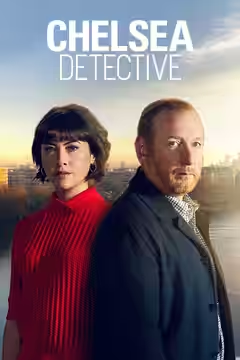
A gentle, well-made whodunnit that does nothing you have not seen and does most of it properly. Adrian Scarborough is the reason to watch: a detective who listens rather than declaims, in a postcode where nobody is used to being listened to.
Peter Fincham created The Chelsea Detective and writes it with Glen Laker and Liz Lake, and what the three of them have set out to make is the most familiar thing in British television: the unhurried whodunnit with a rumpled inspector at its centre, four cases to a series, one body per case. The idea is to move that form to SW3 and let a man who could never afford to live there ask questions of the people who do. It is good, in the way a well-made chair is good. It does nothing you have not seen, and it does most of it properly.
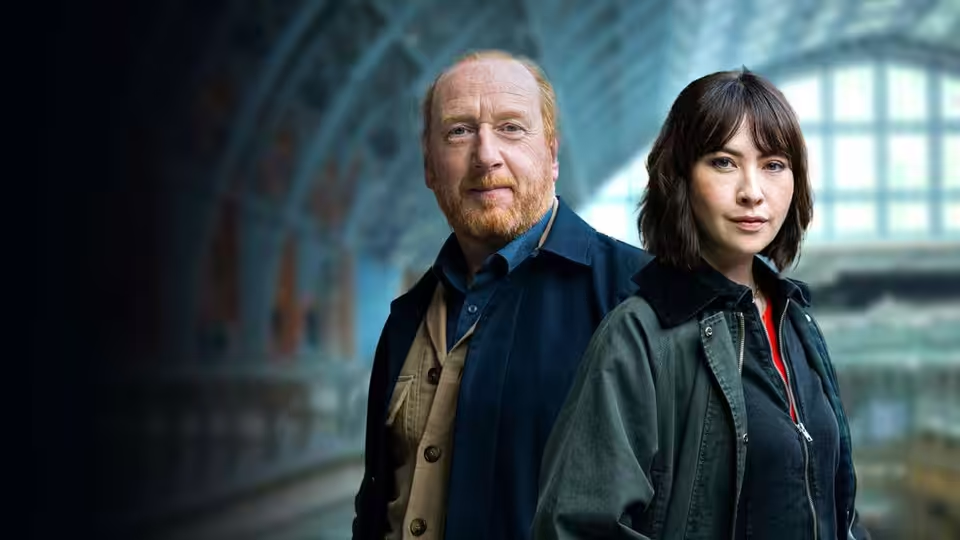
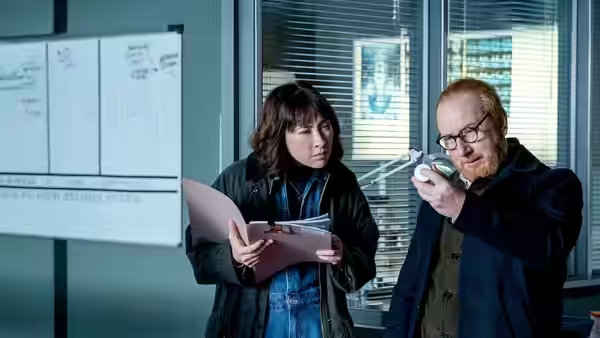
Adrian Scarborough is the reason to watch. He plays DI Max Arnold at the volume of a man asking a shop assistant for help, hands in his coat pockets, head slightly tilted, letting a silence run until the person opposite fills it. The trick of the character is that the wealthy do not take him seriously, so they talk, and Scarborough lets us see Max noticing this and declining to be offended. We were never once on the edge of the sofa. Somewhere in the second episode we realised we did not mind, and that what was keeping us there was his face in the interview scenes, a look of patient interest that the suspects keep mistaking for slowness.
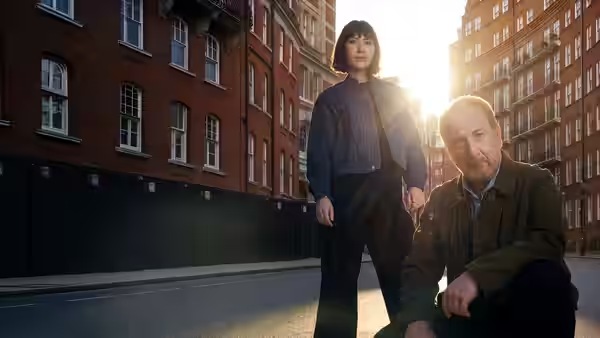
Rob Kitzmann and Tom Hines shoot Chelsea in daylight and mostly from the pavement, so the white stucco terraces loom a little and the black railings do a lot of work. Interiors are cream and glass and expensive quiet. Against all this sits Max’s houseboat, low on the river and cluttered, and the series is never more itself than when it cuts from a drawing room to that boat. This is a programme about money, which is the one thing its detective has not got, and the two cinematographers understand that better than the scripts sometimes do.
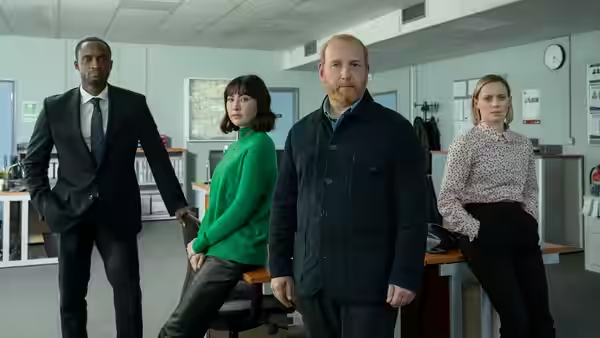
The partnership carries the procedure. Sonita Henry’s DS Priya Shamsie treats Max with a mockery that has respect underneath it, and Davood Ghadami, as her husband Nitin, gives her a home to be irritated in, so that she has a life of her own. When Vanessa Emme’s DS Layla Walsh takes the chair in later series the show barely breaks stride. That is partly because the form is sturdy and partly because neither sergeant has been given much that could break. Peter Bankole and Lucy Phelps, as the two constables, are given enough to register. Frances Barber turns up as Olivia Arnold and, being Frances Barber, takes the scene.
The best material away from the bodies is Anamaria Marinca as Astrid, the wife Max has left without quite leaving. Marinca plays her as a woman who has made a decision and keeps not acting on it, and the scenes between them, on the boat, over food neither of them finishes, have a truthfulness the murders never reach. Those murders are solved the old way. Someone in a nice room says more than they meant to, Max asks one further question, and there is a confession. We saw the shape of it coming every time, and the scripts do not seem to mind that we did.
The pace is the price. Xavier Russell and David Barrett let scenes stand a beat longer than they need, and the four directors, Brian Kelly, Jennie Darnell, Darcia Martin and Richard Signy, keep the look so uniform that we could not tell you which of them did what. Ian Arber’s score is light piano over strings, and it tends to arrive at the moment we were about to be curious anyway. Four episodes a series is not many, and the private lives take a while to accumulate into anything.
Against Morse or Vera it is smaller and knows it. It is handsome, mild and confident about who is watching. The 12 certificate is honest, since the bodies are found rather than made. If you like the form, this is a decent evening of it, and Scarborough is worth the trip to a part of London most of us only see from the top of a bus.