Series review

In a sentenceThe doctors need a break, the nurses need a break, and we have somehow started another episode

Drama

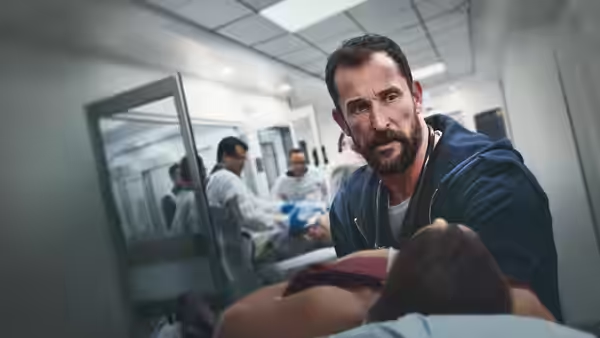
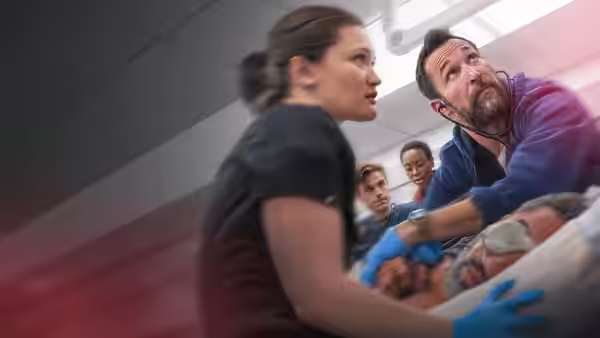
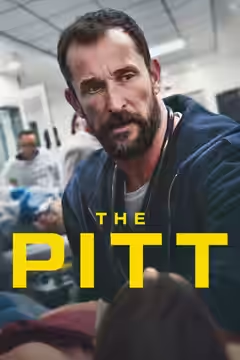
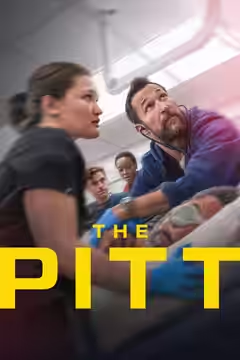
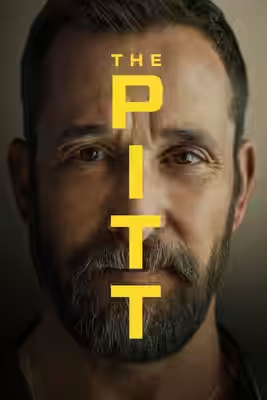
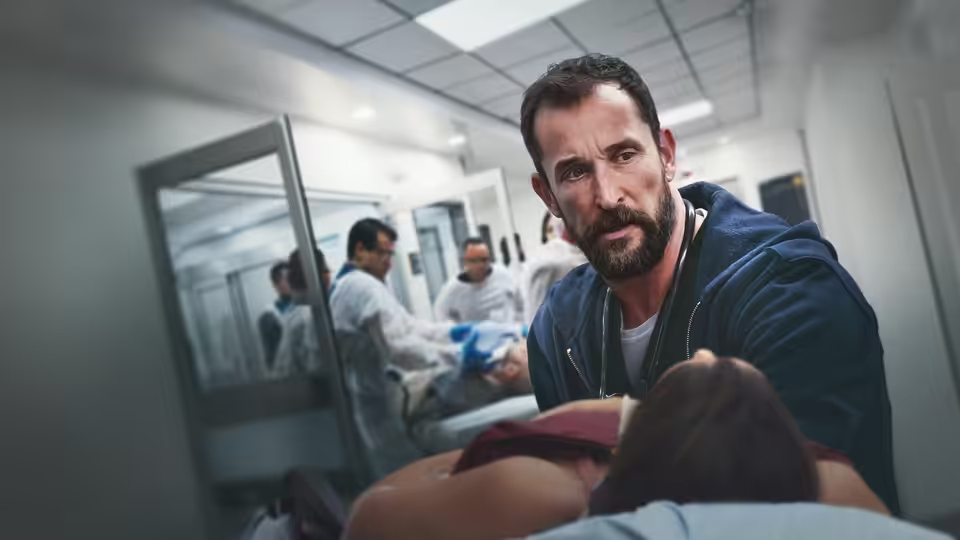
Dr Michael ‘Robby’ Robinavitch (Noah Wyle) works alongside doctors, nurses and students in an emergency department where one demand follows another. Dr Heather Collins (Tracy Ifeachor) and Dr Frank Langdon (Patrick Ball) are among the doctors, while charge nurse Dana Evans (Katherine LaNasa) helps keep the work moving. Student doctors Dennis Whitaker (Gerran Howell) and Victoria Javadi (Shabana Azeez) join an ensemble dealing with patients and the pressures of emergency medicine. The drama follows the working day in real time, keeping personal strains close to the practical business of caring for people.

Plays from YouTube when you press play; nothing loads from them until then.

Fi1m review

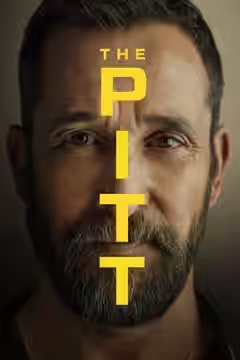
The Pitt makes absorbing television out of an exhausting job, with Noah Wyle and Katherine LaNasa giving the hospital staff weight and warmth. The opening is awkward, and some supporting characters remain thinly written.

The Pitt is an absorbing medical drama once it stops introducing its staff and lets them work. Its real-time approach keeps us close to the competing demands of an emergency department, where being capable does not mean being able to keep up. We recommend it for the ensemble and the sustained pressure, with a warning that the opening is clumsy. Its early character introductions are less convincing than the medical work.

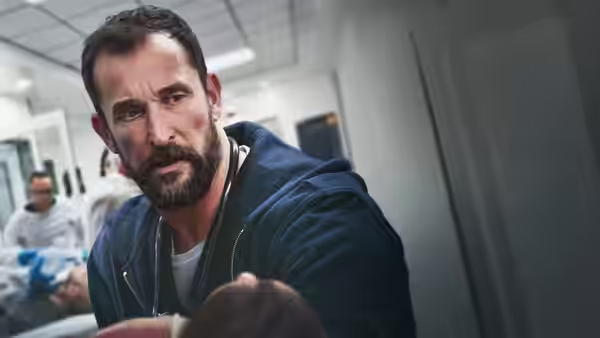
Noah Wyle gives Dr Michael ‘Robby’ Robinavitch the authority this kind of programme needs, without suggesting that authority will solve everything. He makes competence interesting, allowing the effort of remaining useful under pressure to show without turning every difficulty into an announcement. Katherine LaNasa’s charge nurse Dana Evans is just as important: her practical presence helps make the department feel like a place of employment, with work that must be done regardless of anyone’s private troubles.

We respond to the lack of glamour in Johanna Coelho’s cinematography and Nina Ruscio’s production design. The hospital is convincing enough that routine work can hold our attention before the characters have earned much of it. That matters in a programme built around an ensemble: we need to believe that the department keeps functioning beyond whichever person is speaking. The graphic medical detail makes the physical demands harder to dismiss, though squeamish viewers may find the insistence punishing.

Mark Strand and Joey Reinisch are among the editors managing that flow of information. Too much tidiness would make the workload look easy; too much confusion would make watching it a chore. Once the opening settles, the editing keeps the work legible without making the pace comfortable. We felt worn out by the succession of demands on the staff, and still wanted to keep watching. Gavin Brivik’s music matters less to the tension than the persistent sense that the staff cannot give everyone enough time.

The writing is less dependable when it pauses to make sure we understand a character. R. Scott Gemmill, Joe Sachs and their fellow writers sometimes give the staff traits before they give them enough behaviour to make those traits convincing. Some performances consequently push harder than the scenes can bear, and the occasional soapiness is noticeable because the medical routine is so persuasive. The ensemble grows more distinct as it settles, but the opening asks us to invest in people we can barely distinguish.

As a hospital procedural, it understands the appeal of watching trained people think and act together. Its attention to the shortcomings of emergency medicine gives those decisions weight, though the discussion of wider problems can be more explicit than it needs to be. The gallows humour helps. It gives the staff some relief without asking us to forget what is making them tired, and keeps the programme from becoming a lecture about how much we ought to care.

Give it time to get past the introductions. If graphic medical detail is likely to make you switch off, the strength of the acting will not solve that. For anyone who takes comfort in watching capable people persist, there is plenty here to stay for.
Critical consensus AI synthesised

4 of 6
Positive
3
Mixed
0
Negative
1
Vulture
9 January 2025
90*

The critic finds The Pitt a highly engrossing medical drama that captures the chaotic, unrelenting rhythm of an ER shift with strong performances from Noah Wyle and Katherine LaNasa. They single out its textured, unglamorous approach and dense storytelling as the main sources of delight.

Read the full review →
The Guardian
9 January 2025 · ★★
40

The critic finds the real-time medical drama covers knotty issues but is derailed by soapy acting and thinly written characters. Wyle is a strong lead, but the show struggles between prestige and procedural.

Read the full review →
Empire
12 March 2026 · Beth Webb

The critic calls it a bold and elevated medical drama that is a masterful balancing act of character study, medical theatrics and social commentary in a real-time 15-hour shift. It praises Wyle's gravitas and humanity as the lead, the strong ensemble including Katherine LaNasa, and its handling of contemporary issues with gallows humour.

Read the full review →
The Hollywood Reporter
3 January 2025 · Daniel Fienberg

The critic finds the series starts choppy while establishing characters and situation but grows sturdy as a well-executed medical procedural with an effective real-time format. It praises the production design, ensemble performances once settled, and points about flaws in emergency medicine, while noting it benefits from but is distinct from ER.

Read the full review →
The Times
26 March 2026 · Carol Midgley

The Pitt is the most immersive, authentic and naturalistic medical drama seen, a masterpiece that shows humanity at its worst and best. It stands out for its real-time format, graphic realism and compelling portrayal of hospital life and staff.

Read the full review →
Den of Geek
21 January 2025 · Alec Bojalad
80*

The review highlights the real-time format as a strength that delivers relentless pace and tension, likening it favorably to 24 while noting the show's ER roots and post-pandemic themes.

Read the full review →

Cast

Stills

Awards

Primetime Emmy Awards, 2025

Won
Outstanding Casting for a Drama Series
Won
Outstanding Drama Series

If you liked this, try…

ER poster

ER

1994 · For another hospital ensemble where skill and fatigue share the same shift.

Bodies poster

Bodies

2004 · A harsher British hospital drama about competence, complicity and institutional self-protection.

Hospital poster

Hospital

1970 · Hospital routines observed without a fictional hero to make things easier.

The Death of Mr Lazarescu poster

The Death of Mr Lazarescu

2005 · Romanian hospital bureaucracy turns one man’s need for care into an ordeal.

This Is Going to Hurt poster

This Is Going to Hurt

2022 · British hospital work, bitter humour and the cost of keeping going.