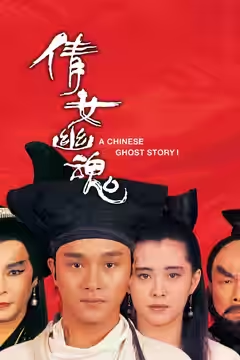
Tony Ching Siu-Tung’s fantasy romance throws swordplay, slapstick, horror and a love story into the same fog-filled temple and keeps nearly all of it in the air. The last act is a scramble and the comedy is broad. We recommend it warmly anyway.
A Chinese Ghost Story runs 95 minutes and contains a ghost romance, a demon with a tongue that can go through a man’s chest, a rap about Taoism, three swordfights on wires and a wedding in hell. Tony Ching Siu-Tung directs, Tsui Hark produces, and Yuen Kai-Chi’s screenplay takes a tale from Pu Songling’s collection of strange stories and gives it a hero who faints at the sight of blood. It should not hold together. For most of its length it does, and the parts that do are among the loveliest things Hong Kong cinema made in the eighties.
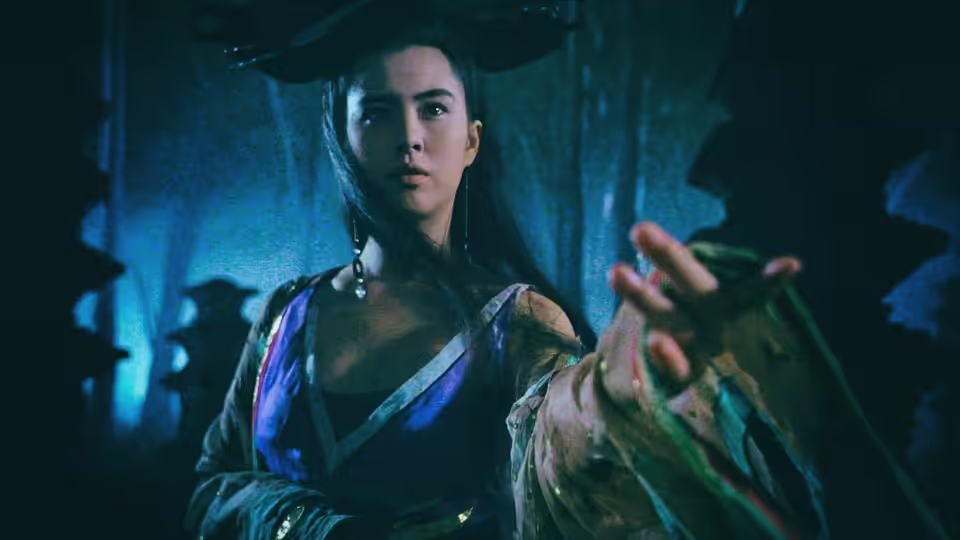
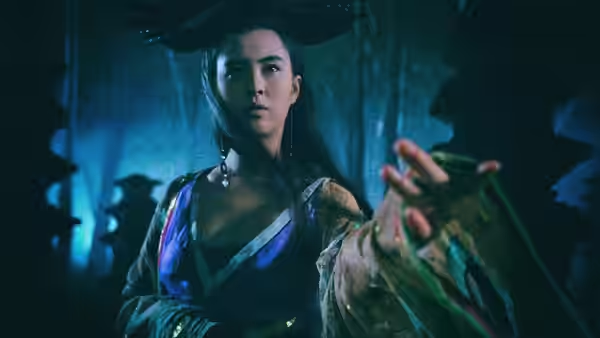
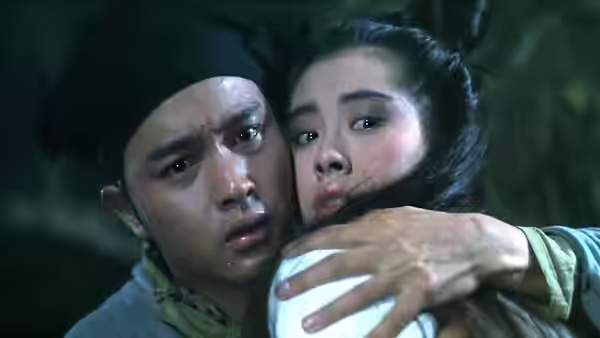
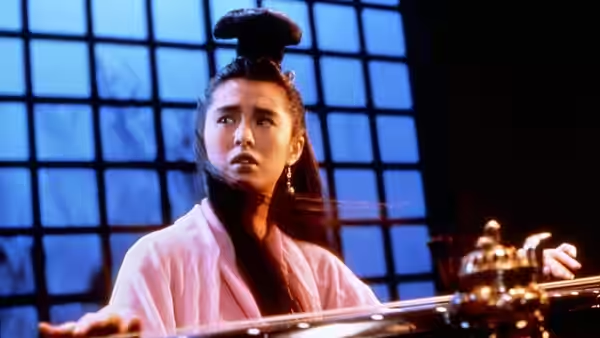
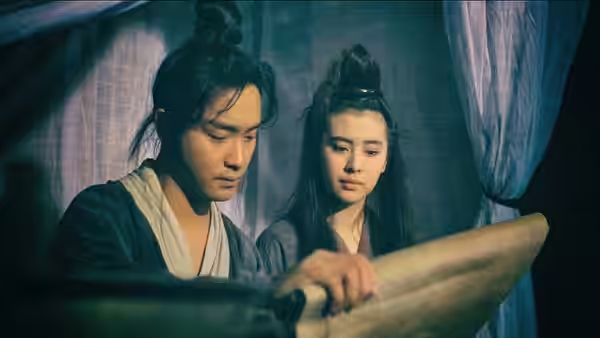
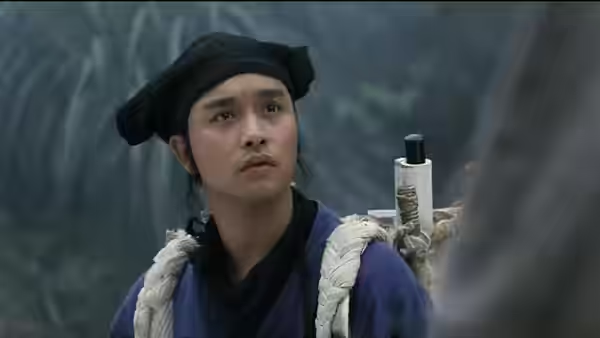
Leslie Cheung plays Ling Choi-san as a decent, damp young man who is frightened of everything and goes into the haunted temple anyway because he has nowhere else to sleep. Joey Wong’s Lip Siu Sin is the film’s stillness. She barely moves when the wind machines are throwing her sleeves about, and she looks at Cheung as if she has already decided how this ends. We were not expecting to be moved by a film in which a man is drained to a husk in the first twenty minutes, and then Wong turned from her zither, saw him standing in the doorway, and did not smile. That look is the film. Everything after it is decoration, and it is superb decoration.
Four cinematographers are credited, Poon Hang-Sang, Tom Lau Moon-Tong, Horace Wong Wing-Hang and Sander Lee, and between them they build a night that never quite ends: blue moonlight, fog at knee height, white silk lit from behind so that Wong seems to be made of it. The temple is all broken tiles and leaning pillars, and Ching, who came up as an action choreographer, shoots the swordsmen skimming across water and tumbling through roofs with a speed that still looks fast. The Tree Demon’s tongue, when it comes, is a rubbery, glistening thing of no fixed length, and it is more frightening in the dark than any effect from that year with a bigger budget behind it.
Wu Ma, as the swordsman Yin Chek-ha, is the film’s engine. He drinks, sulks, fights Lam Wai’s Hsia Hou across a bamboo grove for no reason either of them can name, and at one point sings a song about the Tao that is, without argument, a rap. We laughed, and then felt slightly ashamed of ourselves, because the film means it, and Wu Ma performs it as if he does too. Lam Wai gets less to do but does it with a good deal of hair.
The music, by Romeo Diaz, James Wong and David Wu, mixes synthesisers, Cantonese ballads and a great deal of thunder, and the ballads are the ones that stay. Wu also edits the film and turns up on screen as Secretary Chiu, which tells you something about how it was made. The cutting is quick and clean in the temple scenes. It is less clean at the end, where a great many things are flying at once and it is not always clear which of them is winning.
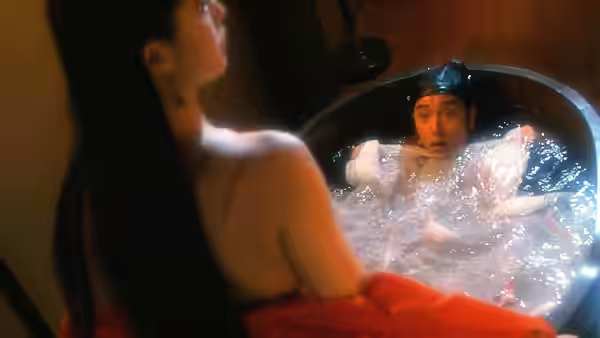
That last act is the caveat. The film leaves the temple for a place we will not describe, and once there it becomes a procession of effects, some of them thrilling and some of them plainly a man in a rubber suit under a red gel. The Tree Demon, so good as a voice and a tongue, is less good when the film shows it whole. Ling’s cowardice, which is funny the first four times, is played a fifth and a sixth. And the plot rules of its afterlife change whenever a scene needs them to.
Some critics have wondered how much of the film is Ching’s and how much is Tsui Hark’s, since Tsui produced it and the fog, the wires and the tumbling romance look like his. We do not think it matters much on a sofa. What is on screen is a director who knows how a body should move through the air and a producer who wanted a love story, and the two did not get in each other’s way. Set against the fantasy swordplay films around it, this one is warmer and sillier and better lit.
Watch it late, with the lights off, and do not try to keep track of who is allowed to do what to whom in the underworld. The film has not kept track either, and it is happier for it.