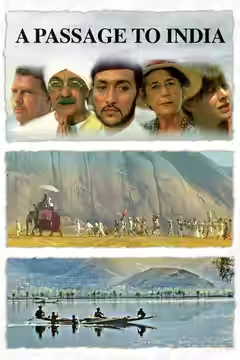
David Lean’s last film is a handsome, well-acted, patient adaptation of Forster, and for an hour and a half it is some of the best work he did. Then the trial arrives and the last hour slows to a procession. Worth your evening, with reservations.
David Lean had not made a film for fourteen years when he took on E.M. Forster’s novel, and he did most of it himself: screenplay, direction and the cutting. Two Englishwomen arrive in Chandrapore wanting to meet Indians, and the English there think this eccentric at best. In the opening scenes Aziz’s friends Hamidullah (Saeed Jaffrey) and Mahmoud Ali (Art Malik) sit up late arguing whether an Indian can be friends with an Englishman at all. The film spends 163 minutes on that question.
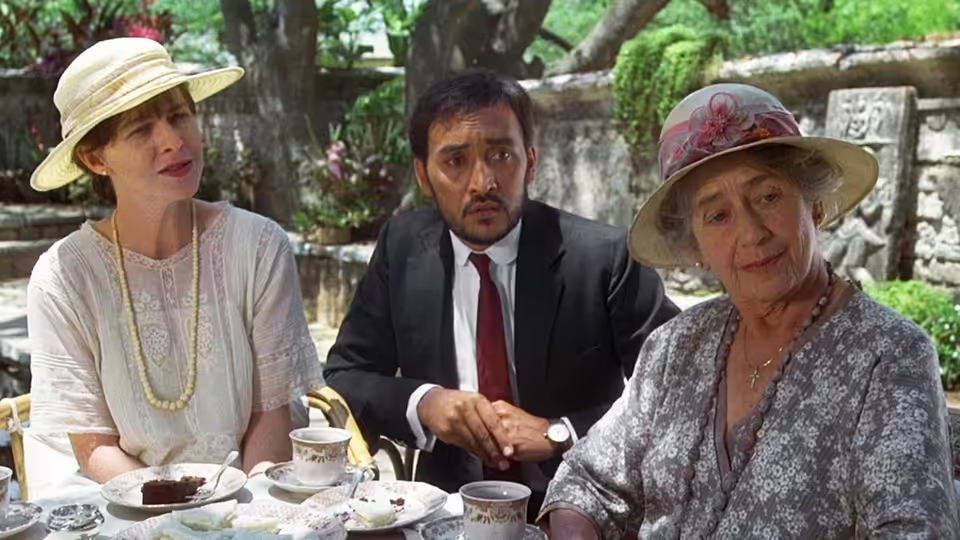
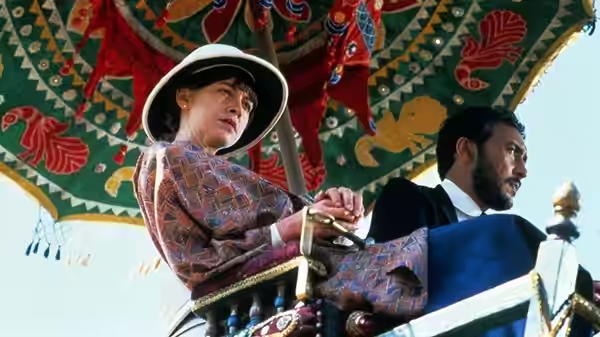
For an hour and a half it is as good as anything Lean made after Lawrence of Arabia. Ernest Day photographs the arrival in India from a ship’s rail, all boats and crowds, then narrows everything to a mosque at night with moonlight on the water outside, where Mrs. Moore (Peggy Ashcroft) and Dr. Aziz H. Ahmed (Victor Banerjee) meet and like each other before either has finished a sentence. Judy Moorcroft keeps Adela in high-collared white cotton, and the English club, from production designers John Box and Leslie Tomkins, is a big wooden room full of ceiling fans and people watching the door. Aziz gets a bungalow so small that his friends sit on the bed.
The best sequence is one Lean added. Adela (Judy Davis) cycles alone out of town, finds a ruined temple, and stands looking at stone lovers carved into every wall until a troop of monkeys comes screaming down the masonry at her. We jumped, and then we understood why the scene was there. Forster leaves what Adela does not know about herself between the lines; Lean puts it on a wall and makes her run from it. It is blunt, it works, and it is not in the book.
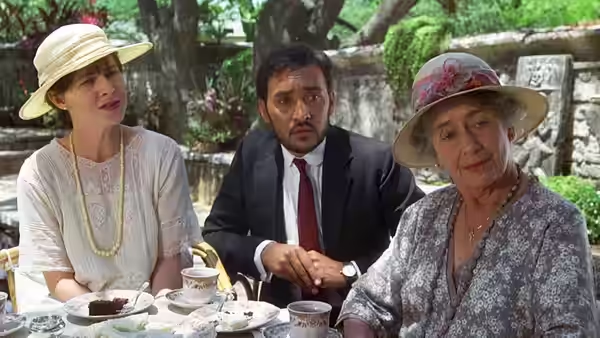
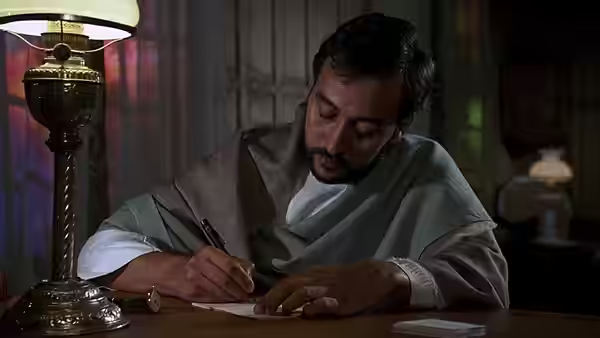
Davis is plain, awkward and honest, and makes Adela’s habit of saying what she thinks both likeable and a hazard to everyone near her. Banerjee plays Aziz as a man who laughs a beat too soon and is wounded by every slight, and his scenes with Ashcroft are the heart of the film. Ashcroft is dry and tired, an old woman who has seen enough of England to be curious about anywhere else. James Fox is decent and a little dull as Richard Fielding, the one Englishman who gives Indians tea, which is fair to the character. Clive Swift has one small, exact scene as Major Callendar, who summons Aziz to his house, is not there when he arrives, and whose wife takes Aziz’s carriage without a word.
Then there is Alec Guinness. He plays Professor Godbole, a Hindu Brahmin, under brown make-up, with a lilt and a philosophical shrug, and we winced every time he came on. He is not bad. He is doing an act, in a film where nobody else is, and the act stops the film dead. Godbole in the novel declines to explain anything; here he is light relief, and the joke is on him rather than on the English watching him, which is the wrong way round.
Aziz arranges an expedition to the Marabar Caves, and what happens there we will not describe. The second half is a trial, and the film slows with it. Lean, cutting his own picture, holds every shot a little too long, a habit that suits a landscape and does not suit a courtroom; we had understood who believed what long before the scene let us go. Maurice Jarre’s main theme, a bright swinging tune fit for a film about a holiday, keeps returning at the wrong moments. The caves themselves, black mouths in a bald hill, are the one thing in the back half that frightened us.
The politics have been softened. Forster’s English are rulers; Lean’s are mostly rude. Nobody in the film is seen governing anything, and the empire becomes a matter of who is invited to tea. It is a smaller film than Lawrence or Doctor Zhivago, and that is not the failing some critics have taken it for.
It is a PG, it does not hurry, and the last hour asks for patience the first ninety minutes did not. See it for the mosque, the temple and the tea party, and for Davis and Banerjee, who are better than the film around them. Forgive it Guinness if you can. We nearly could.