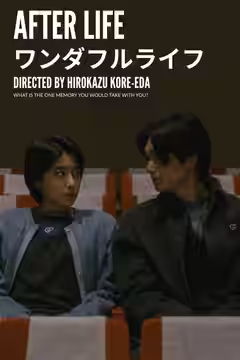
Hirokazu Kore-eda sends the newly dead to a run-down building where they must pick one memory to keep for ever, and civil servants film it on a shoestring. It is gentle, funny and it moved us badly; only the staff’s own story feels underwritten.
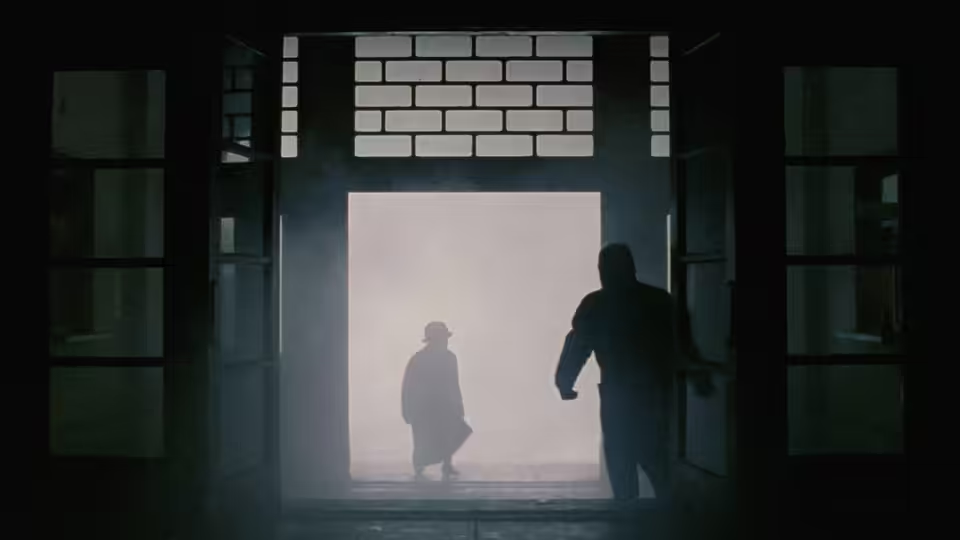
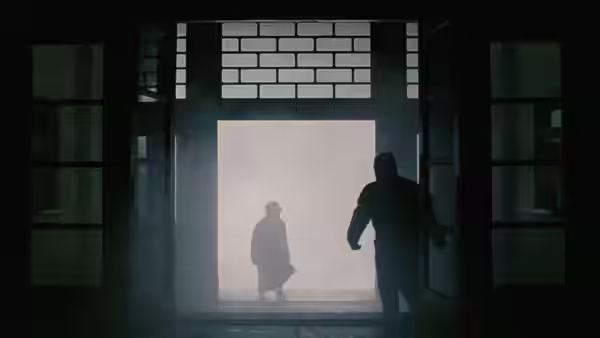
The newly dead, in Hirokazu Kore-eda’s After Life, do not go up or down. They walk out of a bright doorway into a shabby building, sign in at a desk and are told how the week will go. They must choose one memory from their whole life. The staff will build it, film it and screen it, and they will pass on with that memory and nothing else. The Japanese title translates as Wonderful Life, and the film means it.
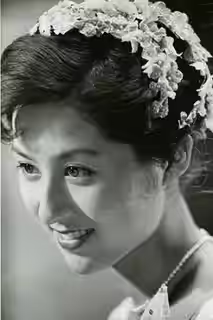
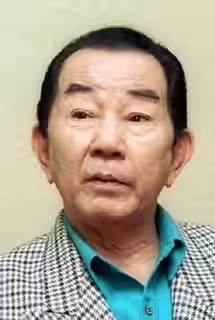
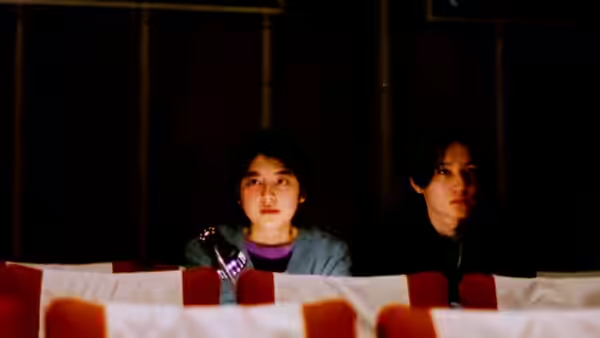
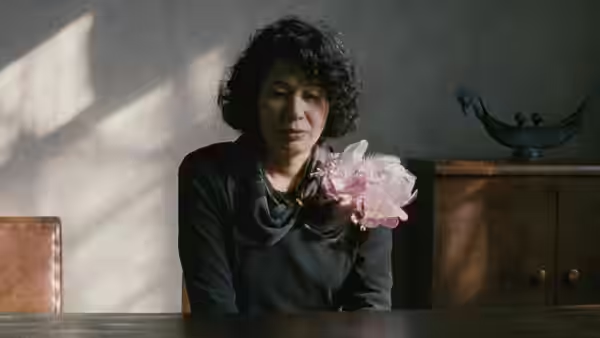
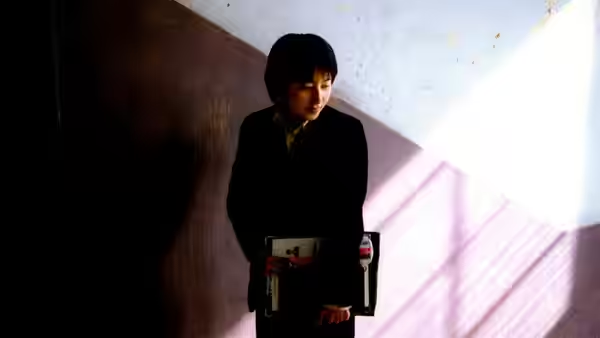
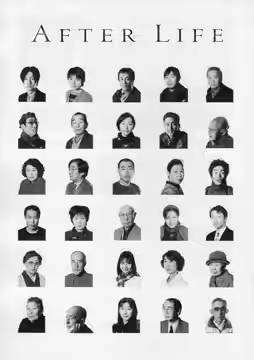
Kore-eda wrote, directed and edited it, and the shape he gives it is a week of interviews. Men and women sit in hard chairs across a desk and try to answer, and many of them are plainly not actors. Yutaka Yamazaki and Masayoshi Sukita shoot these scenes head-on, against a bare wall in flat window light, the camera still, so they look like testimony rather than drama. Nobuko Amano (Kazuko Shirakawa) answers slowly, as if the question were a kindness. Gisuke Shoda (Tōru Yuri) wants to talk about women. Kana Yoshino (Sayaka Yoshino) answers fast and is asked to think again. People pause, lose the thread and start again, and the cutting never hurries them.
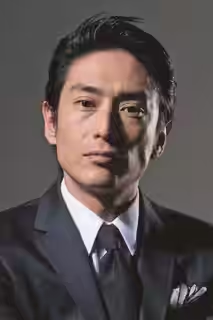
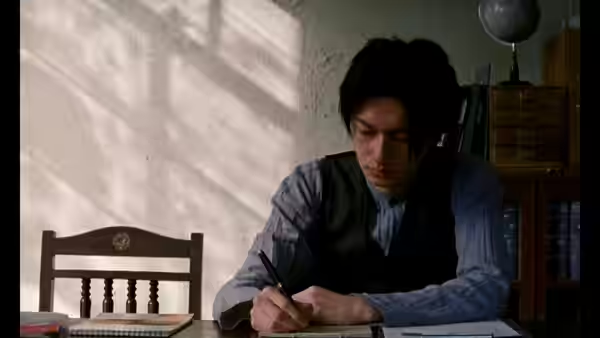
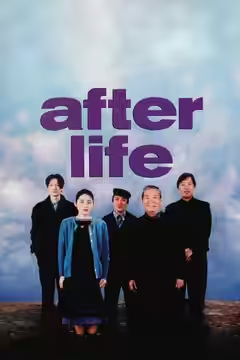
The building is the other main character. Production designers Hideo Gunji and Toshihiro Isomi give it peeling paint, cast-iron radiators, a courtyard of bare trees and the quiet of an institution with more rooms than people. Its caseworkers are Takashi Mochizuki (Arata Iura), reserved and careful; Shiori Satonaka (Erika Oda), young and eager; Satoru Kawashima (Susumu Terajima), who treats the job as a job; and their manager, Kennosuke Nakamura (Kei Tani), who handles the awkward cases with decades of patience. The most awkward is Yusuke Iseya (Yūsuke Iseya), a young man who argues with the whole arrangement.
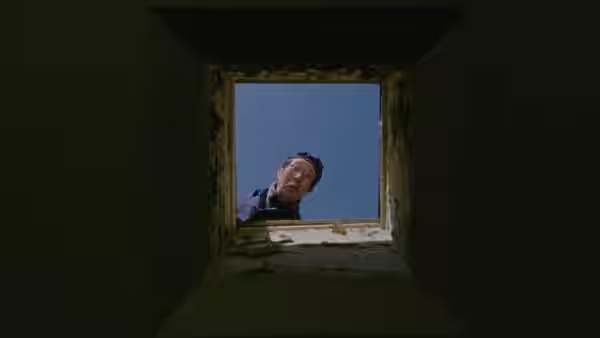
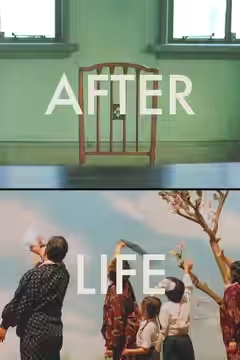
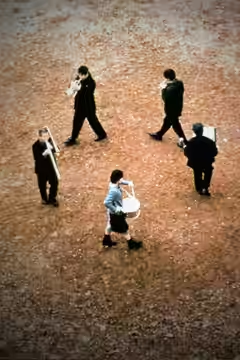
The recreations are where the film finds its tone, and where it got us. The staff have almost no budget. Clouds are cotton wool on wires. A tram is a plywood front and a bell, with someone off camera rocking it. One of the older men sits in front of a window while the crew hold tufts of white outside it and work a fan. We laughed at how shabby it looked. Then he turned his face to the window and something in it changed, and we stopped laughing and found our throat had tightened. Nobody has fooled him. The feeling was never in the cloud.
Yasuhiro Kasamatsu’s score is used so sparingly that long stretches have nothing under them but footsteps and the hum of the building, and the few notes that do arrive count for more because of it. Kore-eda the editor is as restrained as Kore-eda the writer. He holds on faces after the line and leaves in silences a tidier film would have cut.
Not all of it works. The interviews repeat their shape, and the middle hour slackens as the film sits with one undecided case for longer than it needs to. The feelings between Mochizuki and Shiori are done in half-lines and glances, which suits the characters but leaves the one strand of ordinary drama thin. The second half takes a turn we will not describe, involving a woman named Kyoko Watanabe (Kyōko Kagawa). It is handled with tact, but the dead at the desk stay more vivid than the staff behind it.
Set beside Kore-eda’s later family films, Nobody Knows (2004) and Shoplifters (2018), this is the one with a premise from fantasy, and he treats it as if it were a documentary. It is also the film of his we would hand to someone who had never seen one, because it asks a question nobody can avoid answering. At 118 minutes it does not overstay. Expect to spend the rest of the evening choosing your own memory, and to find the first three you think of are not the ones you would keep.