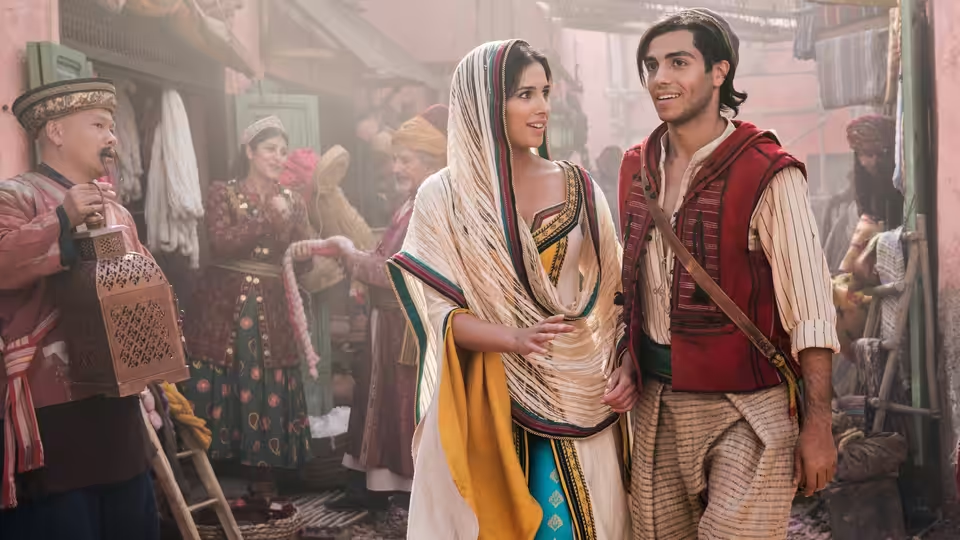
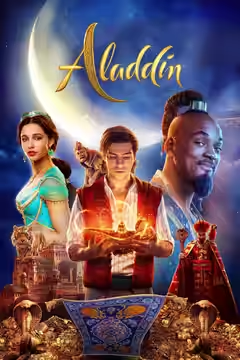
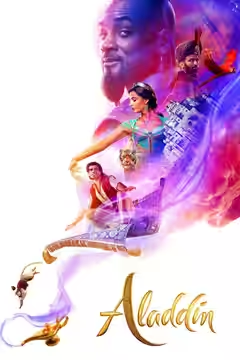
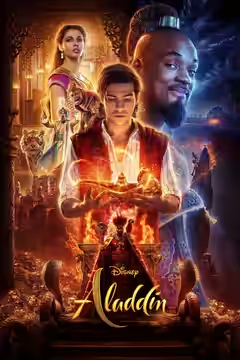
Guy Ritchie’s live-action Aladdin repeats the 1992 cartoon almost beat for beat, with forty minutes added. Naomi Scott and Nasim Pedrad give it a pulse; the computer-made Genie and the anonymous direction take it away again.
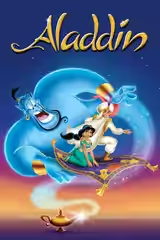
Disney has remade its 1992 cartoon Aladdin with actors, and it is the same film: a street thief, a princess in disguise, a lamp in a cave, a genie with three wishes and the same songs in nearly the same order. Guy Ritchie directs, and he and John August have added a new number for Jasmine, a handmaiden for her to talk to, a love interest for the Genie and a framing device in which Will Smith, as a mariner, tells the story to his children. It runs 127 minutes, roughly forty longer than the cartoon. The additions are the best of it; the length is the worst.
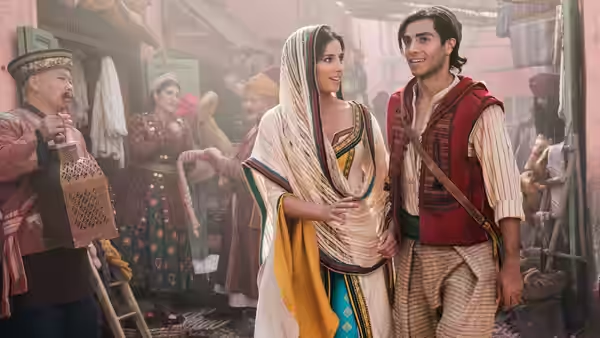
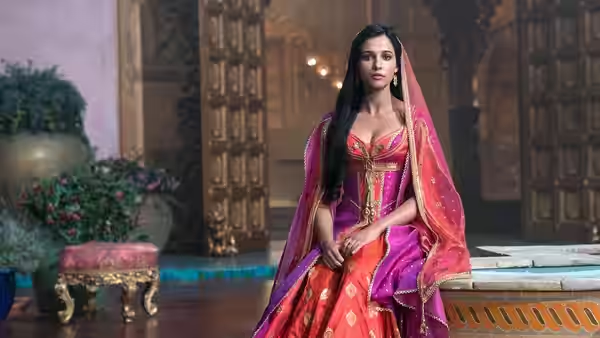
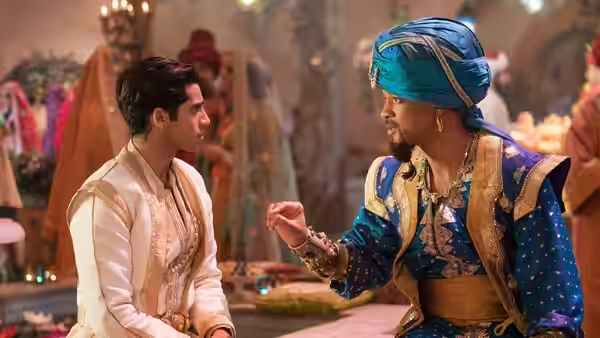
Naomi Scott is the reason to stay. She has the voice for the songs and a straight back for the palace politics, and when the film stops so she can sing Speechless, the new song, she carries a number that belongs in a stagier show. Mena Massoud is quick on his feet and easy to like, and his scenes with Scott have the right nervousness. Nasim Pedrad, as the handmaiden Dalia, is the one invention that pays off: dry, sceptical of everyone, and funnier every time the film remembers she is there.
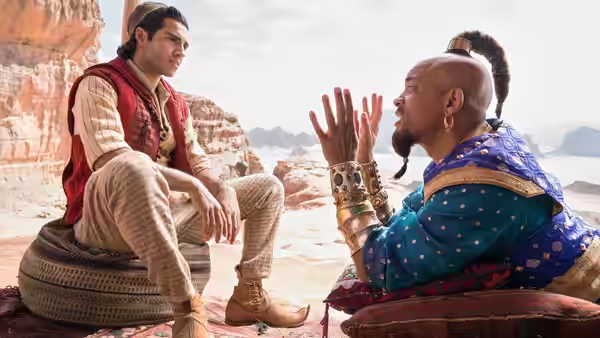
When Smith first comes out of the lamp as the Genie, blue and enormous, with a topknot and a torso made by a computer, we felt a small embarrassment on his behalf. The face was his, the body was not, and the join showed. Then he wishes himself down to a man in a waistcoat and the film relaxes, and so did we. He is not attempting Robin Williams, and he is right not to. He does Will Smith: fast, cocky, a hype man far better at teaching Aladdin how to talk to a girl than at being a hundred feet tall. Whenever the plot needs proper magic, the film hands him back to the computer, and the computer does not love him.
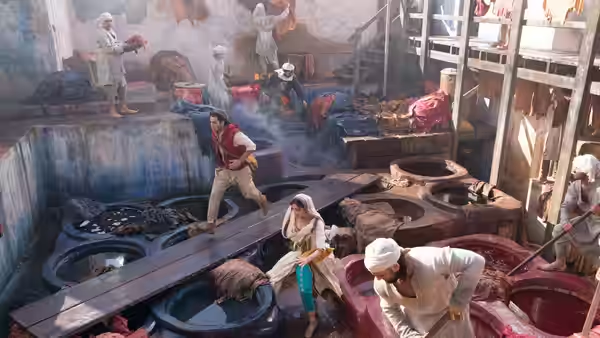
Alan Stewart shoots Agrabah in pink, gold and turquoise, and Gemma Jackson’s city borrows from Morocco, Rajasthan and the Gulf without settling anywhere: stacked fruit and hanging brass in the market, a palace like a wedding cake above it. Michael Wilkinson’s costumes are embroidered to within an inch of their lives. The Prince Ali parade is the one set piece that earns its money, a street full of dancers doing Bollywood shoulder work with Smith out front. James Herbert cuts the opening chase with the speed changes Ritchie has used since Snatch, slow then fast then slow, so that One Jump Ahead looks like an advertisement for trainers. After that the editing could be anyone’s. Alan Menken, who wrote the songs the first time, returns, and his tunes survive the louder arrangements.
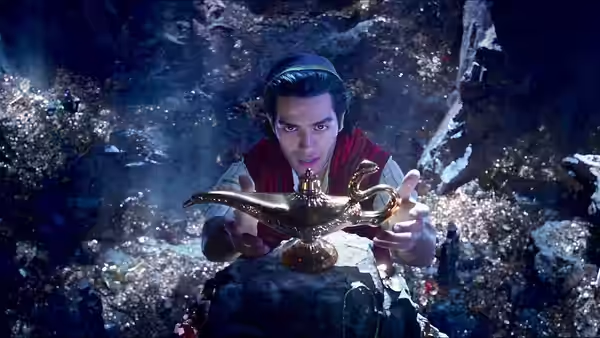
The villain does not work. Marwan Kenzari plays Jafar young, quiet and whispering, a reasonable idea, but he never frightens anyone, and a film like this needs its children a little scared. The Cave of Wonders is a dark digital cavern with gold in it, and the finale is more of the same at greater volume, storms, smoke and shouting. Ritchie has made a film any competent hand on Disney’s books could have made. Apart from that chase, there is no sign he was there.
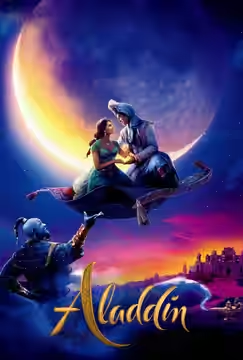
We should own the moment it got us anyway. A Whole New World, sung on the carpet over the rooftops and out across the desert, is played straight, Scott and Massoud sing it well, and for four minutes we were sold and slightly annoyed about it. Then it cuts back to plot.
Disney’s remakes have, at their best, found a reason to exist. The Jungle Book (2016) had a technology to show off. This one’s reason is that people liked the last one, and it produces a film you watch while checking it against your memory. Children who do not know the cartoon will have a good time, and it is a PG they can be left with. Adults who know it will spend two hours noticing what has been moved, and will come out wanting to watch the original, which is a recommendation of a kind.