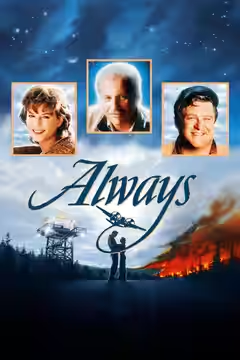
Spielberg remakes a wartime weepie as a firefighting romance, and it is sweeter and slighter than either he or the material seems to think. The flying is thrilling and John Goodman is warm; the afterlife plot dries up long before the film does.
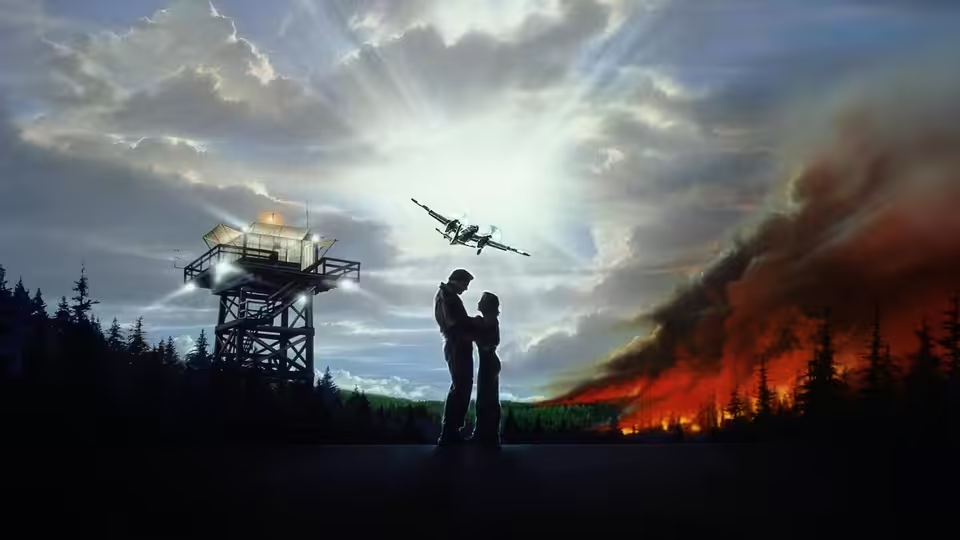
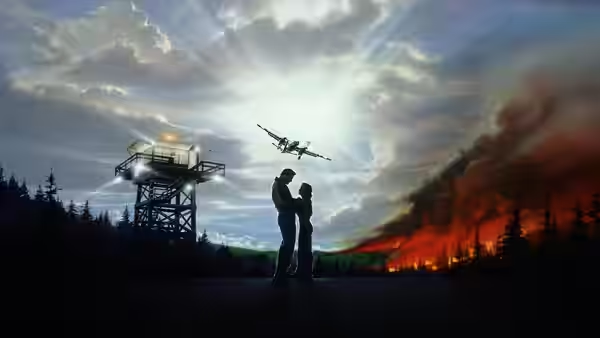
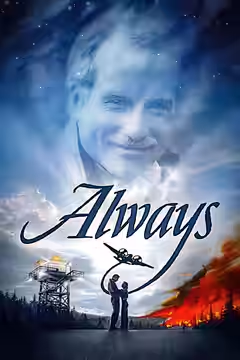
Steven Spielberg remakes A Guy Named Joe, the 1943 picture in which a dead bomber pilot returns to guide the young man courting his girl. He moves it from the war to the forests of the American west, where old bombers drop red retardant on wildfires, and he keeps almost everything else. Always is one of the gentlest films he has made and one of the slightest. The first forty minutes are warm and loose and properly felt. Then Pete dies, as the tagline has already told you he will, and the film is never as sure of itself again.
The flying is the best of it. Mikael Salomon shoots the fires from low and close, so the smoke is brown and orange rather than picturesque grey, and the planes look what they are, tired machines being asked to do one more thing. An early run in which Pete’s engine catches fire and he dives to put it out is cut by Michael Kahn with no wasted frame, and we gripped the arm of the sofa. James D. Bissell’s fire base is a proper working place: a dirt strip, a tin canteen, a radio shack with maps curling off the walls. John Williams writes quieter than usual, mostly piano, and lets an old dance record carry the film’s real theme.
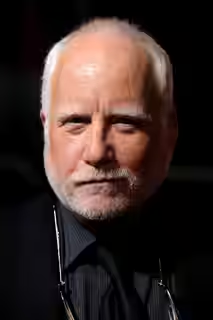
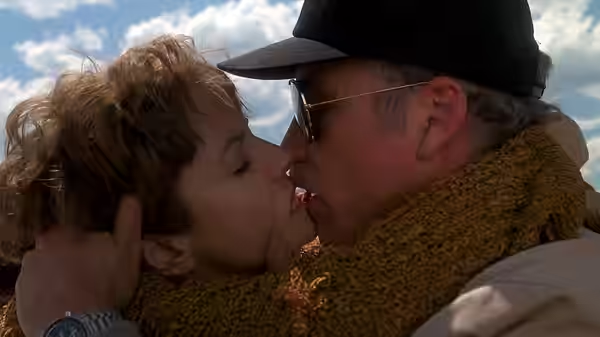
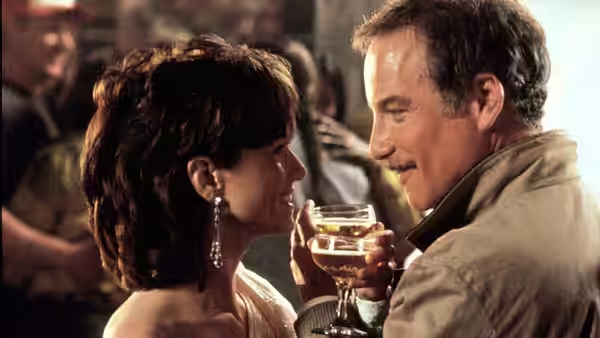
Richard Dreyfuss plays Pete as a man who thinks a joke is the same as saying something, and Holly Hunter’s Dorinda has heard all the jokes and takes them anyway. Their scene on her birthday is the one we will keep: he gives her a white dress, she puts it on and comes out into the hangar, and the men on the base line up to dance with her one after another while the record plays. Ellen Mirojnick dresses Hunter in work shirts and boots for the whole film except this, which is why it lands. It moved us more than we expected, and we were slightly annoyed about it, because we could feel exactly which strings were being pulled and they pulled anyway.
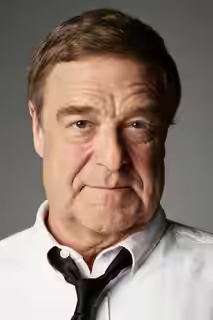
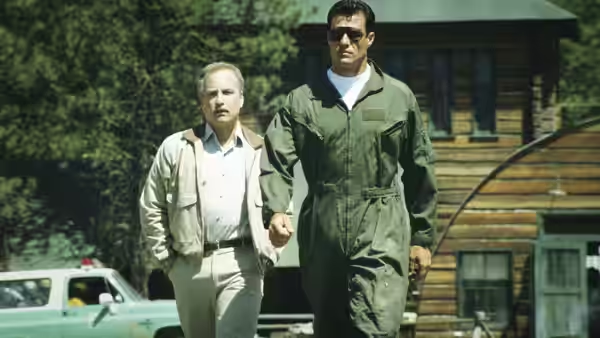
John Goodman is the film’s ballast. His Al Yackey is a large kind man who tries to talk Pete down and cannot, and Goodman lets the worry show under the bluster without ever asking for credit. Audrey Hepburn, in her last film, is Hap, the guide who meets Pete in a burned-out clearing in a white jumper and tells him the rules with the calm of someone who has done this many times. She is on screen for a few minutes and the film is steadier every second she is there. Roberts Blossom turns up as Dave, a hermit in the ruins who may or may not be able to hear the dead, and is gone before the idea is used.
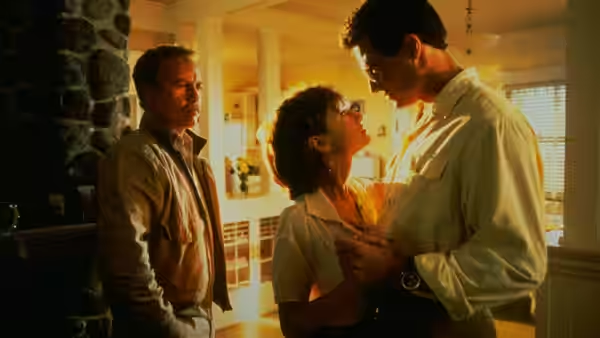
The trouble is Ted Baker. Brad Johnson is tall and handsome and Jerry Belson’s screenplay gives him nothing but a run of pratfalls, so that when the film asks us to want Dorinda to fall for him, we found we did not, and could not see why she would. The ghost device, Pete standing at people’s shoulders and whispering while they mistake it for their own thoughts, is funny the first time and is then repeated for an hour. Belson reaches for a gag whenever a scene threatens to go quiet. Every feeling gets a joke to cover it, which is Pete’s flaw and turns out to be the film’s too. At 122 minutes it is a good half hour longer than the story it has.
It sits oddly in Spielberg’s run. It comes two years after Empire of the Sun (1987), which trusted a boy’s face and a silent sky, and the same year as Indiana Jones and the Last Crusade, which trusted nothing but motion. Always wants to be a grown-up romance about letting go, and Spielberg does not yet know how to hold a shot on two adults with nothing burning behind them. He keeps cutting away to the planes, and the planes are more interesting.
See it on a slow Sunday, with someone who will not laugh at you for being got by a dead pilot and a white dress. The flying will hold anyone; the rest is for people who do not mind being told how to feel, provided it is done kindly. It is a PG, and it earns that too.