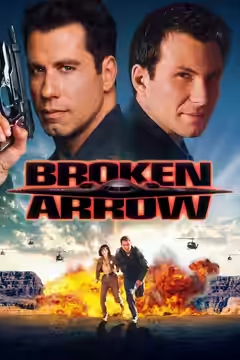
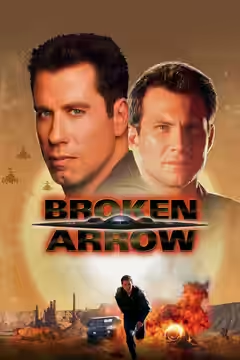
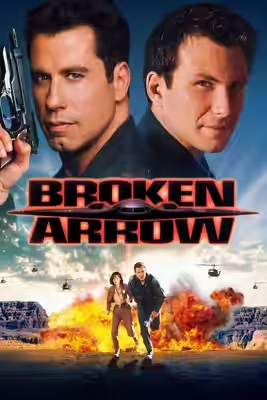
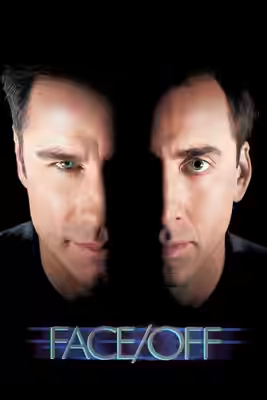
John Woo’s second Hollywood film is loud, daft and held together by John Travolta, who plays a nuclear thief as a man having the best week of his life. The set pieces are handsome; the script and the continuity are not. A decent Saturday night, no more.
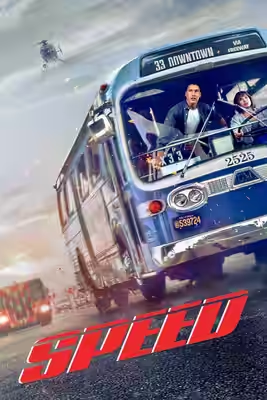
John Woo’s second American film, after Hard Target (1993), is a plane, a desert and two nuclear bombs, and for 108 minutes that is nearly all it has. Graham Yost, who wrote Speed (1994), supplies another story about a vehicle in trouble, and Woo shoots it with the slow motion and two-handed pistols he brought from Hong Kong. The result is loud, daft and often enjoyable, and carried almost entirely by John Travolta. We would not call it good. We would call it a decent Saturday night, if the genre is yours.
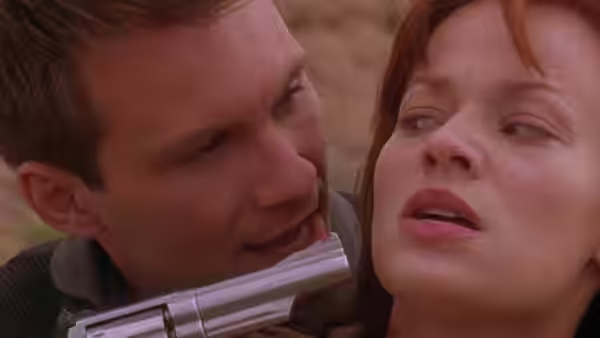
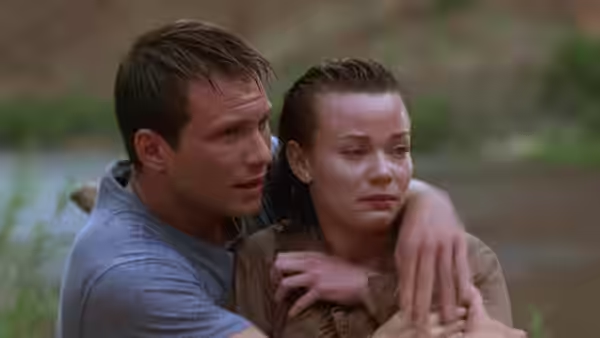
The opening is the film in small. Deakins and Hale box in a hangar; Deakins wins and tells Hale he lacks the will to finish. Then they take a stealth bomber over the Utah desert with two live warheads aboard, and before the first reel is out Deakins has shot at his co-pilot, ejected him and put the plane into the ground on purpose. Hale comes to in the sand and meets Terry Carmichael (Samantha Mathis), a park ranger with a rifle and no patience. Back at the Pentagon, Giles Prentice (Frank Whaley) explains that Broken Arrow is the service term for a lost nuclear weapon, and that the alarming thing is not the loss but that it happens often enough to need a term.
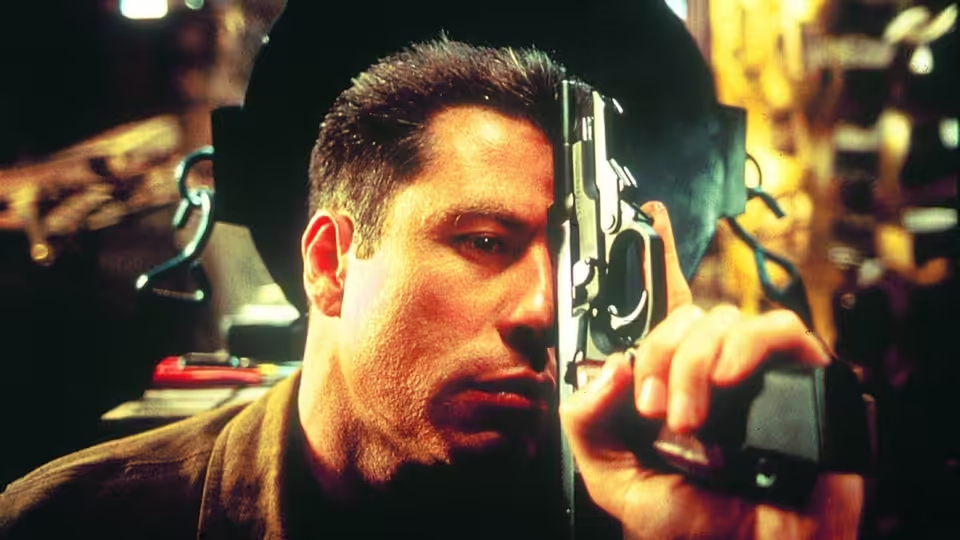
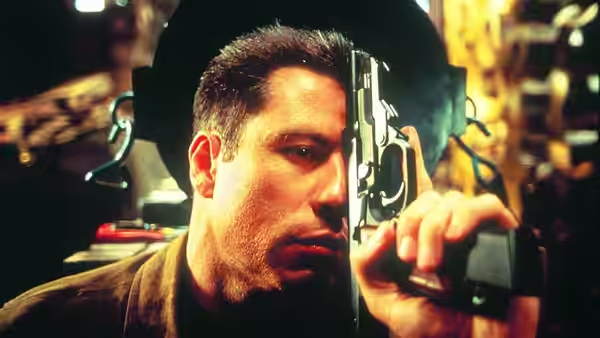
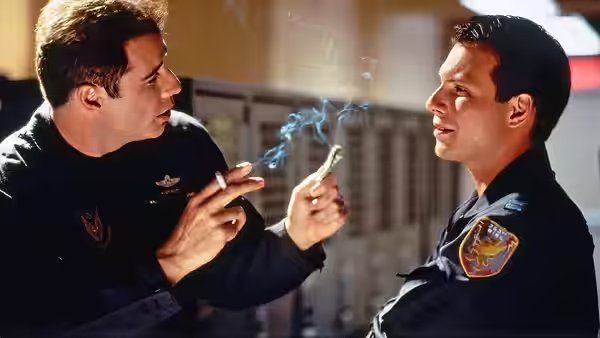
Travolta plays Deakins as pleased with himself, smoking, grinning, lecturing people on the virtues of a calm mind while his own plan comes apart. When somebody fires a gun near the warheads he objects as if they had put a glass down on good wood. We laughed out loud, more than once and always at him, and we are fairly sure that was the intention. Slater has been handed the earnest one, and earnestness is not what Slater does well; he spends the film running after things and looking pained. Mathis is better than her part, which is mainly asking what is going on and being told.
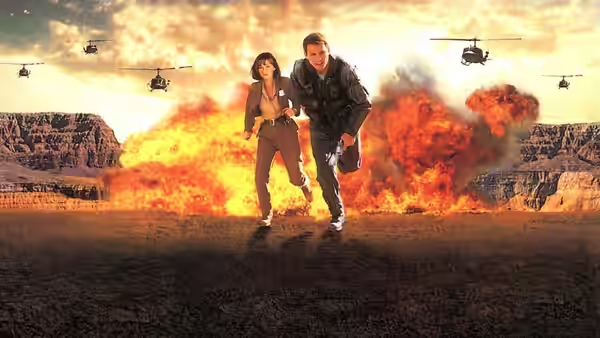
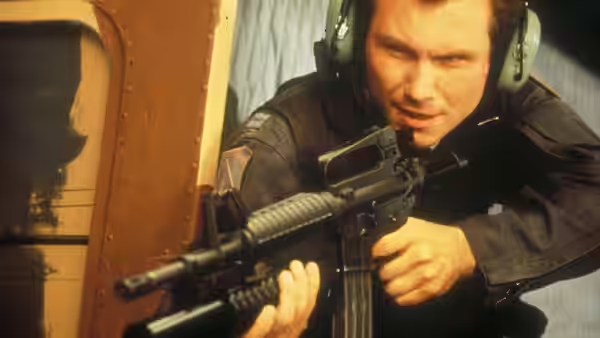
Peter Levy shoots the desert wide and bright, red rock against hard blue sky, and gets the camera low under the helicopters as they come over the ridge. Woo stages the action his usual way: bodies in slow motion, two guns where one would do. Holger Gross gives the Pentagon a dim room lit by its own screens and the villains’ hideouts a scrapyard look. Hans Zimmer’s score is the odd thing here, a twanging electric guitar over marching drums, as if a western had wandered into a missile silo. It tells us not to take any of this to heart, and we did not.
Three editors are credited, Joe Hutshing, Steve Mirkovich and John Wright, and in places the film looks like the work of three editors. Vehicles change position between shots. People arrive at places they could not have reached in the time. Yost’s dialogue runs to men announcing what they are about to do and then doing it, and the Pentagon scenes, with Delroy Lindo’s Colonel Wilkins and Kurtwood Smith’s Secretary of Defense Baird frowning at maps, stop the film cold every time.
Somewhere past the hour the film does something with one of the warheads that we did not expect from a studio action picture, and for ten minutes we were properly gripped, glad to be in the dark. Then it went back to chasing vehicles. That is the pattern of the whole thing: a moment of real nerve, then a long stretch of noise.
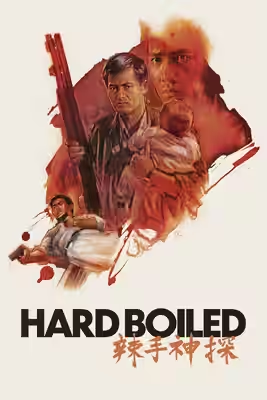
Against Woo’s own standard it is thin. The Killer (1989) and Hard Boiled (1992) put a friendship at the centre and made the gunfire mean something. Here the bond between Deakins and Hale is stated in the boxing ring and then dropped, so when they face each other later it is two men and some hardware. The gunfire is still handsome. It just does not mean anything.
It runs 108 minutes, carries a 15, and opened in UK cinemas on 11 April 1996. Watch it with company and a drink, and do not look too closely at where the trucks are. Travolta will be back on screen soon enough, and that is what it is for.