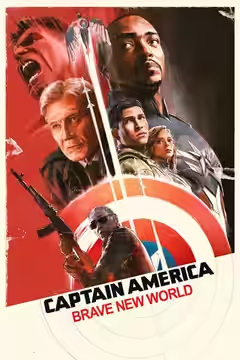
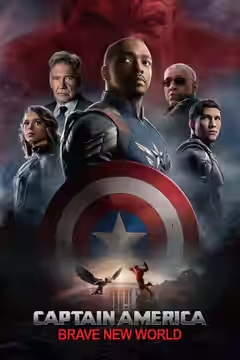
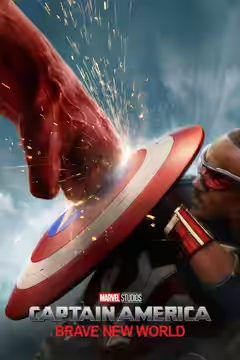
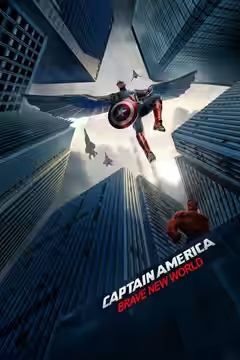
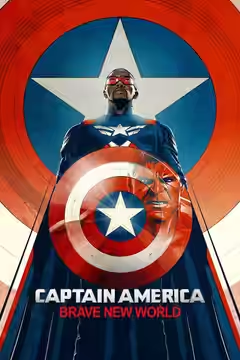
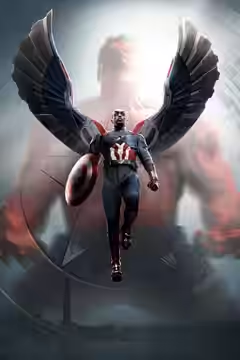
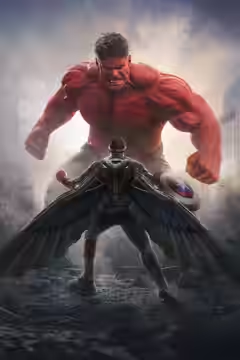
Anthony Mackie is ready to carry the shield and Harrison Ford is ready to fall apart in the Oval Office. The film around them is a conspiracy thriller with the paranoia left out, shot in murk and visibly stitched together. Watchable, not much more.
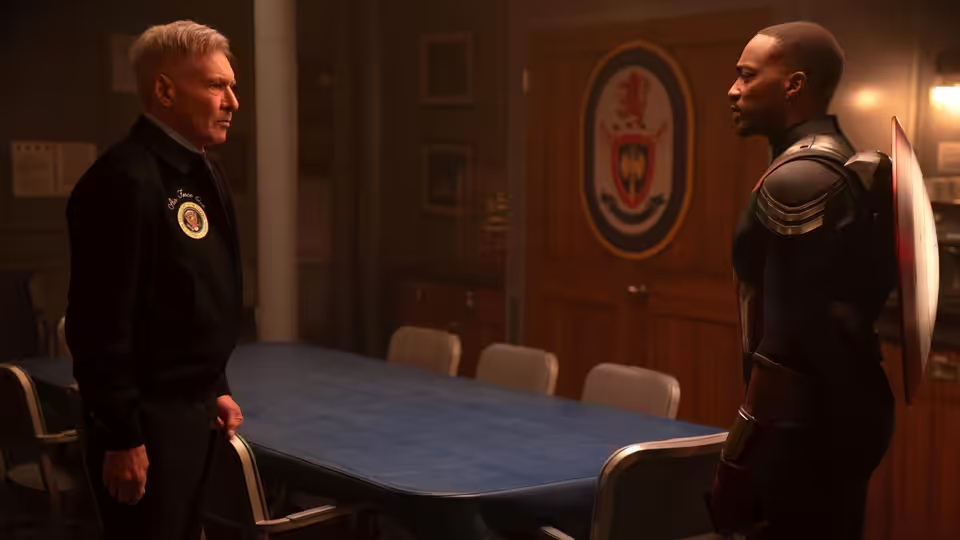
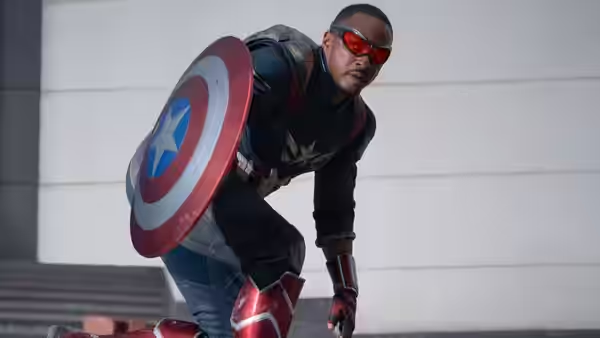
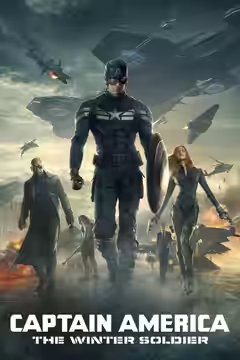
Sam Wilson (Anthony Mackie) has had the shield for a while, and Captain America: Brave New World is the first film to ask what he means to do with it. He is not a super-soldier but a man in a good suit with a pair of wings, and the film knows this is the most interesting thing about him. Thaddeus Ross (Harrison Ford), the general who spent years hunting the Hulk, has been elected President and wants Sam to help him rebuild the Avengers. Julius Onah directs from a script credited to five writers, himself among them, and the aim is a Washington thriller in the manner of Captain America: The Winter Soldier. It gets the Washington. The thriller is another matter.
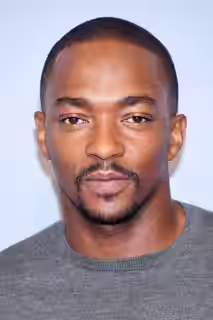
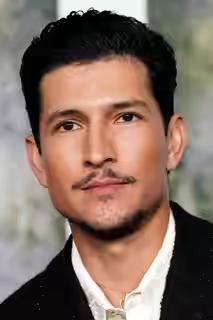
Mackie is ready, and has been for years. He plays Sam as a man who listens before he speaks and is never sure he is welcome, which is the right way to play a Captain America who cannot bend a car door. Danny Ramirez’s Joaquin Torres, the new Falcon, is loud where Sam is quiet, and their bickering over a radio link is the film’s best running joke. The opening raid in Mexico, on a compound held by the mercenary Sidewinder (Giancarlo Esposito), is shot by Kramer Morgenthau in plain daylight and staged so that we can see who is hitting whom. A later dogfight over the Indian Ocean, Torres threading his wingsuit between Japanese jets, has the same clarity. Those are the two set pieces we would show anyone.
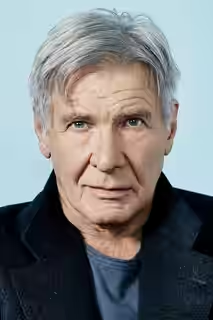
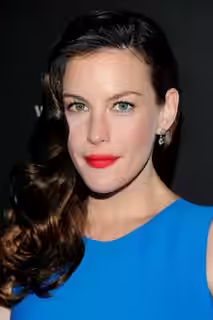
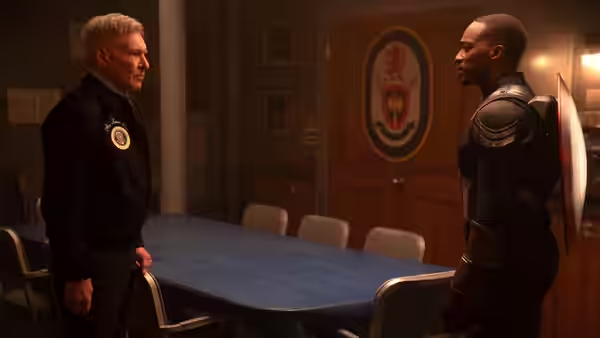
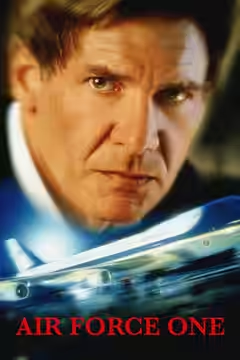
Ford has decided to act, which is not a given these days. His Ross takes pills, breathes badly and has a daughter, Betty (Liv Tyler), who will not return his calls. Ford gives him a low rasp and a hand that shakes when nobody is looking. In the Oval Office he tells Sam he wants to be a better man than he was, and Ford delivers it as though he half believes it and is furious about the other half. Gersha Phillips keeps him in the same dark suit throughout, and he seems to shrink inside it.
The film’s best idea belongs to Carl Lumbly. Isaiah Bradley was the Black super-soldier the government experimented on and then locked away for decades, and Sam brings him to the White House as his guest. Within the hour Isaiah is in custody again, for something he does not remember doing. Lumbly plays the holding-cell scene without raising his voice once; he tells Sam he cannot do this a second time, and looks at the wall. It moved us more than anything else in the film, and then it made us angry, because the film has him arrested to start the plot and then does not visit him for most of an hour. The question of what this country has done to this man is put on the table and left there.
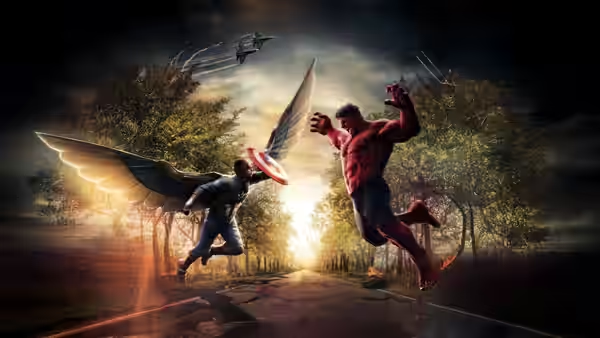
The plot is the problem, and so is the telling. The villain is Samuel Sterns (Tim Blake Nelson), last seen in The Incredible Hulk in 2008, and the film spends too long explaining him to an audience most of whom will have forgotten. Matthew Schmidt and Madeleine Gavin cut the fights into short pieces from which the geography goes missing. Morgenthau, so clear in Mexico, shoots the interiors in a grey-green murk, and Laura Karpman’s score marches underneath without a tune we could recall. Ramsey Avery’s one big set, an island made from a stone hand the size of a mountain, is the only image with any scale, and the film cuts away from it every time.
The Winter Soldier worked because for an hour nobody on screen could be trusted. Here the film shows us who is behind the plot before Sam finds out, so there is no suspicion, only waiting. We noticed we were bored during a fight in a warehouse, which is the wrong place to notice it.
Most critics have landed around where we have. It does not outstay its 119 minutes, and Mackie and Ford give it more than it earns. See it if you have kept up with the series; watch it at home, where the murk is easier to forgive.