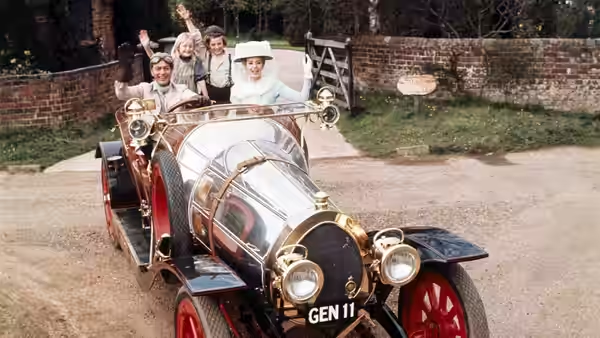
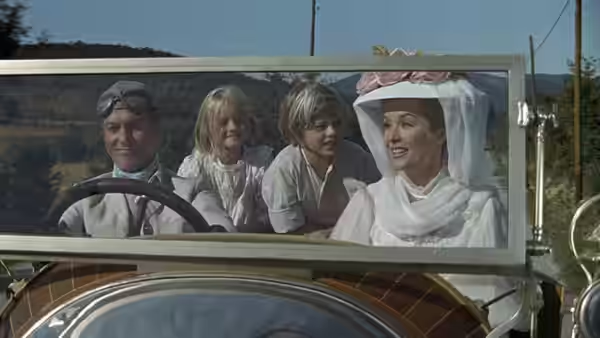
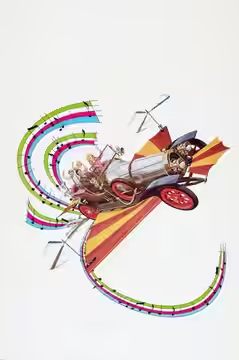
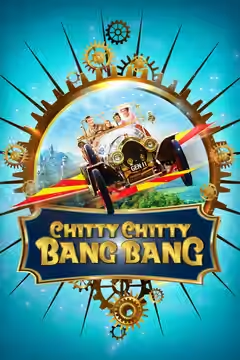
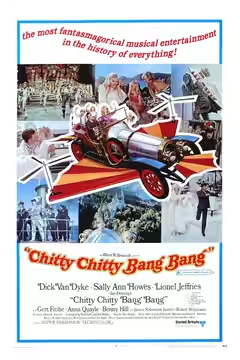
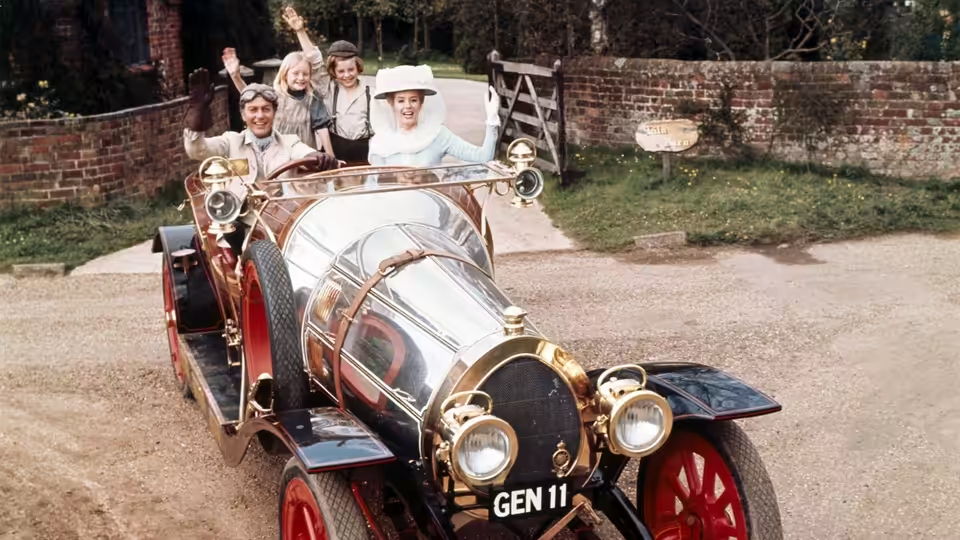
Family waving from an open polished vintage automobile on a country lane
Film review

Chitty Chitty Bang Bang

1968 · Directed by Ken Hughes · 2h 24m

In a sentenceThe car flies, the songs stick, and a man in a top hat with a net has ruined bedtime for generations

Edwardian England. Caractacus Potts (Dick Van Dyke), a widowed inventor whose machines seldom work, lives in a windmill with his father, Grandpa Potts (Lionel Jeffries), and his two children. The children love a wrecked racing car rusting at the local garage, and it is about to be sold for scrap. Caractacus needs money he does not have to save it. The same morning, the children are nearly run down by Truly Scrumptious (Sally Ann Howes), daughter of the sweet manufacturer Lord Scrumptious (James Robertson Justice). Caractacus tries to sell his sweets to the factory, scrapes the money together and rebuilds the car. On a beach picnic he begins a story about Baron Bomburst (Gert Fröbe), a tyrant who wants the car for himself.

Plays from YouTube when you press play; nothing loads from them until then.

Fi1m review

Ken Hughes’s musical is a bright, generous family film whose first half is far better than its second. The songs hold, the car is a real machine, and Robert Helpmann’s Child Catcher has earned every sleepless night. It is twenty minutes too long.

Albert R. Broccoli took Ian Fleming’s novel, handed it to Roald Dahl and Ken Hughes for a script, hired the Sherman brothers for the songs and Dick Van Dyke to sing them, and asked for a British Mary Poppins (1964). Critics at the time judged it against that film and found it wanting, which was unfair then and is beside the point now. Chitty Chitty Bang Bang is a good family musical with a first half that is close to lovely and a second half that goes on and on, and the best thing in it is a man with a butterfly net.

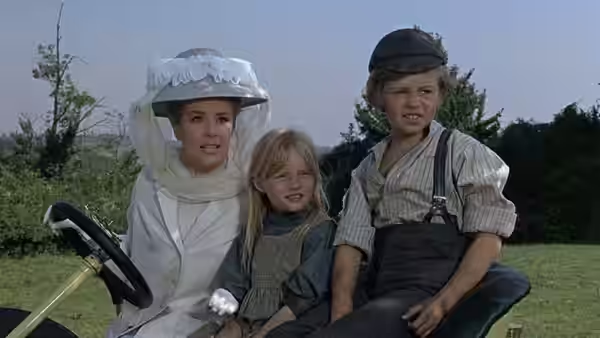
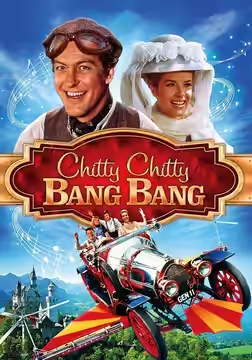
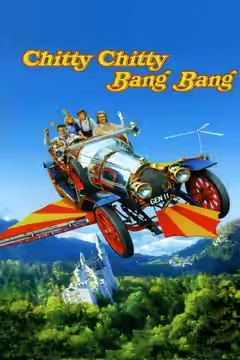
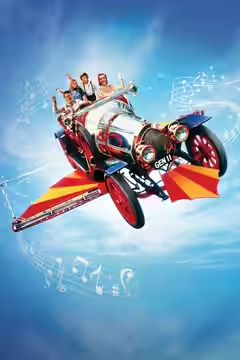
The first hour is set in an England of meadows, windmills and steam, and it is where the film is happiest. Ken Adam gives Caractacus Potts a windmill full of machines that cook breakfast badly and cut hair worse, and he builds the car itself, long, brass-trimmed and red-leathered, so solid it looks as if it might start. Christopher Challis shoots the countryside in a green so bright it looks freshly painted and keeps the car in wide frames so we can see all of it. Joan Bridge and Elizabeth Haffenden dress Truly Scrumptious in white from hat to hem and every Vulgarian in frills.

The Sherman brothers’ songs hold up. The sweet-factory number turns the building into a dance floor. “Me Ol’ Bam-boo” gives Van Dyke a fairground routine with a troupe of dancers and bamboo poles, and he does it with the loose-limbed ease that was always his gift. The number that got to us is the lullaby sung to two children in a windmill at night. It is a small, sad tune from a widower with no money, and it moved us more than we expected.

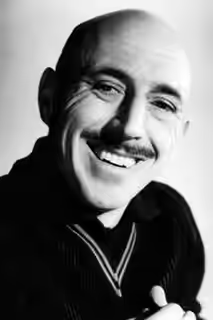
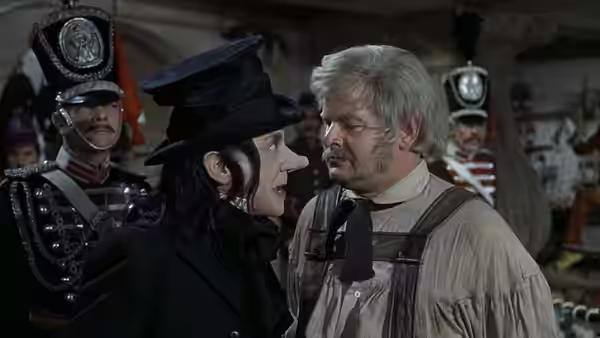
Then there is the Child Catcher. Robert Helpmann plays him on his toes: long black coat, top hat, a nose that arrives before he does, and a way of sniffing the air for children. He drives a cart with a cage hidden under a canopy of lollipops and calls out that the sweets are free. We were horrified by him as children and we are not over it. Watching again, the fear still works, because Helpmann never once plays it as a joke.

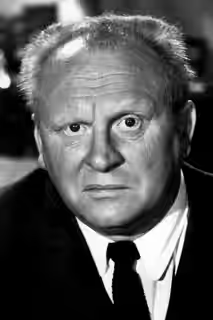
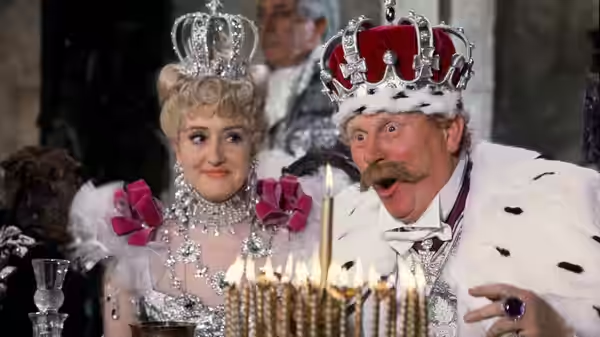
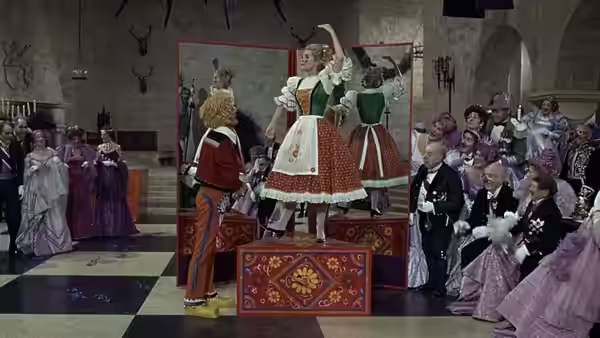
The trouble is Vulgaria, where the film spends its second half and where John Shirley’s editing stops cutting anything. Gert Fröbe and Anna Quayle, as the Baron and Baroness, play a couple who want each other dead and sing a duet about it, which is funny once and is repeated. Two spies (Alexander Doré and Bernard Spear) fall off things at regular intervals. Somewhere in the palace, watching two adults in silk repeat a slapstick routine we had seen twenty minutes before, we were bored, and then annoyed at being bored by a film that had made us cry an hour earlier.

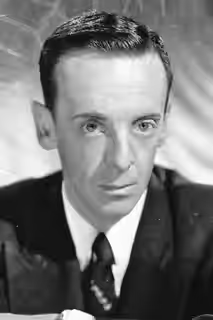
The romance is thin, too. Sally Ann Howes sings cleanly and looks the part, but the script gives Truly a motor car, a father and a name, and nothing to want. Lionel Jeffries, as Grandpa Potts, is better company; he plays him as a pantomime old soldier, big and warm. Benny Hill, as the Toymaker in a country where children are forbidden, is gentle and nearly unrecognisable, and his scenes are the quietest in the film.

Most critics now like it and one or two never did; we sit near the middle. Set beside Mary Poppins it is less disciplined and less sure of its story. Set beside most other family musicals of its era it has a real car, a real tune and a real villain, and children have gone on remembering all three. It runs 144 minutes and carries a U certificate, which is generous to the Child Catcher. Watch it at home with an interval at the beach picnic, and be ready to explain at bedtime that the man with the net was only pretending.
Critical consensus AI synthesised

66
Positive
4
Mixed
1
Negative
1

Most critics like it, and four of the six recommend it as a family film. The praise clusters on the songs, on the picture-book Edwardian setting, and on the mixture of fantasy and honest frights, with the Child Catcher singled out as the part that frightens children in the right way. Dick Van Dyke’s lead is noted, as are the colours and the choreography of the “Toot Sweet” factory number, which one later notice says look better than ever in restored form.

The reservations are about length, which even admirers find excessive, and about Mary Poppins, which hangs over nearly every review. Radio Times argues the comparison is unfair and that the film stands on its own merits; Variety, writing at the time of release, finds the film emotionally cold, with performances and musical talent that fall short of the earlier film’s warmth. The spread is wide, from outright rejection to firm enthusiasm, and the only rejection is the contemporaneous one; the later reviews are consistently kinder.

Empire
1 January 2000 · Neil Jeffries
85*

The critic finds it a justly celebrated, vivid and entertaining children’s film, despite its excessive length. They single out the iconic Child Catcher and the film’s mix of catchy songs, fantasy and genuine scares.

Read the full review →
Radio Times
★★★★ · Jeremy Aspinall
80

Aspinall says the musical was unfairly judged against Mary Poppins and finds it a splendid family film with its own merits. He praises its toe-tapping songs and picture-book Edwardian setting.

Read the full review →
Time Out
15 March 2012
70*

The blurb gives the film a positive recommendation for kids of all ages. It singles out Dick Van Dyke’s starring role and the film’s appeal to young viewers.

Read the full review →
The New York Times
3 November 1968
64*

The page content is unavailable, so the critic’s verdict cannot be established. No specific praise or complaint is visible in the supplied page.

Read the full review →
Variety
31 December 1967 · Variety Staff
25*

The review finds the film emotionally cold and lacking in genuine feeling between its characters. It faults the performances and musical talent for failing to recreate the warmth of Mary Poppins.

Read the full review →
HeyUGuys
18 October 2010 · David Sztypuljak
75*

The critic warmly recommends the film and its remastered Blu-ray release. They particularly praise the restored picture quality, vibrant colours and choreography in the “Toot Sweet” factory scene.

Read the full review →

Straight answers AI written, from our review

Is Chitty Chitty Bang Bang worth watching?
Chitty Chitty Bang Bang is worth watching for families who want a bright musical with a real car and a real villain, and we scored it 70. The first hour is close to lovely, with the Sherman brothers' songs and a lullaby that moved us more than we expected. The Vulgarian second half runs on twenty minutes too long.
How long is Chitty Chitty Bang Bang, and what is it rated?
Chitty Chitty Bang Bang runs 2h 24m. It is a family and adventure film.
Where can I watch Chitty Chitty Bang Bang in the Philippines?
Chitty Chitty Bang Bang is available to rent from Apple TV from ₱149.00. Availability is checked daily; the links above go straight to each service.
How does Chitty Chitty Bang Bang compare to Mary Poppins?
Chitty Chitty Bang Bang is looser and less sure of its story than Mary Poppins, which is the better film of the two. Both share Dick Van Dyke and the Sherman brothers' songs, but the earlier film is tighter and quietly about a father, while this one has a flying car and a Child Catcher children never forget. Pick Mary Poppins for discipline, this for spectacle and a scare.
Is Chitty Chitty Bang Bang based on a true story or a book?
Chitty Chitty Bang Bang is based on a novel by Ian Fleming, not a true story. Roald Dahl and Ken Hughes wrote the script, and the film builds an Edwardian fantasy around an inventor, his rebuilt racing car and a tyrant who wants it. You need not know the book to follow any of it.
What should I watch after Chitty Chitty Bang Bang?
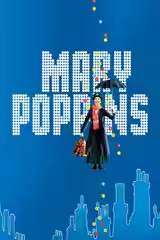
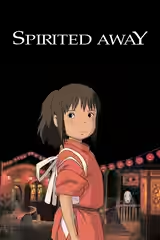
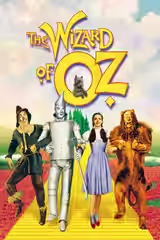
After Chitty Chitty Bang Bang, try Mary Poppins (1964, Fi1m 83): The film it was measured against; tighter, and Van Dyke attempts the accent. Then Spirited Away (2001, Fi1m 92): A child in a land run by grotesque adults, drawn with far more care; and The Wizard of Oz (1939, Fi1m 91): Another long trip to a painted kingdom, with a witch children still dream about.

Cast

If you liked this, try…

  1. The Railway Children (1970) · not on Fi1m yetLionel Jeffries directs, and finds the same Edwardian England without the tyrant or the flying car.

  2. Mary Poppins (1964, Fi1m 83)The film it was measured against; tighter, and Van Dyke attempts the accent.

  3. Spirited Away (2001, Fi1m 92)A child in a land run by grotesque adults, drawn with far more care.

  4. The Wizard of Oz (1939, Fi1m 91)Another long trip to a painted kingdom, with a witch children still dream about.

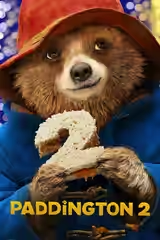
  5. Paddington 2 (2017, Fi1m 91)A modern family film that knows how long a joke should run.