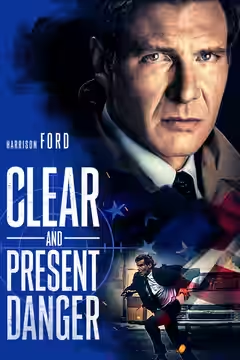
Phillip Noyce’s second Jack Ryan film is the best of the three: a patient, grown-up thriller about who in Washington gave the order, with one of the decade’s great ambushes at its centre. The jungle half is routine, and it runs long.
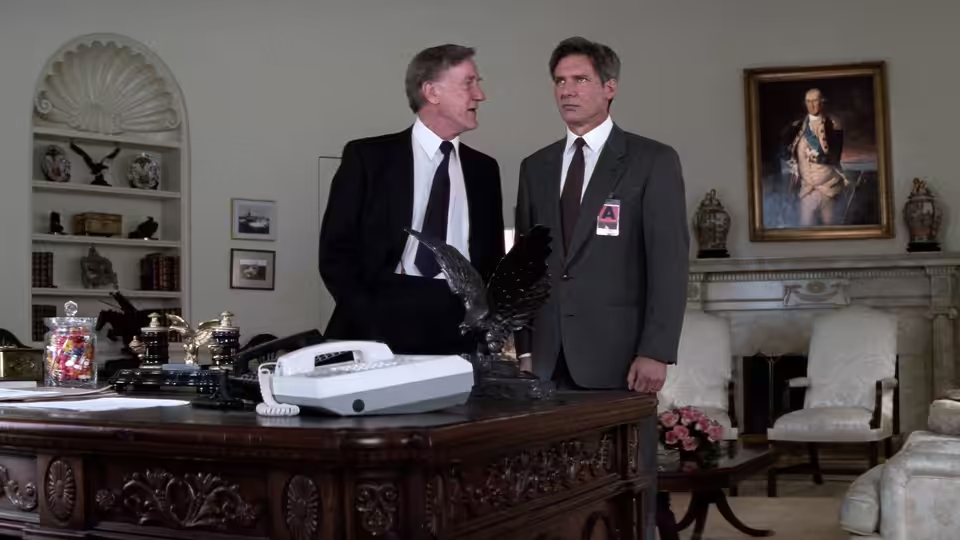
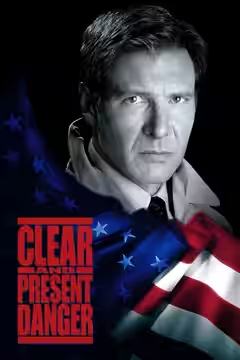
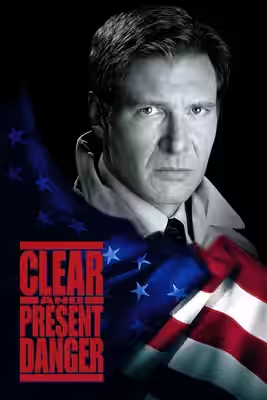
Phillip Noyce’s second Jack Ryan film, after Patriot Games (1992), is the one in which the villain is a memo. A president’s friend is murdered by a Colombian cartel, the president says something intemperate in the Oval Office, and two of his advisers take it as an order, run a small war on his behalf and make sure no paper connects him to it. Clear and Present Danger is a thriller about who gave the order, and it is patient, well acted and for long stretches properly tense. It is the best of the three Ryan films made by that point. It is also twenty minutes too long, and the half of it set in the jungle never matches the half set in offices.
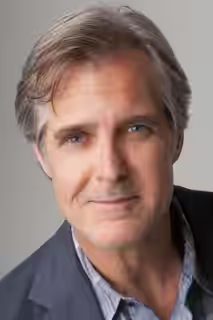
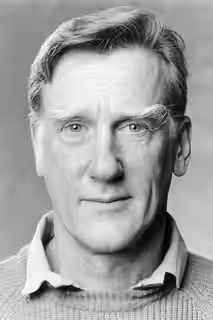
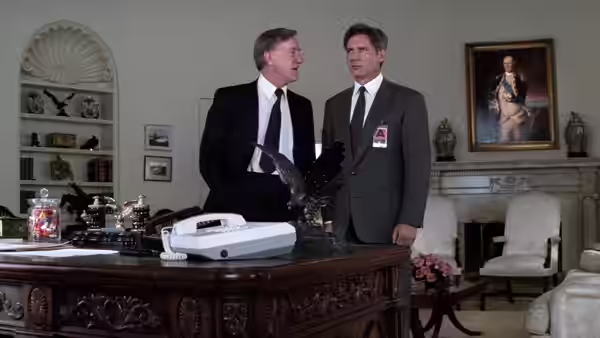
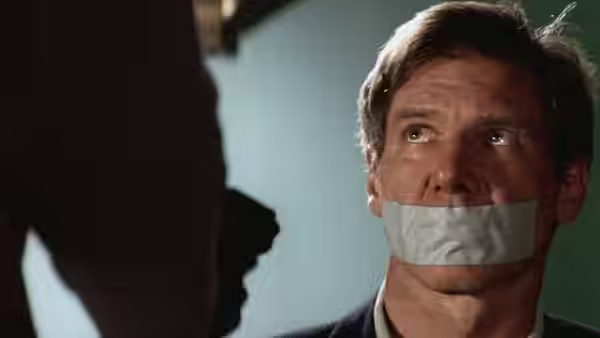
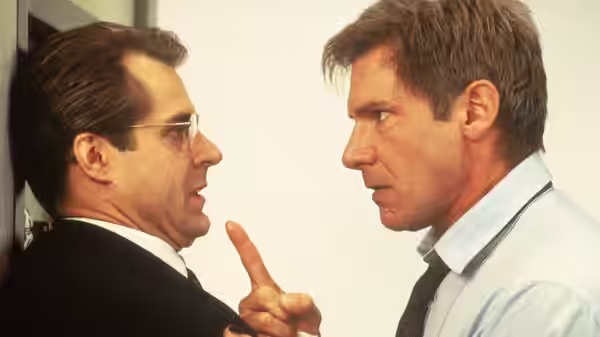
The screenplay, by Donald E. Stewart, Steven Zaillian and John Milius, takes Tom Clancy’s doorstop and keeps the part that matters: the argument. Its best scenes are quiet lies told in carpeted rooms. Harris Yulin’s Cutter, the National Security Advisor, has never said a sentence he could be quoted on. Henry Czerny’s Ritter, the CIA deputy who runs the operation, gives the film its best performance, a clever, tired man who despises Ryan’s decency and says so to his face in a voice he barely raises. Donald Moffat plays President Bennett as a genial uncle, which is exactly what makes him frightening. A scene in which two men race each other through a computer file is as gripping as anything in the film with a gun in it.
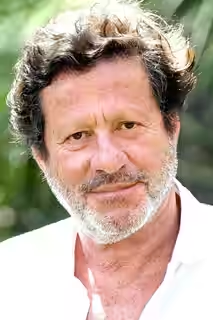
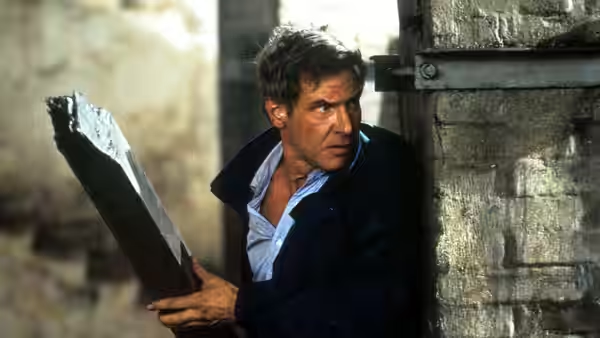
Ford plays Ryan as a man who is good at his job and poor at reading the consensus. Newly made acting Deputy Director while his superior is ill, he spends the first hour being lied to by people who have decided he is too honest to be told things. He is not an action hero here; when he does pick up a weapon he looks as if he resents it. What Ford does well is anger, slow and righteous and faintly embarrassed about itself, and the film builds towards letting him use it. Willem Dafoe’s Clark, running the soldiers on the ground, is the film’s other still point, and Noyce never tells us how much he knows. Joaquim de Almeida’s Cortez, the cartel’s intelligence man, is the only character on either side who understands all the others.
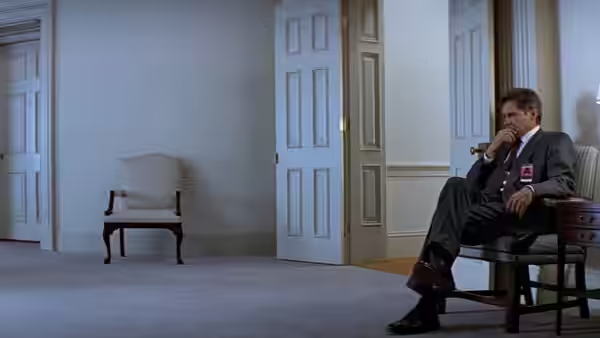
Donald McAlpine lights Washington hard and bright, flat daylight in the hearing room and white corridors at Langley, and Colombia in heat haze and dense green. Terence Marsh gives Ernesto Escobedo (Miguel Sandoval) a hacienda of horses and tiled courtyards, and the Americans rooms with nothing on the walls. Neil Travis cuts the two countries against each other, so that Ryan is asking Congress for money at the same moment Raymond Cruz’s Chavez is lying in the undergrowth spending it. James Horner scores the soldiers with military snare and low brass and mostly leaves the Washington scenes alone, which is the right call.
Then there is Bogotá. Ryan’s convoy of armoured cars is boxed into a narrow street in daylight, in traffic, and rockets come out of the windows above. Noyce shoots it from inside the cars, so we hear the rounds hit the glass before we see where they come from, and Travis holds the shots long enough that we always know where every vehicle is. We were frightened, properly frightened, in a way we had not expected from a studio thriller with a 12 certificate, because the sequence does the simplest thing well: it puts people we care about in a box and shows us they cannot get out. The film never climbs that high again, and does not try to.
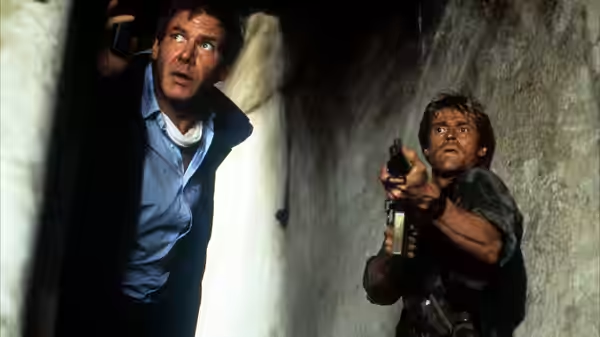
What follows in Colombia is competent and ordinary. Chavez and Captain Ramirez (Benjamin Bratt) move through the jungle with laser designators and night scopes, and the set pieces are the ones you would expect: a raid, an airstrike, a long walk. The final action sequence is routine, and the film we had been watching for two hours was not. Anne Archer and Thora Birch, as Ryan’s wife and daughter, return from Patriot Games with almost nothing to do, and at 141 minutes the film could have lost a jungle set piece without anyone noticing.
Against the series, this is the one that trusts its audience with an argument about power rather than a submarine or a bomb. Watch it at home, where the Washington scenes lose nothing and the jungle loses little, and keep an eye on Czerny, who is doing the most interesting work in it from the second row. It carries a 12.