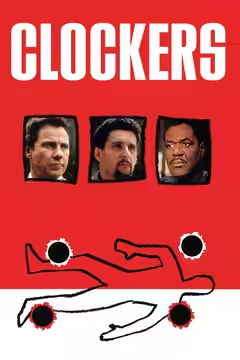
Spike Lee’s adaptation of Richard Price’s novel is a murder story that is not much bothered about the murder, and is better for it. Delroy Lindo, Mekhi Phifer and Malik Hassan Sayeed’s hot, grainy photography make the benches feel like a trap. It is heavy, and it knows it.
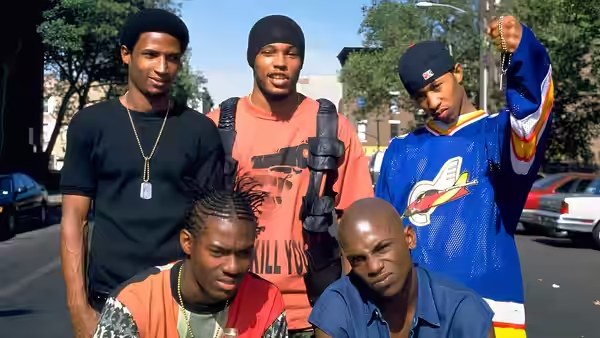
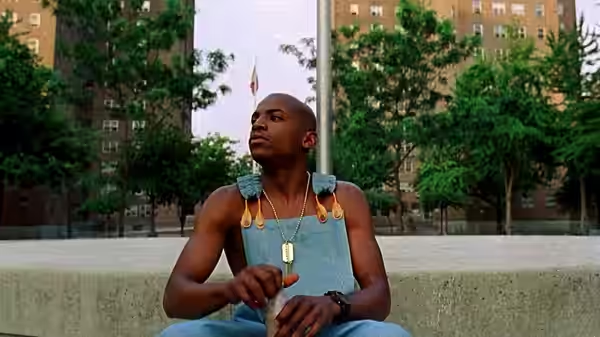
Spike Lee takes Richard Price’s novel about a crack corner in Brooklyn and, with Price sharing the screenplay credit, makes a murder story that is not much bothered about the murder. Strike (Mekhi Phifer) sells for Rodney Little (Delroy Lindo) from the benches in the middle of a housing project. A man is shot dead outside a fast-food restaurant. Strike’s brother Victor (Isaiah Washington), who works two jobs and has never been in trouble, walks into a police station and says he did it. Detective Rocco Klein (Harvey Keitel) does not believe a word of it and decides Strike is the one. That is the plot, and Lee comes back to it only when he has to. What holds him is the benches: who sits on them, who watches them, and what it costs to stand up and leave.
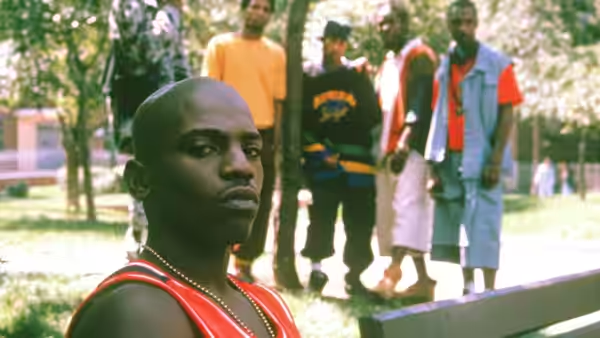
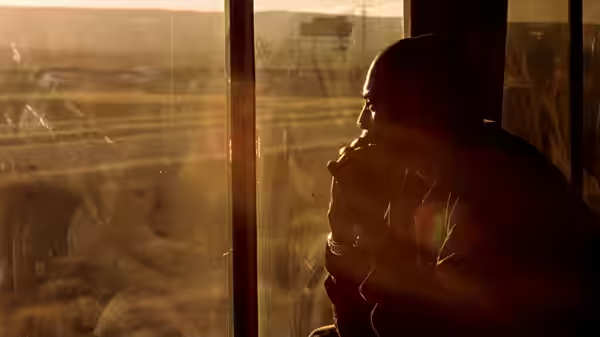
The film opens on photographs. Bodies on pavements, in cars, in stairwells, shot at close range, held on screen one after another under a slow soul song. We were shaken before a line had been spoken, and it took us a while to settle, which we suspect is the idea. Malik Hassan Sayeed then shoots the rest in a way we have rarely seen a city photographed: hot, grainy, the reds and yellows pushed until they bleed, faces lit from the side so that half of every conversation happens in shadow. The courtyard at dusk looks feverish. When the film moves into the station house with Klein and his partner Mazilli (John Turturro), the picture goes flat and greenish and you feel the temperature drop.
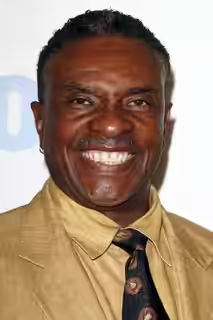
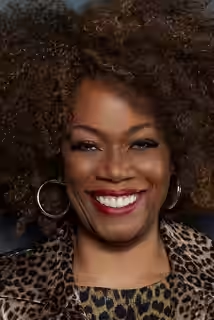
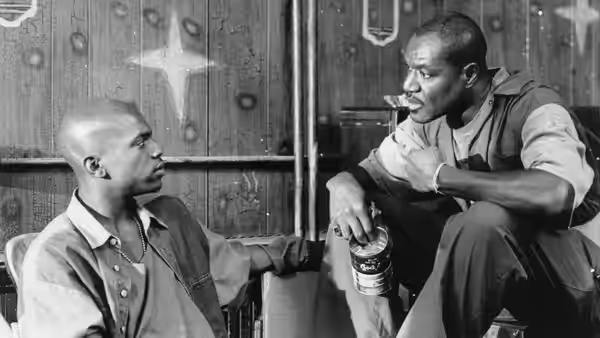
Phifer was new to this and it shows in the best way. His Strike has a bad stomach and sips chocolate milk to keep it down, and Phifer plays him as a boy who has learned to keep still because moving draws attention. Lindo is the film’s engine. Rodney runs a corner shop and a few benches and talks to his boys with an arm around the shoulder, and Lindo lets the warmth curdle so slowly you cannot say when it went. There is a scene in a car, Rodney and Strike, in which nothing is raised above conversation level, and we were frightened for Strike in a way the shootings never managed. Keitel gives Klein a tired, needling patience; he has decided how the world works and is waiting for it to agree. Turturro has less to do and does it with a shrug. Keith David, as André the housing cop who grew up here, and Regina Taylor, as Iris, a mother trying to keep her son Tyrone (Peewee Love) off the benches, supply the film’s conscience without making a speech about it.
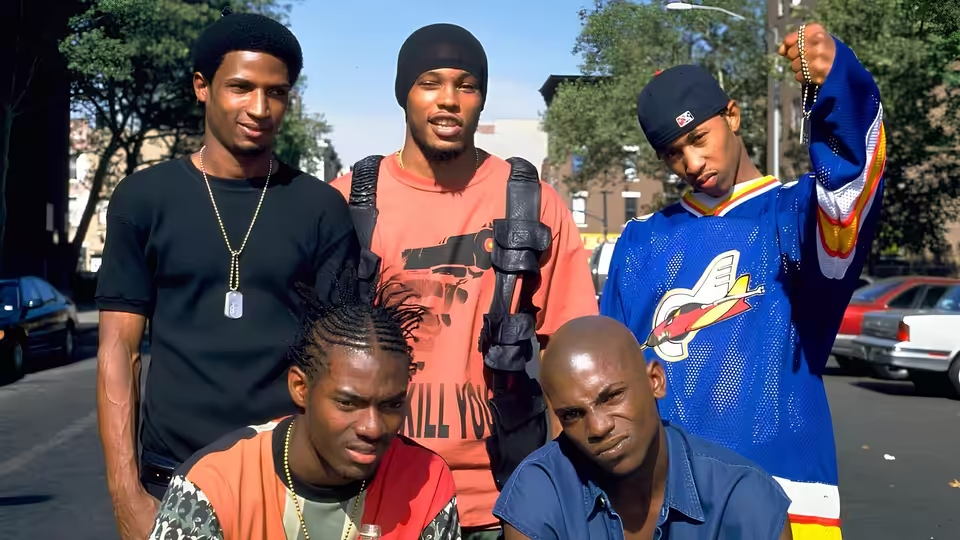
Andrew McAlpine puts the benches dead centre in a courtyard overlooked on every side, so that everything Strike does is done in front of an audience. Ruth E. Carter dresses the clockers in bright, oversized jackets that mark them out from a hundred yards, which is what the clothes are for. Terence Blanchard’s score is trumpet and strings and mourning, and it is often beautiful, and it is often too much; scenes that were already sad get told they are sad. Sam Pollard cuts the interrogations long and the street short, which is right, and stitches in repeated shots from odd angles that keep you slightly off balance.
Where the film stumbles is when Lee stops trusting the material. A video game in which the player guns down black youths, a small boy reciting lyrics about killing, the adverts on the walls: in each the director steps in front of his own story to make sure we have understood. We had. Price’s novel gave the detective and the dealer equal weight; Lee has tilted the film toward Strike, and the police half is thinner for it. Klein’s own life is barely there, so his pursuit of Strike reads as stubbornness rather than damage.
After Do the Right Thing (1989) and Malcolm X (1992), this is Lee working quieter, with the anger banked rather than blazing, and some critics missed the heat. We did not, much. Most reviews land roughly where we do, and the argument among them is over how much of Lee’s sermonising the film can carry. Our answer is nearly all of it, on the strength of Lindo, Phifer and that photography. It runs 128 minutes and carries an 18, and it earns the certificate less for the violence than for those photographs at the start, which you will not forget.