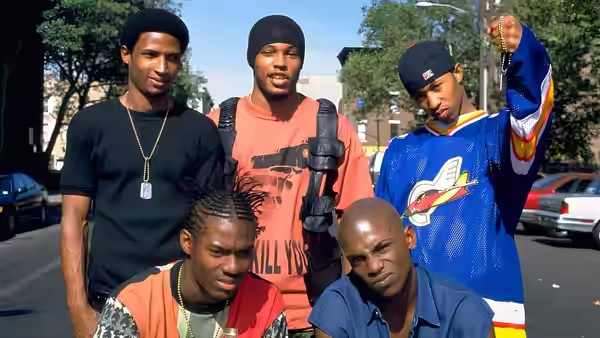
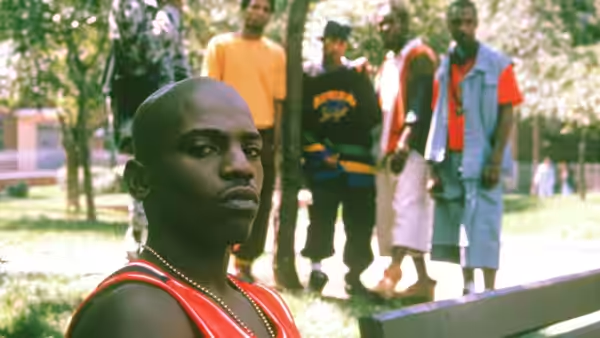
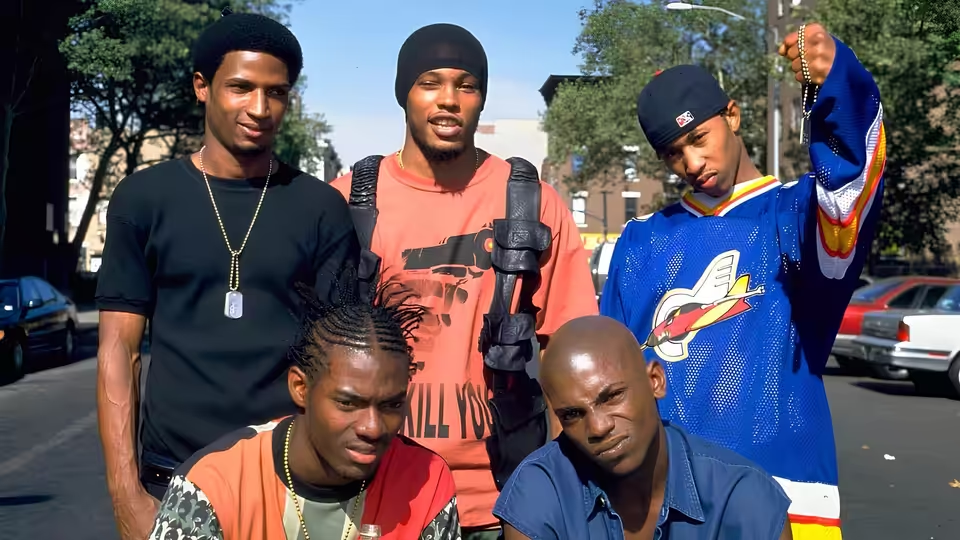
Five young men posing together on a city street, one raising his fist
Film review

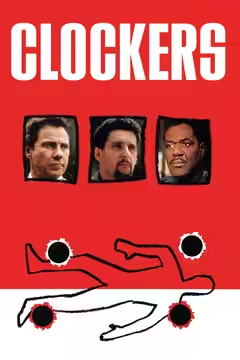
Clockers

1995 · Directed by Spike Lee · 2h 08m · CNC 16

In a sentenceA whodunit in which the detectives are the only people in Brooklyn who care who did it

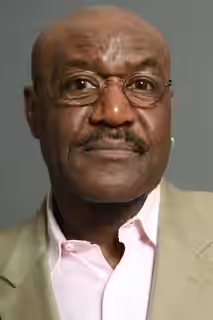
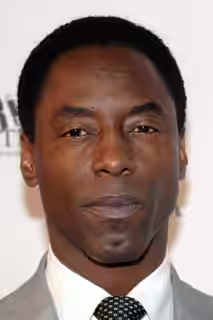
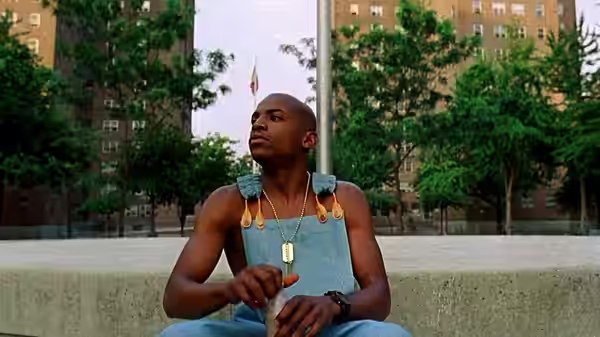
A housing project in Brooklyn. Ronald ‘Strike’ Dunham (Mekhi Phifer) sells crack from the benches in the courtyard for Rodney Little (Delroy Lindo), who runs a corner shop and talks to his boys like a youth worker. Strike has a bad stomach and drinks chocolate milk to settle it. Rodney tells him about a rival dealer who has been skimming, and shortly afterwards the man is shot dead outside a fast-food restaurant. Strike’s brother Victor (Isaiah Washington), who works two jobs and has never been in trouble, walks into a police station and confesses. Detective Rocco Klein (Harvey Keitel) and his partner Larry Mazilli (John Turturro) do not believe him. Klein decides Strike did it, and begins to lean on him, while André (Keith David), the housing cop who grew up here, watches Strike being watched by a boy named Tyrone (Peewee Love).

Fi1m review

Spike Lee’s adaptation of Richard Price’s novel is a murder story that is not much bothered about the murder, and is better for it. Delroy Lindo, Mekhi Phifer and Malik Hassan Sayeed’s hot, grainy photography make the benches feel like a trap. It is heavy, and it knows it.

Spike Lee takes Richard Price’s novel about a crack corner in Brooklyn and, with Price sharing the screenplay credit, makes a murder story that is not much bothered about the murder. Strike (Mekhi Phifer) sells for Rodney Little (Delroy Lindo) from the benches in the middle of a housing project. A man is shot dead outside a fast-food restaurant. Strike’s brother Victor (Isaiah Washington), who works two jobs and has never been in trouble, walks into a police station and says he did it. Detective Rocco Klein (Harvey Keitel) does not believe a word of it and decides Strike is the one. That is the plot, and Lee comes back to it only when he has to. What holds him is the benches: who sits on them, who watches them, and what it costs to stand up and leave.

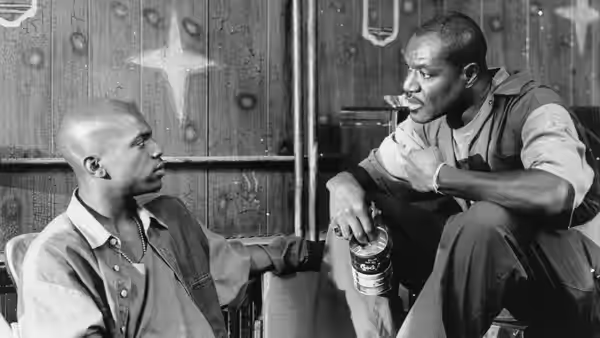
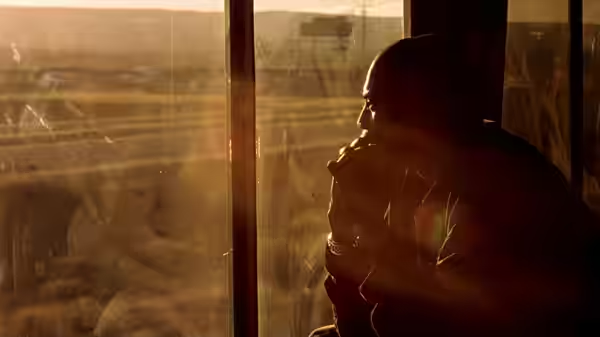
The film opens on photographs. Bodies on pavements, in cars, in stairwells, shot at close range, held on screen one after another under a slow soul song. We were shaken before a line had been spoken, and it took us a while to settle, which we suspect is the idea. Malik Hassan Sayeed then shoots the rest in a way we have rarely seen a city photographed: hot, grainy, the reds and yellows pushed until they bleed, faces lit from the side so that half of every conversation happens in shadow. The courtyard at dusk looks feverish. When the film moves into the station house with Klein and his partner Mazilli (John Turturro), the picture goes flat and greenish and you feel the temperature drop.

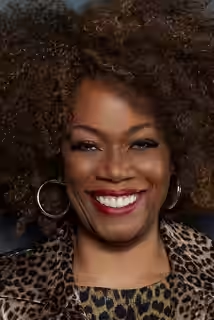
Phifer was new to this and it shows in the best way. His Strike has a bad stomach and sips chocolate milk to keep it down, and Phifer plays him as a boy who has learned to keep still because moving draws attention. Lindo is the film’s engine. Rodney runs a corner shop and a few benches and talks to his boys with an arm around the shoulder, and Lindo lets the warmth curdle so slowly you cannot say when it went. There is a scene in a car, Rodney and Strike, in which nothing is raised above conversation level, and we were frightened for Strike in a way the shootings never managed. Keitel gives Klein a tired, needling patience; he has decided how the world works and is waiting for it to agree. Turturro has less to do and does it with a shrug. Keith David, as André the housing cop who grew up here, and Regina Taylor, as Iris, a mother trying to keep her son Tyrone (Peewee Love) off the benches, supply the film’s conscience without making a speech about it.

Andrew McAlpine puts the benches dead centre in a courtyard overlooked on every side, so that everything Strike does is done in front of an audience. Ruth E. Carter dresses the clockers in bright, oversized jackets that mark them out from a hundred yards, which is what the clothes are for. Terence Blanchard’s score is trumpet and strings and mourning, and it is often beautiful, and it is often too much; scenes that were already sad get told they are sad. Sam Pollard cuts the interrogations long and the street short, which is right, and stitches in repeated shots from odd angles that keep you slightly off balance.

Where the film stumbles is when Lee stops trusting the material. A video game in which the player guns down black youths, a small boy reciting lyrics about killing, the adverts on the walls: in each the director steps in front of his own story to make sure we have understood. We had. Price’s novel gave the detective and the dealer equal weight; Lee has tilted the film toward Strike, and the police half is thinner for it. Klein’s own life is barely there, so his pursuit of Strike reads as stubbornness rather than damage.

After Do the Right Thing (1989) and Malcolm X (1992), this is Lee working quieter, with the anger banked rather than blazing, and some critics missed the heat. We did not, much. Most reviews land roughly where we do, and the argument among them is over how much of Lee’s sermonising the film can carry. Our answer is nearly all of it, on the strength of Lindo, Phifer and that photography. It runs 128 minutes and carries an 18, and it earns the certificate less for the violence than for those photographs at the start, which you will not forget.

Critical consensus AI synthesised

70
Positive
11
Mixed
2
Negative
1

Most critics take to Clockers, and they praise the same things. Nearly all read it as a mournful sociological study rather than a conventional crime thriller, and several credit it with deglamorising the drug trade where other films prettified it. The performances draw consistent approval, Mekhi Phifer, Delroy Lindo and Harvey Keitel most often, and Malik Hassan Sayeed’s cinematography is singled out again and again: high-contrast, sweaty, muted in colour, with mixed film stocks that some find bold and others overstyled.

The reservations are scattered. A few find the dialogue and score heavy, or feel the film comes apart as a thriller even while it holds as a portrait. The Independent notes an imbalance after Lee’s rewrite of Price’s script and misses the director’s usual anger. The spread is narrow, with most reviews landing between good and very good; the lone dissenter is Variety, which calls the film pretentious and thinks Lee’s editorialising undercuts its insider feel.

Slant Magazine
7 February 2020 · Jaime N. Christley
85*

The review praises Clockers as one of the best filmed-on-location New York crime movies, highlighting its nuanced, ambivalent portrayal of pressures on characters in the projects and its bold stylistic flourishes like mixed film stocks and a powerful centerpiece sequence. It commends the Blu-ray transfer for preserving the film's tricky aesthetic while noting the director's complex view of policing and justice.

Read the full review →
RogerEbert.com
13 September 1995 · Roger Ebert
80*

Ebert finds the film a thoughtful exploration of black-on-black crime and the drug trade's toll rather than a despairing shriek. He singles out the way Lee and Price illuminate characters' lives through the murder mystery.

Read the full review →
The AV Club
12 June 2015 · Jesse Hassenger
80*

The critic views Clockers as a gripping, mournful sociological case study and morality play about limited choices in a Brooklyn neighborhood, rather than a straightforward crime drama. They single out the strong performances (especially from Mekhi Phifer, Delroy Lindo, and Harvey Keitel) and the high-contrast hyperreal cinematography for praise, while noting the heavy dialogue and score as minor drawbacks.

Read the full review →
Los Angeles Times
13 September 1995 · Kenneth Turan
75*

Turan calls it a disturbing portrait of a cold, pitiless world and praises Lee's accomplished control of plot, actors and imagery. He singles out the fierce frontal attacks on drugs and shootings that have lasting impact.

Read the full review →
The New York Times
13 September 1995 · Janet Maslin
75*

Maslin praises the film's mournful, epic vision that rises above its grim setting and its hard-earned wisdom. She highlights the effective collaboration between Price and Lee despite their stylistic differences.

Read the full review →
The New Yorker
11 September 1995 · Anthony Lane
70*

Lane welcomes Lee's return to exploring the streets with solid, ambitious material that gathers reports from the front line. He notes the film's skill in creating profitable confusion around its clouded murder mystery.

Read the full review →

Straight answers AI written, from our review

Is Clockers worth watching?
Clockers is worth watching for anyone who wants a crime drama more interested in the people on the benches than in who pulled the trigger, and we scored it 74. Delroy Lindo, Mekhi Phifer and Malik Hassan Sayeed's hot, grainy photography carry it; Spike Lee's occasional sermonising and a thin police half hold it back.
How long is Clockers, and what is it rated?
Clockers runs 2h 08m and is rated 16 by the CNC in France. It is a crime and drama film.
Where can I watch Clockers in France?
Clockers is available to rent from Amazon Prime Video and Apple TV from €2.99. Availability is checked daily; the links above go straight to each service.
How violent or frightening is Clockers, and is it suitable for children?
Clockers carries an 18 certificate and is not suitable for children. The violence itself is sparing, but it opens on a run of close-range photographs of shooting victims that shook us before a line was spoken, and the threat hanging over Strike is more frightening than the gunfire. Adults and older teenagers with strong stomachs only.
How does Clockers compare to La Haine?
Clockers is the heavier and slower of the two, a murder story that drifts away from its murder to study a Brooklyn housing project, while La Haine is angrier, funnier and tighter, following three friends across one day on a Paris estate. Choose La Haine for momentum and the friendship; choose Clockers for Lindo, Phifer and the photography.
Is Clockers based on a true story or a book?
Clockers is based on Richard Price's novel of the same name, not on a true story, and Price shares the screenplay credit with Spike Lee. The novel gave the detective and the dealer equal weight; the film tilts toward Strike, leaving the police side thinner. You do not need to know the book to follow it.
What should I watch after Clockers?
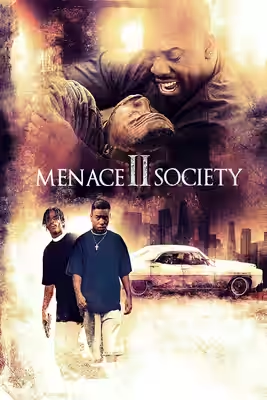
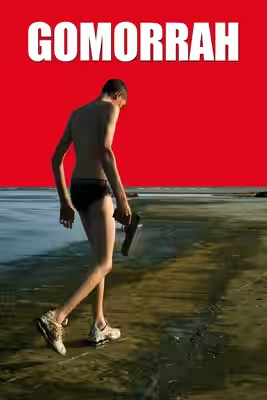
After Clockers, try La Haine (1995, Fi1m 90): The same year, a Paris estate, three friends and a gun nobody should have. Then Menace II Society (1993, Fi1m 82): The film Lee is answering: faster, angrier, and far less sure anyone gets out; and Gomorrah (2008, Fi1m 84): Naples instead of Brooklyn; the drug trade shown as a job, and a dull, lethal one.

Cast

If you liked this, try…

  1. The Wire (2002) · not reviewed yetRichard Price wrote for it; the corners, the police and the same patient anger.

  2. La Haine (1995, Fi1m 90)The same year, a Paris estate, three friends and a gun nobody should have.

  3. Killer of Sheep (1977) · not on Fi1m yetWatts in black and white; a man too tired to be angry, filmed with love.

  4. Menace II Society (1993, Fi1m 82)The film Lee is answering: faster, angrier, and far less sure anyone gets out.

  5. Gomorrah (2008, Fi1m 84)Naples instead of Brooklyn; the drug trade shown as a job, and a dull, lethal one.

Free account

Know what to watch tonight

Two lists that know where things are streaming, collections you can share, your own score beside ours, and Discover that remembers what you have seen.

  • Want to see, sorted by what is streaming now
  • Seen, with your score out of ten
  • No adverts, ever