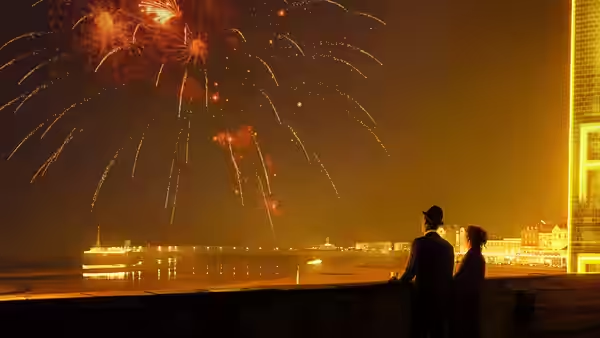
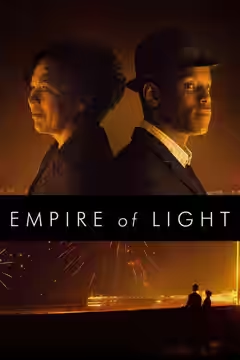
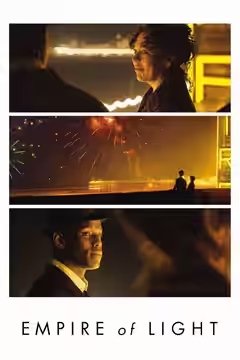
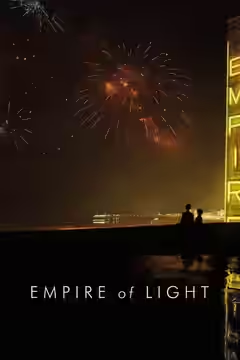
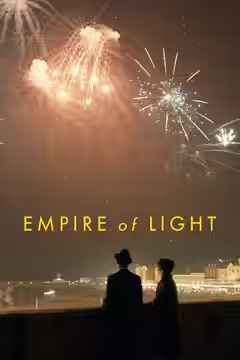
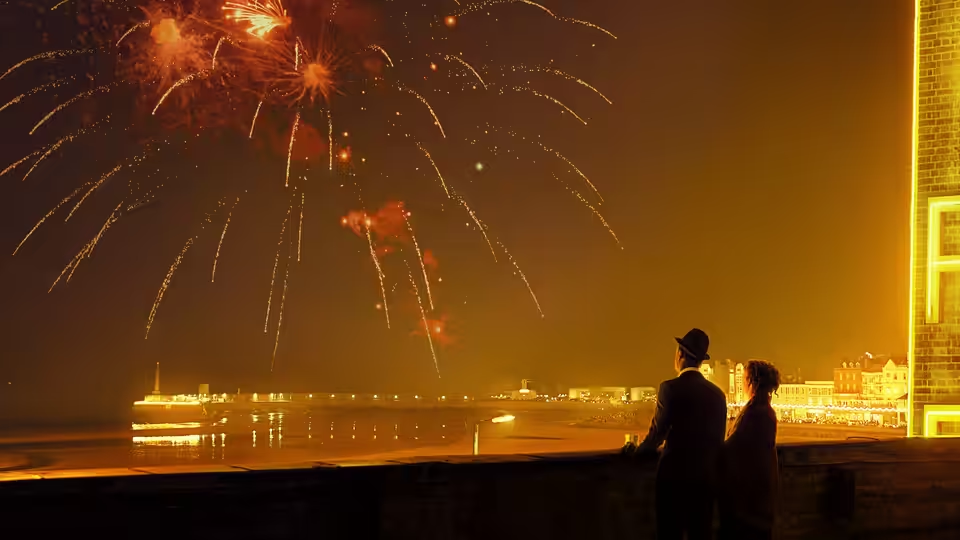
Two figures watch fireworks over the waterfront from a dark balcony
Film review

Empire of Light

2022 · Directed by Sam Mendes · 1h 55m · PISF 16

In a sentenceThe cinema is beautifully looked after; the people could use some of that attention

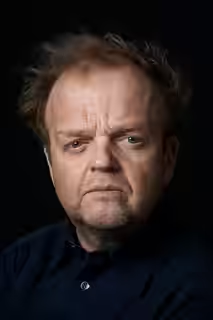
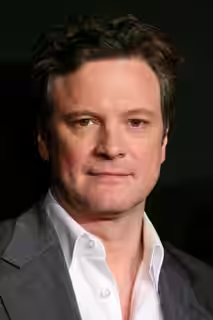
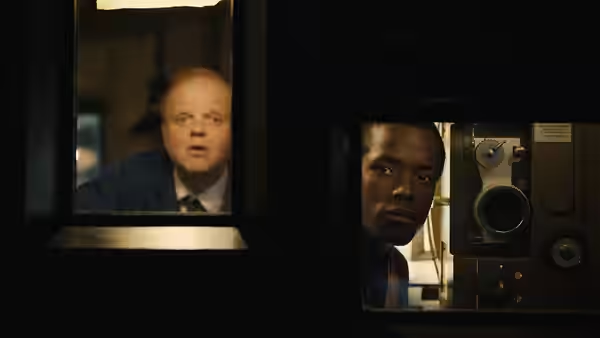
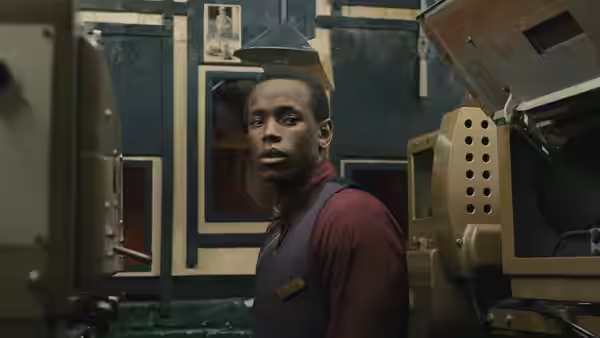
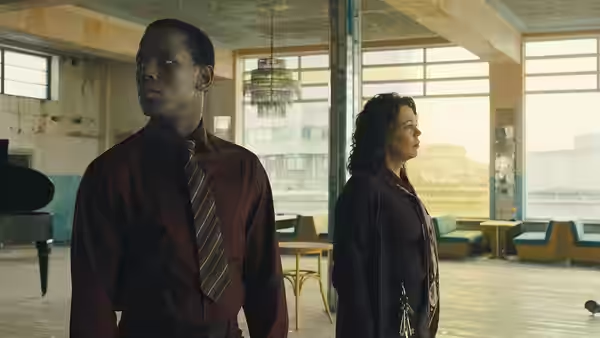
Hilary (Olivia Colman) and Stephen (Micheal Ward) grow close amid the working life of a cinema. Their developing romance offers companionship, but difficulties involving mental health and racism complicate their connection. Around them are Norman (Toby Jones), Donald Ellis (Colin Firth) and Neil (Tom Brooke), as the story follows the people behind the screenings. The staff find company in one another, with the cinema providing a shared workplace and a meeting place. Hilary and Stephen try to make room for affection alongside the troubles that accompany them to work.

Plays from YouTube when you press play; nothing loads from them until then.

Fi1m review

Fine performances and warm images cannot rescue Sam Mendes’s muddled cinema romance. Olivia Colman and Micheal Ward make the affection believable, but the script keeps interrupting them to announce another subject it cannot properly explore.

Sam Mendes asks Empire of Light to be a romance, a drama about mental health and racism, and a tribute to the people who keep a cinema running. That is a great deal to fit into 115 minutes, particularly when the writing keeps changing its mind about what needs attention. It is a disappointing film with fine performances and considerable care behind the camera. Mendes, who also wrote the screenplay, gives his actors feelings to explain that they have already made clear.

Olivia Colman gives Hilary an emotional life that survives some awkward writing. Her vulnerability never feels entirely comfortable, which is right: the performance resists making unhappiness seem sweet or convenient. The affection between Hilary and Stephen is convincing because Micheal Ward makes his attention towards her feel so unforced. Ward brings enough warmth to suggest why this connection matters without having to insist on its importance. For a while, their company is enough.

The script is less patient with them. Racism, mental illness and romance each need sustained attention, but Mendes repeatedly moves between them before the people involved have become sufficiently distinct. The trouble is particularly damaging to the relationship, which has to provide reassurance while the film is busy introducing further distress. There is too little room for curiosity, disagreement or the ordinary business of getting to know somebody. The dialogue often tells us what these people represent when we want to know what they think.

Roger Deakins’s warm lighting gives the cinema an appeal that needs no explanation. Mark Tildesley’s production design is equally persuasive, with its attention to the building’s architecture and period detail making it somewhere we want to spend time. We were briefly delighted by the rooftop fireworks; the colour and light give us a pleasure the earnest dialogue rarely permits. The polish does sometimes work against the intimacy: we notice the care taken over an image before we register the people within it. Still, the affection for the place is clear, and the staff’s camaraderie gives it some everyday life.

Lee Smith’s editing cannot make the changes of subject feel like a developing story. Individual passages have feeling, but too often we seem to be starting again rather than learning more about Hilary and Stephen. Trent Reznor and Atticus Ross supply music whose gentleness is welcome, although it adds to the pressure to find the film touching. Neither the cutting nor the score can repair a screenplay that keeps explaining why we ought to care.

There is nothing wrong with a sentimental romance, and no requirement for a film about cinemas to apologise for liking them. The difficulty comes when affection for the building is expected to make its occupants’ troubles feel adequately understood. Mendes has performers capable of making a quieter, less insistent film worth watching, and their warmth makes this missed opportunity frustrating. Choose it for Colman and Ward only if patience with the script comes included.

Critical consensus AI synthesised

56
Positive
10
Mixed
10
Negative
8

The consensus on Empire of Light is mixed, with firmer agreement on the performances and visual craft than on the story. Olivia Colman draws praise across much of the critical divide, while Micheal Ward’s warmth and the pair’s chemistry also win approval. Roger Deakins’ cinematography and the detailed cinema setting are recurring strengths, including among critics who find the drama unconvincing. Admirers respond to its tenderness and affection for cinema staff.

The spread is wide: some reviews find the film moving and humane; others find it sentimental, contrived and overstuffed. Reservations cluster around storylines that fail to cohere and uneven treatment of racism and mental health. Even those subjects divide critics: Eye for Film praises the sensitive portrayal of schizophrenia, while The Wrap faults the handling of mental health and racism. Several reviews question whether the film’s affection for cinema produces the emotional force it seeks.

The Guardian
12 September 2022 · festival review · Peter Bradshaw
85*

Bradshaw finds the film a poignant, humane revival of the cinematic love-letter genre. He particularly praises Olivia Colman’s performance and Roger Deakins’ cinematography.

Read the full review →
Evening Standard
5 January 2023 · ★★★★ · Luke Hearfield
80

Hearfield finds the film touching and heartwarming, though its script handles racism and mental health unevenly. He praises the electric chemistry between Olivia Colman and Micheal Ward, along with the film’s technical craft.

Read the full review →
Radio Times
★★★★ · Stephen Applebaum
80

The review presents Mendes’s film as an ambitious, personal drama. It singles out Micheal Ward’s performance for warmth and sensitivity.

Read the full review →
Variety
3 September 2022 · festival review · Peter Debruge
75*

Debruge finds the film a thoughtful, warmly positive tribute to the people who bring a cinema to life, even as it tackles social issues and mental health. He especially praises Olivia Colman’s performance, while noting that the polished cinematography can feel less intimate than the story needs.

Read the full review →
Screen Daily
12 September 2022 · festival review · Fionnuala Halligan
70*

The review presents the film as a sentimental, positive ode to cinema. It singles out Olivia Colman and Micheal Ward for shining in their roles.

Read the full review →
The AV Club
6 December 2022 · B- · Jack Smart
70

The review finds the film visually evocative but uneven, with too many storylines that fail to cohere. It praises Olivia Colman’s performance and singles out Roger Deakins’ warm lighting and the theater’s striking production design.

Read the full review →

Straight answers AI written, from our review

Is Empire of Light worth watching?
Empire of Light is worth considering for Olivia Colman and Micheal Ward’s performances, but we find it disappointing and score it 54 out of 100. Their believable affection and Roger Deakins’s warm lighting offer pleasures, though the script keeps interrupting the romance to introduce subjects it does not explore properly.
How long is Empire of Light, and what is it rated?
Empire of Light runs 1h 55m and is rated 16 by the PISF in Poland. It is a drama and romance film.
Where can I watch Empire of Light in Poland?
Empire of Light is streaming on Disney+ in Poland. Availability is checked daily; the links above go straight to each service.
How violent or frightening is Empire of Light, and is it suitable for children?
Empire of Light carries a UK 15 certificate, so it is not suitable for children under 15. Its romance involves mental health difficulties and racism, making emotional distress an important consideration for sensitive viewers; we cannot give a more specific account of violence or frightening content from the certificate and themes alone.
How does Empire of Light compare to Brief Encounter?
Empire of Light is the less satisfying romance beside Brief Encounter, which we recommend for restrained performances that make ordinary meetings feel painfully consequential. Colman and Ward make their affection convincing, but their film repeatedly interrupts the relationship with underdeveloped themes; Brief Encounter gives falling in love more emotional force, despite Alec being less fully drawn.
What should I watch after Empire of Light?
After Empire of Light, try Brief Encounter (1945, Fi1m 90): For restrained performances that make ordinary meetings feel painfully consequential. Then Cinema Paradiso (1988, Fi1m 84): Another cherished cinema, with a clearer connection between the building and its people; and The Last Picture Show (1971, Fi1m 89): A cinema and its community, observed with more curiosity about awkward lives.

Cast

Awards

BAFTA Film Awards, 2023

Nominated
Best British Film

If you liked this, try…

  1. Brief Encounter (1945, Fi1m 90)For restrained performances that make ordinary meetings feel painfully consequential.

  2. Cinema Paradiso (1988, Fi1m 84)Another cherished cinema, with a clearer connection between the building and its people.

  3. The Last Picture Show (1971, Fi1m 89)A cinema and its community, observed with more curiosity about awkward lives.

  4. Ali: Fear Eats the Soul (1974, Fi1m 88)A tentative romance faces racial prejudice with far greater patience and precision.

  5. The Lunchbox (2013, Fi1m 75)Loneliness and unexpected companionship, developed through small exchanges rather than insistent speeches.