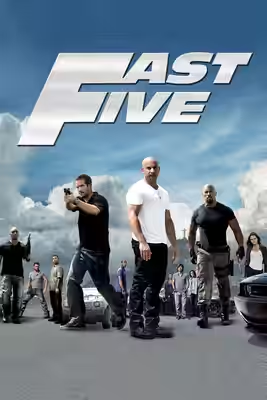
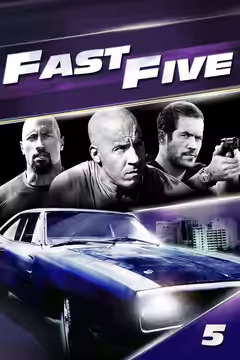
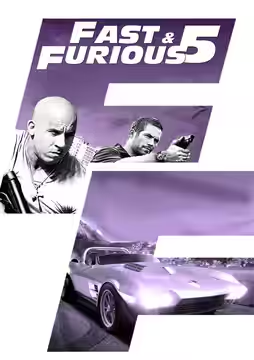
Justin Lin turns a street-racing series into a heist film, puts Dwayne Johnson in the middle of it and finds its best shape yet. Too long, with a cardboard plot, but the last half hour earns the evening.
Five films in, the street-racing series has stopped being about street racing. Justin Lin, directing his third, has made a heist film instead: a crew, a target, a vault, and Rio to drive it through. Fast Five is loud, long and not clever, and it is the first of these films we would recommend to someone who does not already own a lowered Honda. Most of that is down to the last half hour, and a good deal of the rest to Dwayne Johnson.
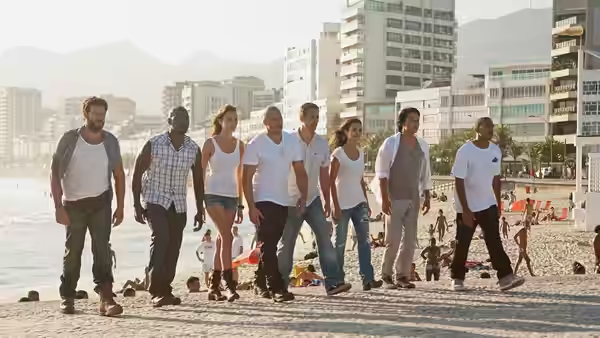
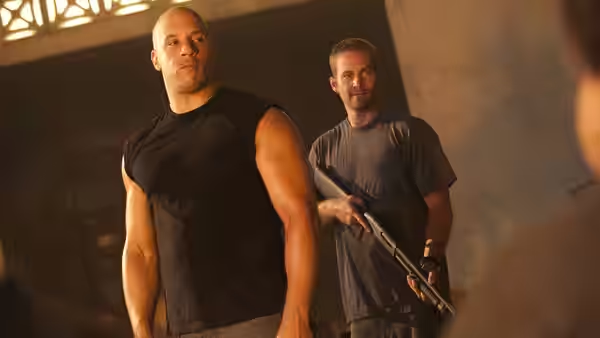
It opens well. A prison bus carrying Dominic Toretto (Vin Diesel) is run off a desert road by Brian O’Conner (Paul Walker) and Mia Toretto (Jordana Brewster). Then Rio, and a job: a train to be hijacked, which the crew does at speed. Chris Morgan’s screenplay knows what the audience has paid for and gets to it inside twenty minutes. Stephen F. Windon shoots the city from helicopters, over and over, the statue on the hill, the bay, the favelas climbing the slope, and after the third pass we had the geography and did not need the fourth.
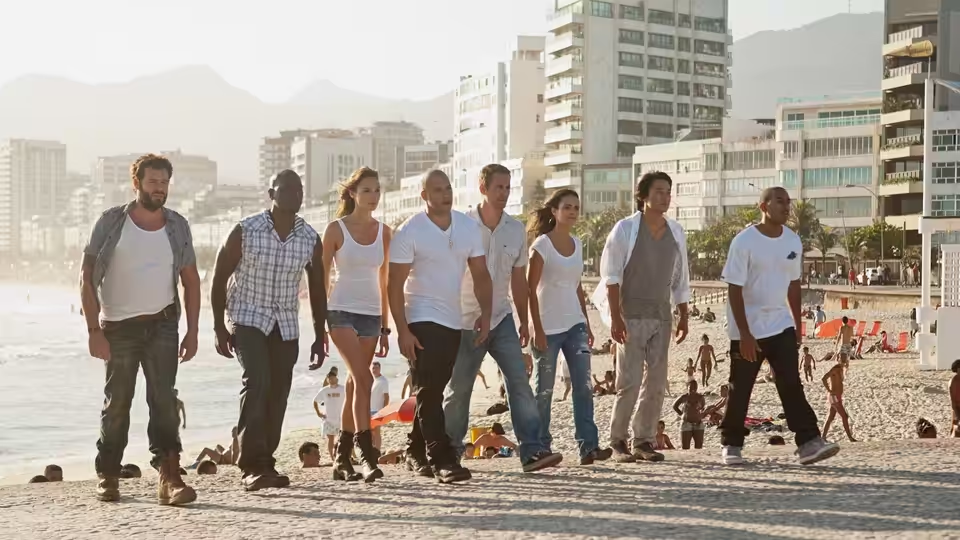
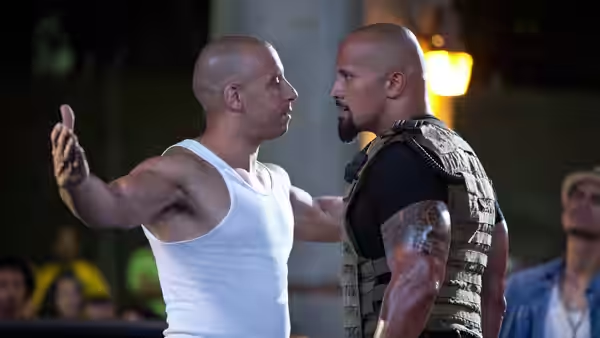
Johnson arrives as Luke Hobbs, a federal agent sent to bring the Torettos in, and the film changes temperature. He wears a goatee and a bulletproof vest and appears to have been oiled before every take; Sanja Milkovic Hays puts him in tactical black against Diesel’s white vests, so that even standing still they look like opposing teams. When the two finally go at each other, in a warehouse Peter Wenham has furnished with enough glass and plaster to break, it is two large men throwing each other through the scenery, and we enjoyed it more than we are comfortable admitting. There is no grace in it, and the film does not pretend there is.
The crew is drawn from the earlier films, and Lin uses them as a comedy troupe. Tyrese Gibson’s Roman Pearce talks, Ludacris’s Tej Parker rolls his eyes at him, Sung Kang’s Han Lue eats and watches Gal Gadot’s Gisele Yashar, and Tego Calderón and Don Omar bicker in Spanish about whose turn it is. None of it is sharp, but the actors like each other and it shows. Joaquim de Almeida’s Reyes, who runs the favelas by handing out money and taking it back, is a dull villain, soft voice and expensive shirt, and the film seems to know it, because Hobbs does most of the threatening.
The middle hour is the problem. Morgan’s plot needs the crew to find the money, lose it, find it again and plan the job, and the planning means a lot of standing around a table while Tej explains a palm scanner and Roman makes a joke. A race against a traffic camera exists only because these films must have a race in them. At 131 minutes it is twenty minutes too long, and we could tell you which twenty. Brian Tyler’s score pushes brass and drums under every scene, including the ones where people are only talking, so that when the real chase starts the music has nowhere higher to go.
Then the vault. Two cars, a safe the size of a garden shed, most of the police in Rio behind it, and the three editors, Fred Raskin, Christian Wagner and Kelly Matsumoto, cut it so we always know where the safe is, which way it is swinging and what it is about to hit. We laughed out loud when it took a corner and a bank’s front wall with it, and we were laughing with the film, not at it; the sequence was built by people who knew exactly how stupid it was and how to make that land. It also flattens a good deal of a poor city for our amusement, and the film never notices. We noticed, and then the safe hit a bus.
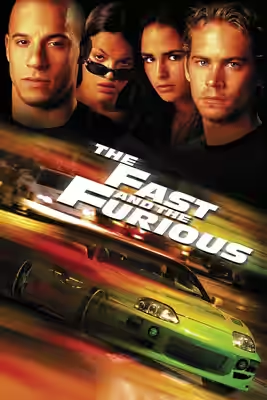
The first film, in 2001, was a small story about an undercover cop and a man who loved his car, with its plot borrowed from Point Break. This is a big story about nothing in particular, and it is much more fun. Watch it with the sound up and somebody who will not ask where the police helicopters went. It carries a 12A; the fights are long and nobody bleeds much.