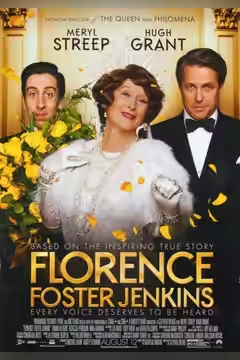
Stephen Frears’s comedy about the worst singer in New York is kind, handsome and expertly acted, with Hugh Grant quietly superb as her husband. It is also softer than its story, and it never quite decides whether we are allowed to laugh.
Stephen Frears tells the story of Florence Foster Jenkins, a New York heiress who in 1944 believed she was a great soprano and was, by any measure the ear can apply, the worst singer in the city. Everyone around her knew. Her husband, St. Clair Bayfield, spent his days making sure she never found out. Nicholas Martin’s script treats this as a love story with a comedy inside it, and Frears directs it with warmth, tact and not much nerve. It is a pleasant 110 minutes about a story that is not pleasant, and the gap shows.
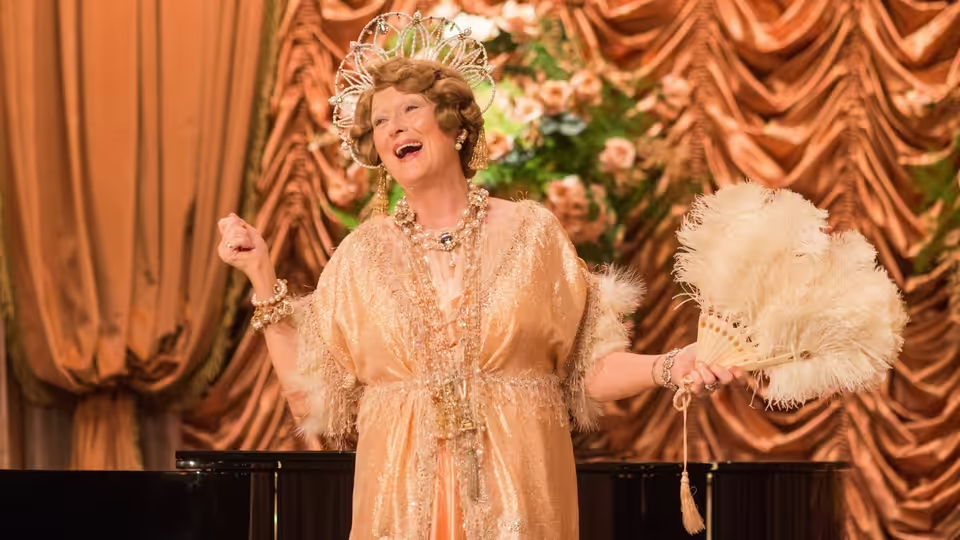
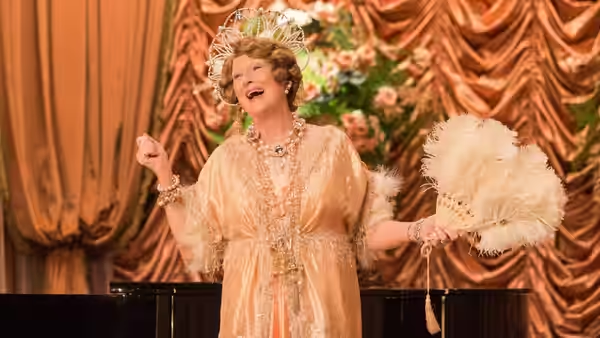
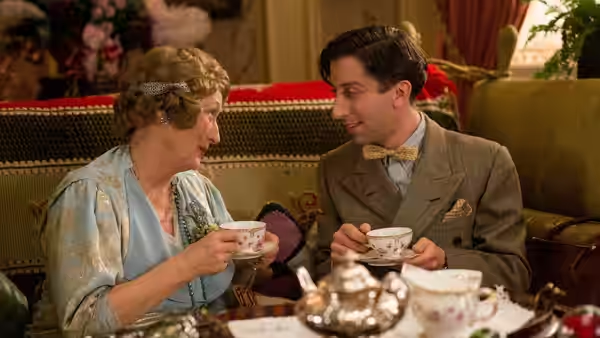
The singing is the attraction and Streep delivers it. The first lesson is the film’s best scene: Carlo Edwards (David Haig) warms her up with scales, she takes a breath, and what comes out is a quarter of a tone flat and stays there, climbing and wandering as if the tune were a staircase in the dark. Streep sings badly with great control. She never tips into parody; the sound is effort, not mockery, and that is what makes it funny. Valerio Bonelli cuts to Simon Helberg at the piano on every wrong note, and Helberg’s face goes through surprise, horror and something close to grief in under a minute. We laughed out loud, more than once, and then felt a little ashamed, because the woman making the noise is so plainly happy.
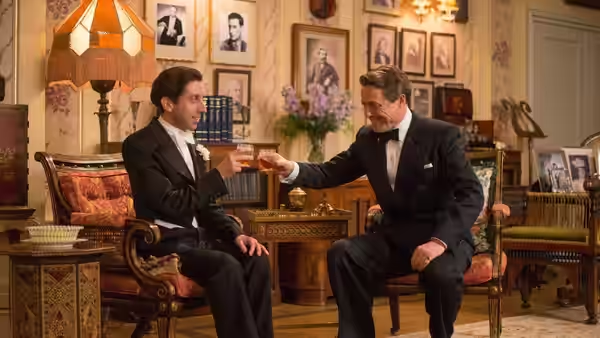
Grant is the reason to see it. His St. Clair is a failed actor who has found his best part, and he plays it with a flattering smile that never quite relaxes. Early on he puts Florence to bed, reads to her, waits for her breathing to slow, then takes the lift down and a cab across town to a second flat where Kathleen (Rebecca Ferguson) has dinner waiting. Grant plays the devotion and the deceit at the same time and asks for no credit for either. It is quiet work and it moved us more than the louder scenes did. Ferguson, meanwhile, is handed a character who exists to wait in doorways, and does what she can with it.
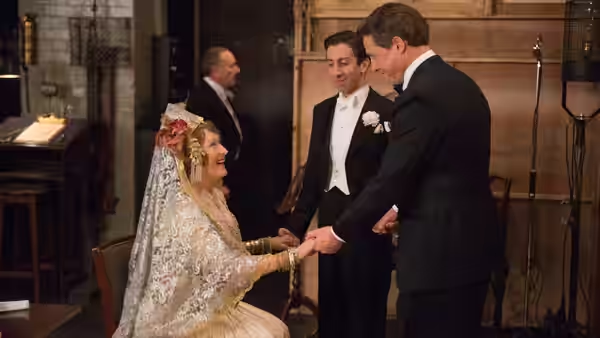
Frears has surrounded them with people who know what they are doing. Danny Cohen lights the flats in cream and dull gold, so every room looks like the inside of a jewellery box, and Alan MacDonald fills Florence’s with chairs, photographs and framed programmes until there is nowhere to stand. Consolata Boyle dresses Streep in turbans, feathers and, for the Verdi Club tableau, a pair of angel’s wings, each outfit one size more ambitious than the woman inside it. Alexandre Desplat’s score is light woodwind and music-box chimes, kept carefully out of the way of the arias, which is the right choice; nothing he could write would compete. Arturo Toscanini (John Kavanagh) drops by for a cheque and leaves with it, and the film lets that joke stand on its own.
The trouble is that the film likes everyone too much to tell the truth about any of them. Agnes Stark (Nina Arianda), the brassy young wife of Phineas Stark (Stanley Townsend), laughs out loud at Florence’s first recital because it is funny, and the film treats her as a vulgarian for noticing. Earl Wilson (Christian McKay), the one critic who will not take St. Clair’s money, is the nearest thing to a villain. Martin’s script raises the question that matters, whether a kind lie is better than an unkind truth, and then leaves it to Grant’s face to answer. The second half is the first half again: another recital, another round of bribed reviewers and hand-picked audiences, another collapse at the piano. By the third aria the joke is tired and the film has no other.
Set against Frears’s own record it is a soft entry. The Queen (2006) and Philomena (2013) were both about women the public had already made up its mind on, and both left the awkward facts where they lay. This one tidies up after itself. The sadness is here, in Grant’s eyes and in a scene late on that we will not describe, but the film keeps covering it with another aria.
See it for Grant, and for Helberg’s face, and expect to laugh. Expect also to feel slightly guilty about it on the way home, which the film has arranged and then declines to take responsibility for. It carries a PG certificate and runs 110 minutes, and it goes down easily.