Aardman’s first go at computer animation is quick, busy and often funny, with a sewer London built from junk that rewards a second look. It is also louder and more frantic than the studio’s clay films, and it mistakes speed for charm.
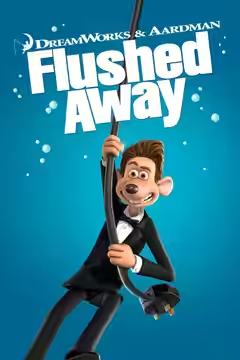
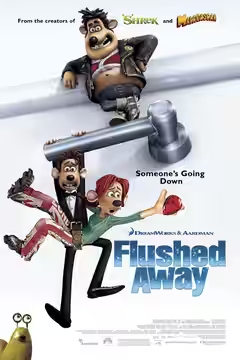
Aardman, the Bristol studio that made its name moving plasticine a frame at a time, has here made a film on computers, and the first thing to say is that you can tell and the second is that it mostly does not matter. Flushed Away sends a pampered Kensington pet rat called Roddy (Hugh Jackman) down the lavatory and into a city under London that the sewer rats have built out of what the city above threw away. It runs 85 minutes, carries a U, and it is a decent, lively family film that would be a better one if it stopped shouting.
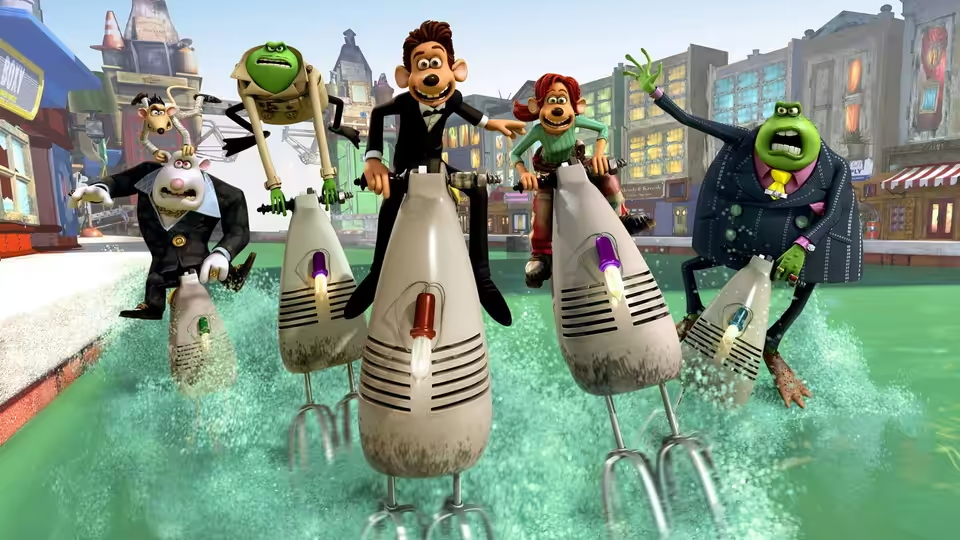
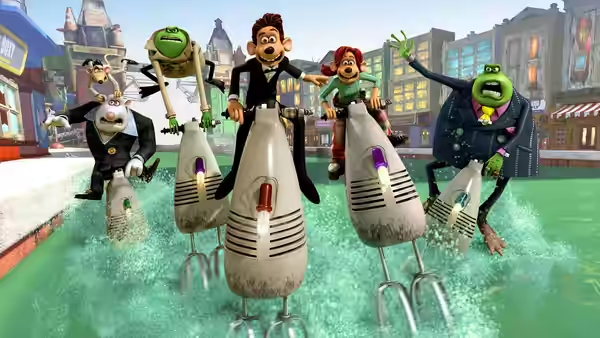
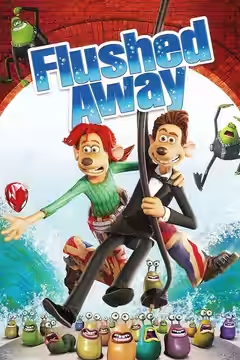
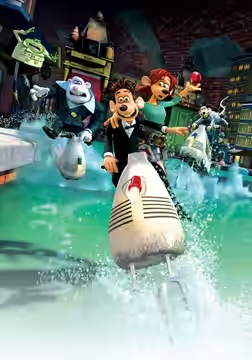
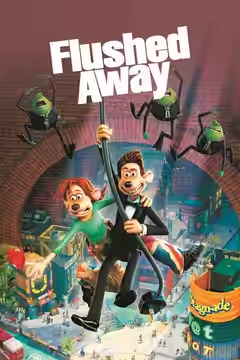
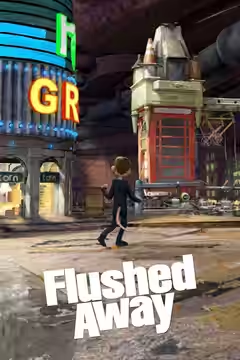
The city is the achievement. David James’s production design builds a second London from rubbish: a skyline of teapots and tin cans, a boat called the Jammy Dodger that is a bath with an outboard, lamps that were once bottles, a palace for The Toad furnished with whatever a toad might find glamorous.
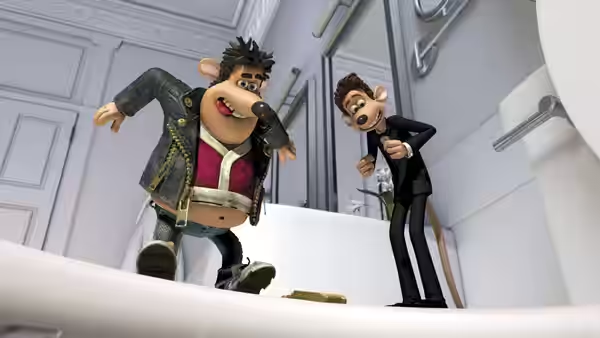
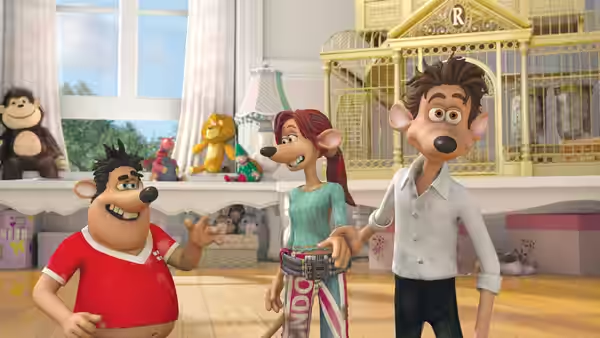
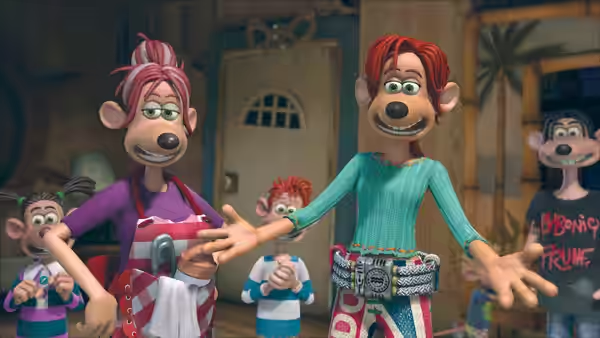
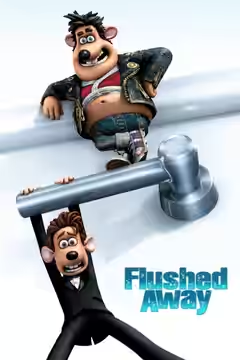
The characters look like Aardman characters. They have the wide mouths, the heavy brows, the slightly startled eyes, and the animators have kept the studio’s habit of letting a face do a little too much. What has gone is the stillness. Clay animators pause because every frame costs them; here nothing costs anything, so nothing pauses. Roddy never stands in a doorway and thinks. He is already running.
The voices are well chosen. Jackman makes Roddy a man who has never been told no and is discovering what it sounds like. Kate Winslet’s Rita is brisk and unimpressed and rather more fun than the script gives her reason to be. Ian McKellen’s Toad is the best thing in the cast, a creature of swollen aristocratic grievance who delivers every line as if it were a complaint about the service, and Jean Reno turns up late as Le Frog, his cousin, and gets most of the lines parents will repeat in the car. Bill Nighy and Andy Serkis, as the henchmen Whitey and Spike, do the double act the film relies on whenever it needs a scene to move.
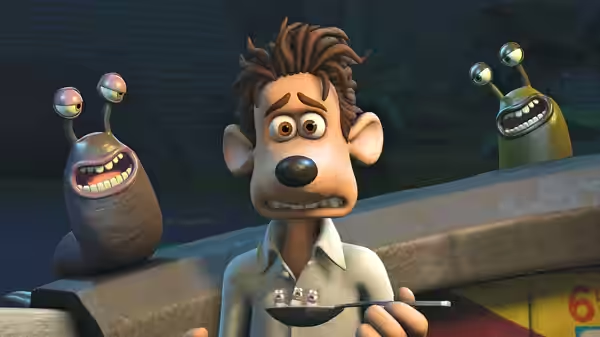
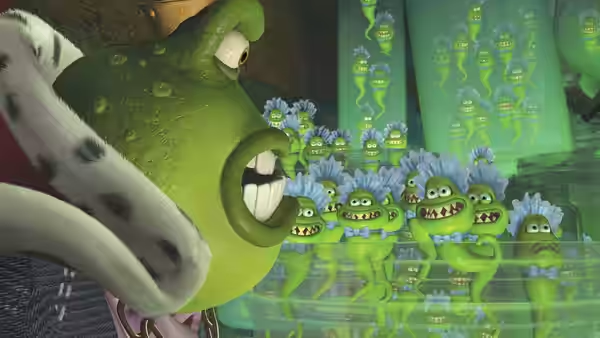
And then there are the slugs. Small, pale, big-eyed, they appear whenever the plot pauses and sing, in close harmony, a verse of whatever is appropriate to the mood. We laughed the first time, and the second, and by the end we were waiting for them. It is the one joke in the film that depends on timing rather than noise, a held moment and then a tiny voice, and it is telling that the quietest gag in a very loud film is the one everybody remembers.
The loudness is the problem. Harry Gregson-Williams’s score drives under nearly everything, and where it stops a pop song takes over, so there is rarely a moment of silence in which a joke can land. John Venzon and Erika Dapkewicz cut the chases as if afraid a child might look away, and somewhere past the hour mark we found we had stopped laughing and were simply watching things fall over. The screenplay is credited to five writers, with Lise Mayer also on the credits, and it reads that way: a run of good lines strung on a plot about a sewer villain with a plan, and a steady supply of film references that are there for the adults and do not much serve the rats.
Against Aardman’s own record this is a step down. Chicken Run (2000) and The Curse of the Were-Rabbit (2005) were built on characters who wanted something and a camera patient enough to watch them want it. This has a hero who wants to go home, which is fine, and a film too busy to let him feel it. Most critics have landed around the middle on this one, and so do we; the reviews that call it the equal of the clay films are, we think, being generous to the studio rather than to the film.
Take it at face value and it is a good Saturday afternoon: 85 minutes, a world worth looking at twice, a toad worth hating and slugs worth the ticket. Watch it at home, where you can turn the volume down and the background up. The jokes in the corners are better than the ones in the middle, and at home you are allowed to pause.