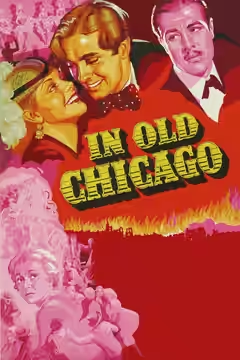
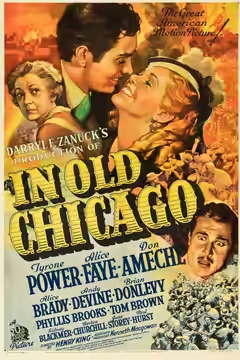
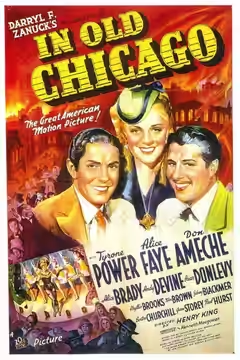
Henry King’s fire picture spends most of its 111 minutes on O’Leary family melodrama that Alice Brady alone makes worth sitting through. Then the Great Fire of 1871 arrives and the last stretch delivers what the rest of the film kept promising.
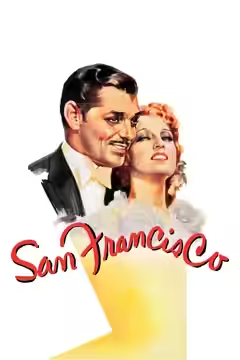
Darryl F. Zanuck wanted his own San Francisco. MGM had made that one in 1936, putting Clark Gable in a Barbary Coast saloon and shaking the city down around him, and In Old Chicago follows the recipe closely: a big Irish family, a crooked city, a singer in feathers, and the Great Fire of October 1871 waiting at the end. The fire is worth the wait. Most of the 111 minutes in front of it are not, and the film seems to know this, because it keeps glancing towards the barn.
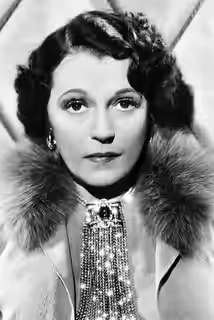
Henry King directs the O’Learys as a saga in miniature. Alice Brady’s Molly buries her husband on the prairie in the opening minutes, gets her three boys to Chicago and sets up a laundry. Brady is the reason the domestic half of the film holds at all. She plays Molly as a woman who has decided grief is something other people can afford, scrubbing shirts and scolding sons with the same brisk hands, and when she finally lets a little fear show on her face it is the one performance in the picture that does not feel borrowed from the stage. The prologue moved us more than we expected, and it was Brady kneeling in the grass beside a dead man and standing up again before she had finished.
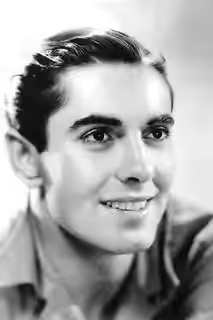
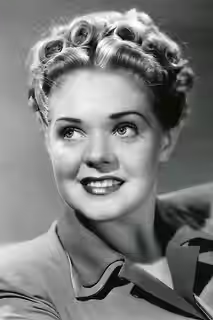
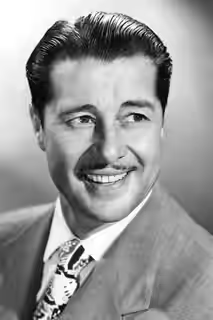
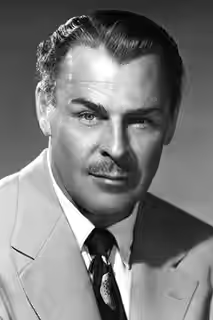
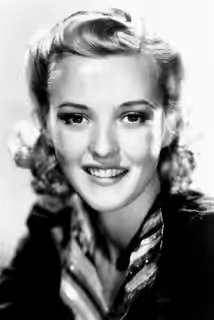
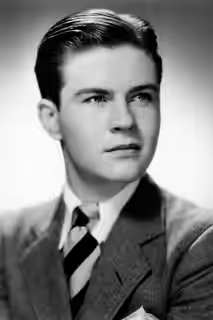
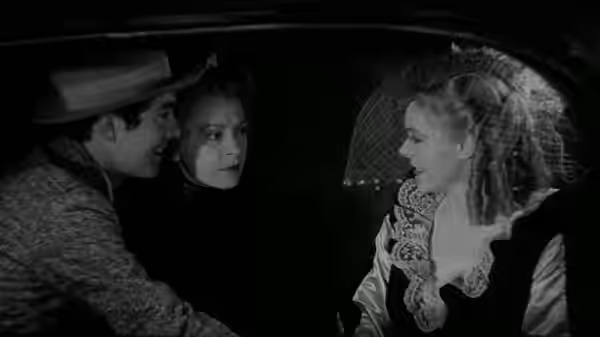
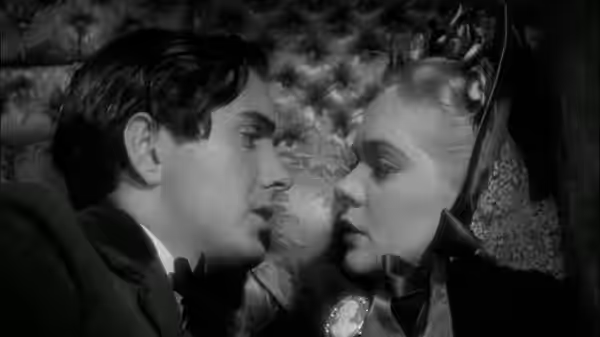
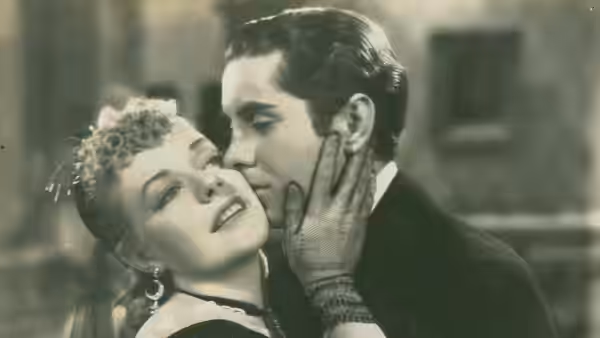
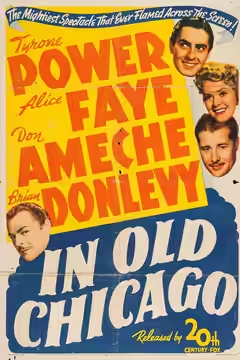
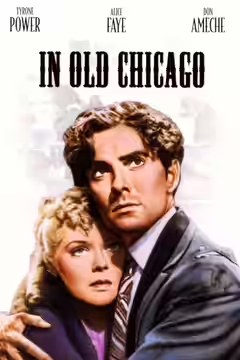
Her sons are less interesting, which is the script’s fault more than the actors’. Tyrone Power’s Dion is a charming cheat who fixes elections and opens gambling rooms, and Power plays him with a grin and very little else until late on. Don Ameche’s Jack is the honest lawyer, earnest and clean-shaven and about as much fun as that sounds. Alice Faye’s Belle sings a handful of saloon numbers and is warmer than the part deserves. Brian Donlevy’s Gil Warren, the boss Dion wants to unseat, is the best thing among the men: he barely raises his voice and the saloon still goes quiet.
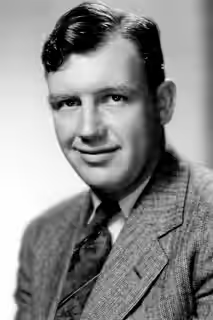
Sonya Levien and Lamar Trotti’s screenplay, from a story by Niven Busch, fills the middle hour with ward politics, saloon rivalries and a family quarrel that is stated rather than felt. We were bored for a good half hour, and then a little cross about it, because the film keeps cutting to the O’Leary barn and the lantern hanging in it as if to reassure us that something is coming. It is a strange way to build a picture: to spend an hour on a story while nodding at the audience that the story is not the point. Andy Devine’s Pickle Bixby, all squeak and bluster, is there to keep us amused in the meantime, and sometimes he does.
The craft around the melodrama is better than the melodrama. J. Peverell Marley shoots the saloons through cigar smoke and gaslight, so that Faye’s dresses glow and the men behind her are half in shadow. Royer’s costumes do a lot of the characterisation the script skips: Belle in ostrich plumes and satin, Molly in the same black dress for twenty years. Barbara McLean cuts the political scenes quickly, which helps, and cuts the fire like nothing else in the film.
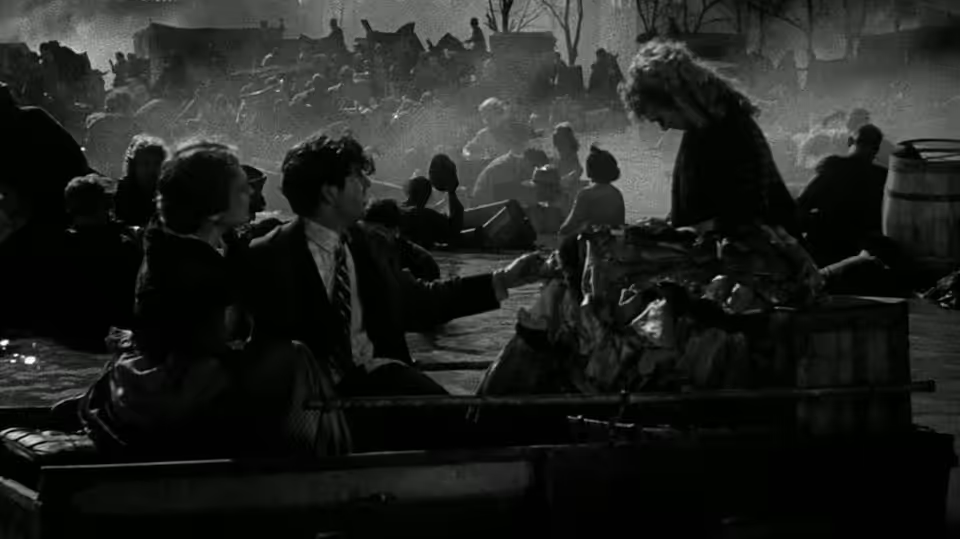
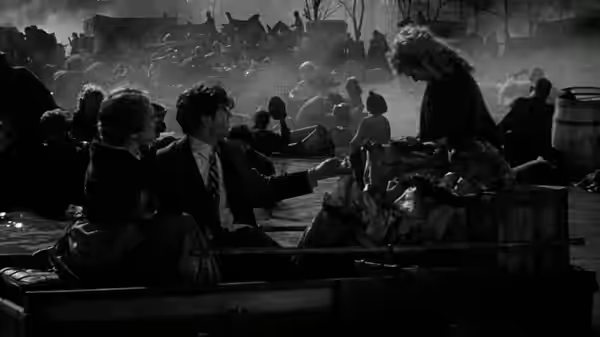
And then the lantern goes over, and for the last stretch In Old Chicago becomes the film it was sold as. King and McLean build it from wooden houses going up one after another, crowds pushed onto the river bridges, stockyard cattle driven through burning streets, and General Phil Sheridan (Sidney Blackmer) ordering buildings blown apart to make a firebreak. Marley shoots much of it in silhouette, figures against a wall of flame, and the scale is real: whole streets, not a matte painting and a fan. We sat up. We had spent an hour waiting for the film to matter and for twenty minutes it did, and we forgave it a good deal.
Against San Francisco it is the lesser picture, because Gable’s saloon keeper was a character and Dion is a costume. Against the run of disaster films since, its fire still holds up better than most of its dialogue. See it for Brady, for Donlevy, and for the last twenty minutes, and feel free to attend to something else during the elections; the film will not mind, and neither, we suspect, did Zanuck.