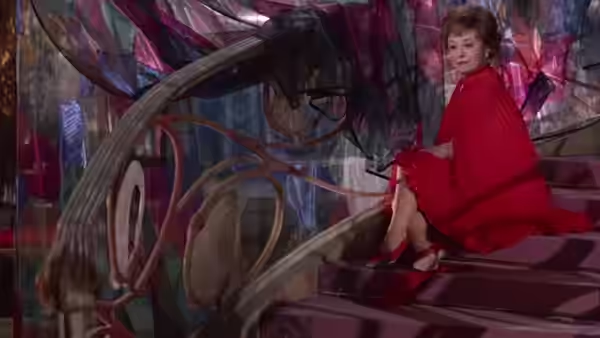
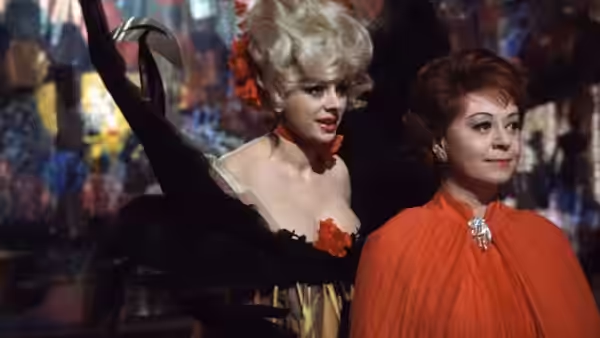
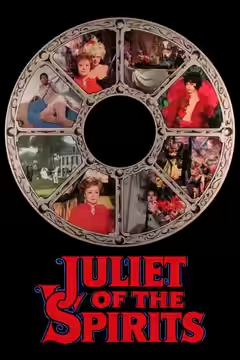
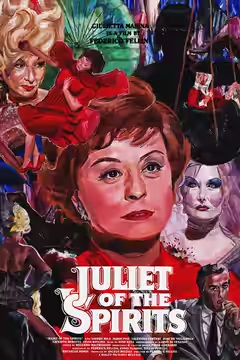
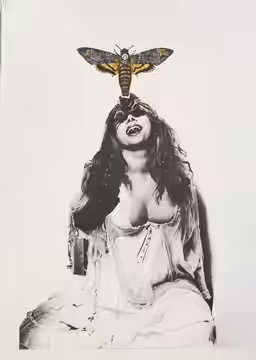
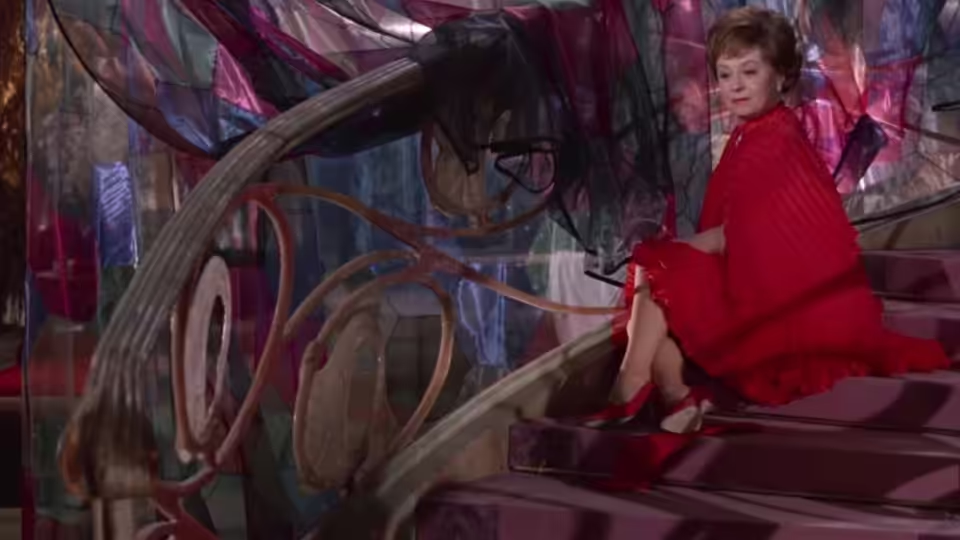
Giulietta (Giulietta Masina) in a red dress sits on a curving staircase
Film review

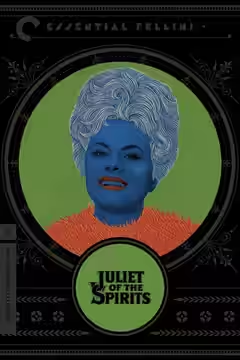
Juliet of the Spirits

1965 · Directed by Federico Fellini · 2h 28m

In a sentenceEvery hat in Italy turns up to watch one small woman’s marriage come apart

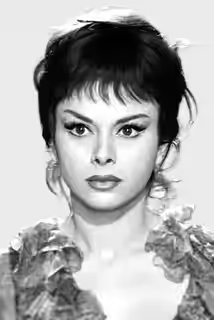
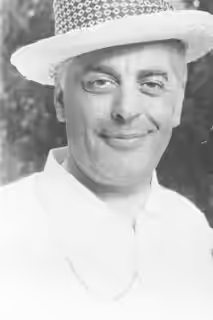
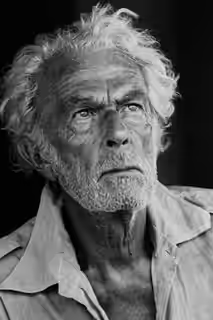
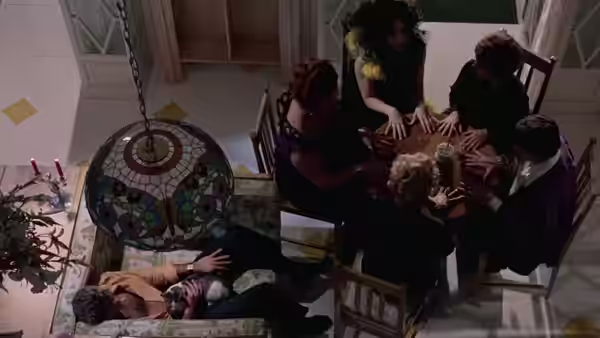
Giulietta Boldrini (Giulietta Masina) lives in a white villa by the sea with her husband Giorgio (Mario Pisu), who fills the house with friends and forgets their wedding anniversary. She has planned a dinner for two; he arrives with a crowd and a medium (Friedrich von Ledebur), and the séance that follows brings her voices, one of which calls itself Iris. That night she hears Giorgio murmur another woman’s name in his sleep. Giulietta begins to see things: her grandfather (Lou Gilbert), her mother (Caterina Boratto) young and beautiful, and figures nobody else in the house can see. Over the garden wall, in a red villa, lives Suzy (Sandra Milo), who decides Giulietta should meet her friends.

Plays from YouTube when you press play; nothing loads from them until then.

Fi1m review

Fellini’s first film in colour surrounds Giulietta Masina with hats, mediums and a sensualist next door, and much of it is a pleasure to look at. It also runs 148 minutes, and a good forty of them are the director admiring his own party.

Federico Fellini’s first film in colour, two years after 8½, moves the camera from a film director who cannot finish his film to a wife who cannot finish a thought without a ghost interrupting. Giulietta Masina plays Giulietta Boldrini, a wife in a white villa by the sea whose husband Giorgio (Mario Pisu) forgets their anniversary and says another woman’s name in his sleep. That is the plot, and the film hangs 148 minutes of visions on it. Some of those minutes are the loveliest Fellini ever shot; a good many more are the director wandering round his own party admiring the hats.

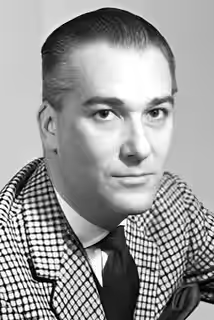
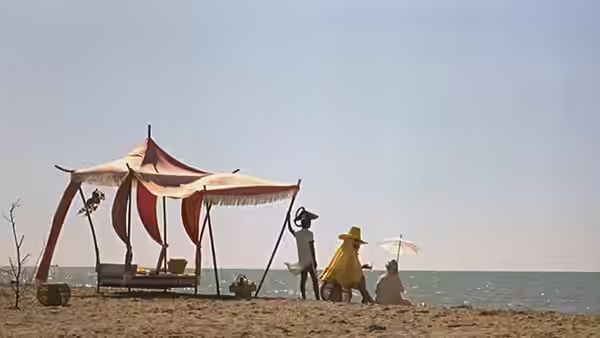
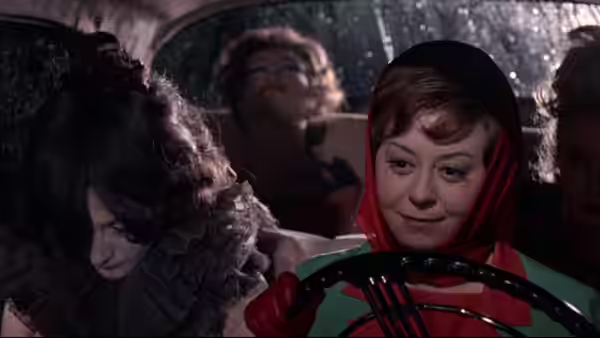
Gianni Di Venanzo shoots the villa in whites and pale greens, the beach in hard noon light, and Suzy’s house over the wall in reds so deep the walls look wet. Piero Gherardi, who did the costumes and the sets, puts the guests in hats the size of bicycle wheels and Giulietta in the plainest thing in every room, a straw sun hat among the feathers. The visions on the beach arrive on a raft in broad daylight, with no change of lens or light to warn us they are not real. Fellini never marks the border between what Giulietta sees and what is there, and it is the best decision in the film.

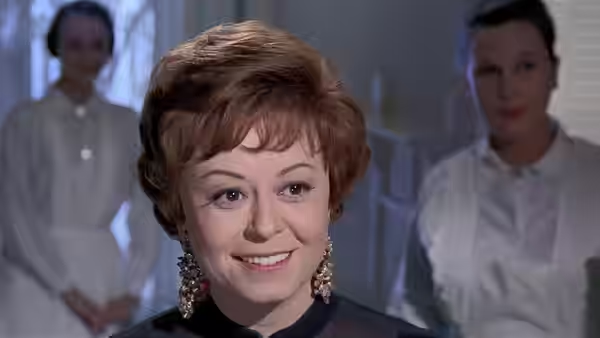
Masina is the reason to sit through it. She had played the holy fool in La Strada (1954) and the streetwalker in Nights of Cabiria (1957), and here she is asked to be the quiet one in a frame full of noise. She takes in Giorgio’s friends, her sister Adele (Luisa Della Noce) and her mother (Caterina Boratto), who is more beautiful than she is and lets her know it, and she gives back a smile that arrives half a second late. Early on she hears the name in the dark and lies still, and we were more moved by that than by anything the spirits say afterwards. It is a small hurt, played small, and the film around it is enormous.

Sandra Milo, in three roles, is the other engine. As Suzy, the woman in the red villa, she keeps a house built for pleasure, and she offers Giulietta a freedom that comes down to better underwear and more visitors. Milo plays her without a trace of malice, which is right; Suzy is not the villain, she is the brochure. Valeska Gert’s Pijma, croaking advice from a hotel bed, and Friedrich von Ledebur’s medium complete a gallery of people glad to tell Giulietta how to live.

The trouble is length and point of view. Four writers, Fellini, Tullio Pinelli, Ennio Flaiano and Brunello Rondi, give Giulietta a marriage, a mother, a childhood, a guru and a neighbour, and the film visits each of them twice. Ruggero Mastroianni cuts memory into the present without a seam, and that also means the second hour has no shape beyond the next arrival. In the second hour, during another procession through Suzy’s rooms, we found we had stopped watching Giulietta and were counting the furniture, which is the wrong thing to be doing in a film about her. Nino Rota’s score is fairground music, organ and brass, right for the parties and wrong for the bedroom, where it keeps playing.

And this is a husband’s picture of a wife’s insides. Fellini was married to Masina, and the film is generous to her, and it still cannot imagine her wanting anything that is not a man, a memory or a dress. 8½ got away with the same drifting because Guido’s job was to drift. Giulietta has nothing to do, and the film never decides what it wants for her.

See it big if you can, because the colour is the point and a small screen turns Gherardi’s reds to brown. Give it a whole evening rather than a late slot; it runs 148 minutes and hurries for nobody. Keep your eye on Masina rather than the party; she is doing something quieter and better in the corner.

Critical consensus AI synthesised

65
Positive
1
Mixed
4
Negative
0
Los Angeles Times
29 June 2001 · Kevin Thomas
90*

Thomas praises the film as a timeless, compassionate work that showcases Fellini’s talent. He singles out its dazzling fantasy and spectacle, supported by the visual artistry of the costumes and production design.

Read the full review →
The New York Times
4 November 1965 · Bosley Crowther
65*

The accessible page does not reveal the critic’s verdict. It also provides no details about what the critic praised or criticized.

Read the full review →
Time Out
· TR
64*

The review metadata identifies this as a review, but the article text is unavailable. No critical verdict or specific praise or complaint can be established.

Read the full review →
Empire
1 January 2000 · Kim Newman
60*

Newman finds the film intriguing, though at times confusing. He singles out Masina’s compelling central performance and the exhilarating flashes of fantasy.

Read the full review →
The AV Club
29 March 2002 · Keith Phipps
45*

Phipps finds the film ambitious but unsuccessful in translating Fellini’s subjective dream world into cinematic magic. He praises its occasional moments of power and beauty, along with its sincere emotional heart.

Read the full review →

Straight answers AI written, from our review

Is Juliet of the Spirits worth watching?
Juliet of the Spirits is worth watching for anyone who wants Fellini in colour and Giulietta Masina at her quietest, and we scored it 68. It runs 148 minutes and a good forty of them are the director admiring his own party, so give it a whole evening rather than a late slot. Watch Masina, not the hats.
How long is Juliet of the Spirits, and what is it rated?
Juliet of the Spirits runs 2h 28m. It is a comedy and drama film.
Where can I watch Juliet of the Spirits in the Philippines?
Juliet of the Spirits is not on any streaming or rental service in the Philippines at the moment. It is available in 4 other countries; change your country at the top of the page to see where. Availability is checked daily.
How does Juliet of the Spirits compare to Nights of Cabiria?
Juliet of the Spirits is the larger, looser film and Nights of Cabiria the better one. Both centre on Masina, but the earlier film knows exactly what its heroine wants, while here Fellini surrounds her with mediums, neighbours and visions and never decides what he wants for her. Come to this one for Di Venanzo's colour and Gherardi's costumes; go to Cabiria for the performance.
What should I watch after Juliet of the Spirits?
After Juliet of the Spirits, try Nights of Cabiria (1957, Fi1m 88): Masina in black and white, in a film that knows exactly what she wants. Then Daisies (1966, Fi1m 85): Two Czech girls wreck a banquet in colour; the anarchy Giulietta never allows herself; and Belle de Jour (1967, Fi1m 86): Buñuel’s bored wife takes the afternoon job Suzy would recommend; colder, shorter, sharper.

Cast

Awards

Academy Awards, 1967

Nominated
Best Art Direction, Color
Nominated
Best Costume Design, Color

If you liked this, try…

  1. Nights of Cabiria (1957, Fi1m 88)Masina in black and white, in a film that knows exactly what she wants.

  2. Daisies (1966, Fi1m 85)Two Czech girls wreck a banquet in colour; the anarchy Giulietta never allows herself.

  3. Belle de Jour (1967, Fi1m 86)Buñuel’s bored wife takes the afternoon job Suzy would recommend; colder, shorter, sharper.

  4. Cries and Whispers (1972, Fi1m 87)Bergman paints a house red and lets three sisters bleed into it; no party.

  5. The Red Shoes (1948, Fi1m 92)Powell and Pressburger’s Technicolor at full tilt, and a woman crushed between two men.