Jordan Vogt-Roberts makes an enjoyable monster adventure with a convincing Kong and too little for the people to do. The helicopter encounter earns our attention; the thin characters make it harder to keep.
Kong: Skull Island is an enjoyable creature feature with a serious shortage of interesting people. Jordan Vogt-Roberts puts his effort into the monsters and their encounters, with results that are often funny and satisfyingly physical. It has enough invention to justify an evening for anyone fond of oversized animals causing trouble. We recommend it on those terms, although the stretches when the humans take charge require more patience than they should.
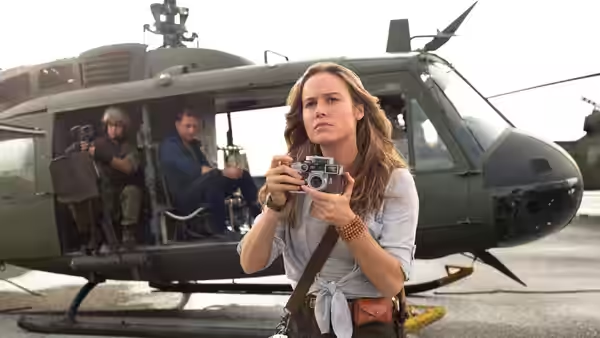
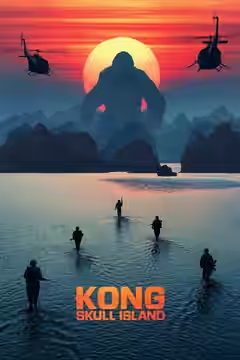
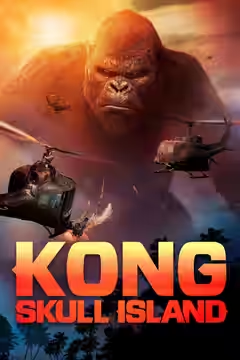
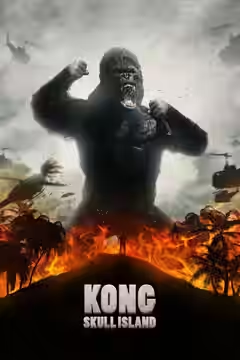
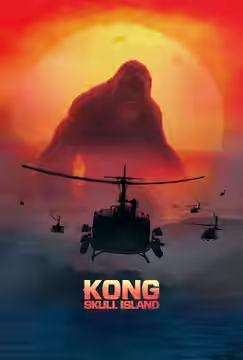
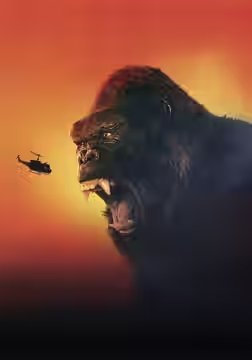
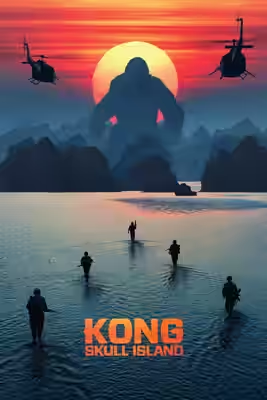
The early helicopter encounter gets the proportions right. Larry Fong uses the aircraft to make Kong’s size clear, so we can see at once how badly mismatched the two sides are. We were delighted by it, because the effects give Kong enough weight to make this absurd confrontation feel physical. The scene also gives the creature a personality, which matters when so many other attractions are competing for attention.
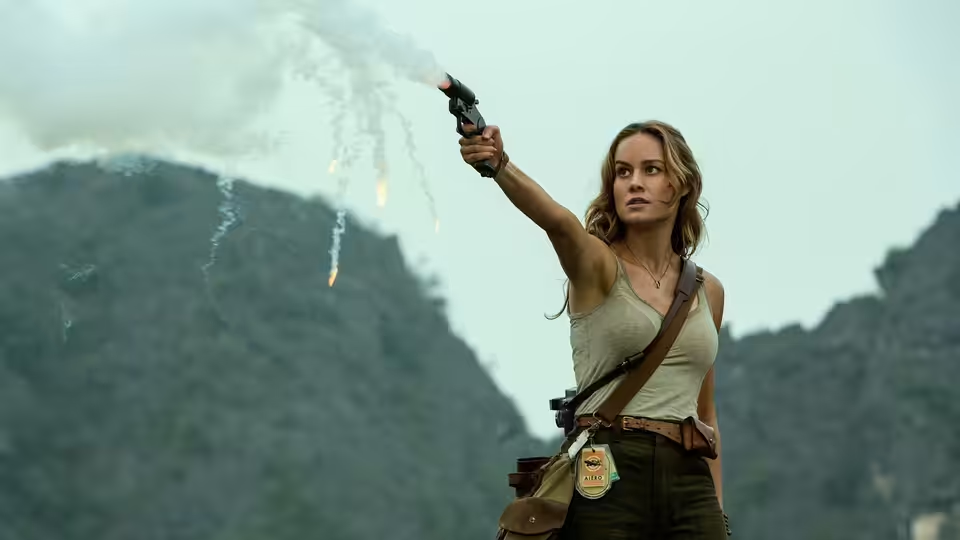
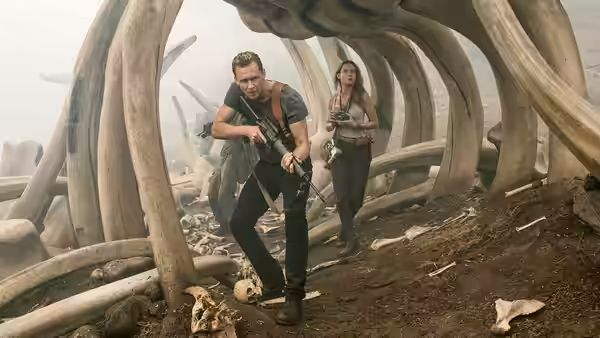
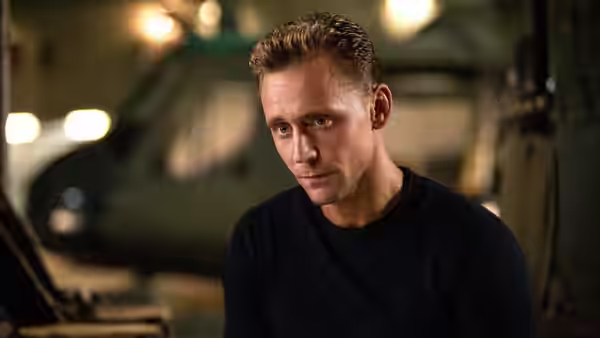
The screenplay by Derek Connolly, Max Borenstein and Dan Gilroy is less attentive to the human characters. Tom Hiddleston’s Captain James Conrad is capable enough as a lead, but the performance gives us little reason to wonder what he might be thinking between dangers. Brie Larson’s Mason Weaver has even less room to become someone we can care about, despite a watchfulness that suggests she could. Samuel L. Jackson gives Lieutenant Colonel Preston Packard a forceful presence, although force alone cannot supply the missing nuance.
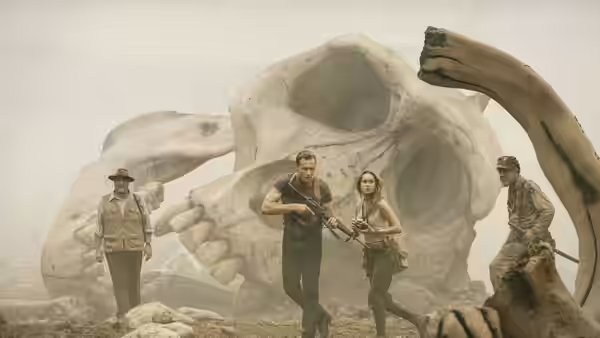
Stefan Dechant’s production design helps make the island feel worth exploring, even when the screenplay treats it chiefly as a place for another creature encounter. The monsters look as though they belong there, and their variety gives us a reason to remain curious about the next threat. Henry Jackman’s score supplies competent support for the action, but it is less memorable than the period songs. The creatures are sufficiently expressive that the music rarely seems to be adding much we could not already understand from watching them.
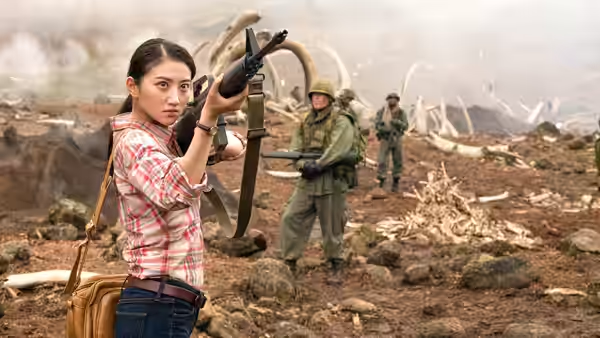
The Vietnam-war parallels are less rewarding. Jordan Vogt-Roberts makes the connection emphatic, but the people are too sketchy for the military imagery to tell us much about them. We can enjoy the scale of the confrontation without finding the implied commentary particularly thoughtful. The script asks us to take familiar ideas about men and violence seriously, while giving those men little beyond a function in the next encounter.
Richard Pearson, Christian Wagner and Bob Murawski keep the first stretch moving briskly, but the rhythm becomes less satisfying as the encounters accumulate. A creature arrives, the action takes over, and the humans have to make the next gap interesting; too often they cannot. At 118 minutes, this is hardly an endurance test, yet the weaker exchanges make it feel longer than it needs to. The switches between comic adventure and more savage monster action can also jar, because the script has not made us care enough about the people caught between them.
Anyone looking for the dread of a horror film should adjust their expectations: this is rowdy adventure, with monsters supplied in generous quantities. There is no need to admire its thoughts about warfare to enjoy the scale and silliness of the fights. Take it on those terms and the weak conversation becomes easier to forgive.