J.C. Chandor stages two or three fights with real weight, and Russell Crowe and Alessandro Nivola enjoy themselves as men who deserve a better film. Around them is a script that explains everything twice and a lion that never once looks like one.
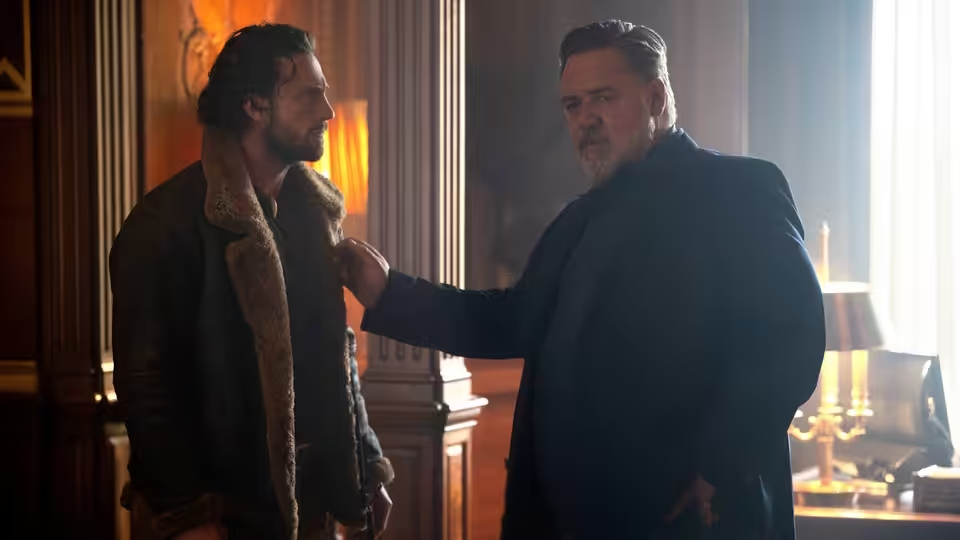
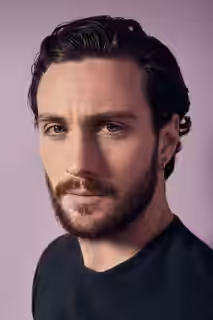
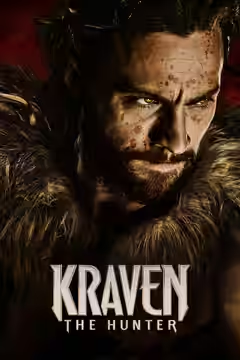
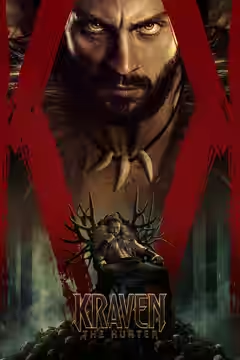
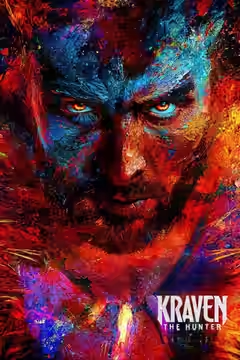
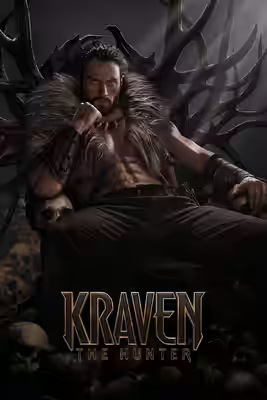
Sergei Kravinoff (Aaron Taylor-Johnson) is the son of Nikolai (Russell Crowe), a Russian crime boss who takes his boys hunting to make men of them. On one such trip the young Sergei (Levi Miller) is mauled by a lion, and a girl (Diaana Babnicova) pours something from a bottle down his throat that leaves him with the strength and senses of the animal that nearly killed him. He grows up refusing his father’s business and hunting the men who are in it. The tagline says villains are made, not born, and Kraven the Hunter spends 127 minutes making one, slowly, with captions.
J.C. Chandor directs, which is the surprising credit. He made Margin Call and A Most Violent Year, films about men in rooms deciding how much to lie, and All Is Lost, in which Robert Redford spends most of a film on a boat saying almost nothing. He knows how to hold a shot. When the film lets him, he does: the opening, in which Sergei has himself sent to a Russian prison in order to reach a man inside it, is a real fight in a real corridor, and Ben Davis keeps the camera near enough to the bodies that we could tell whose elbow was whose. We sat forward. The 15 certificate is earned early and often, with teeth, and Craig Wood cuts the brawls to be followed rather than to be hidden.
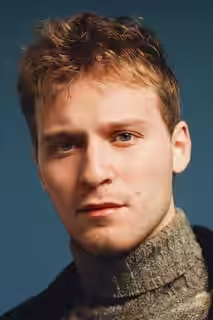
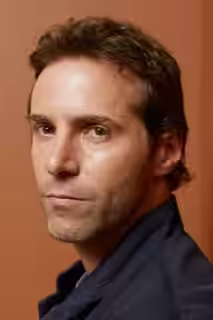
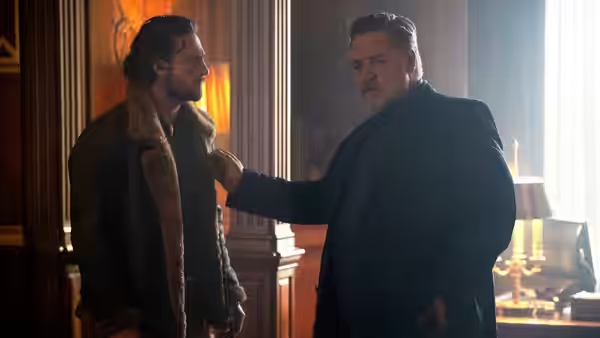
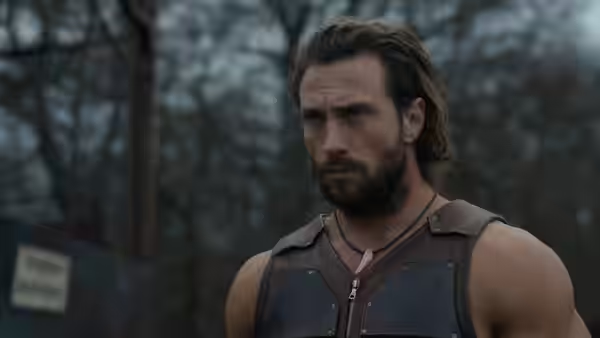
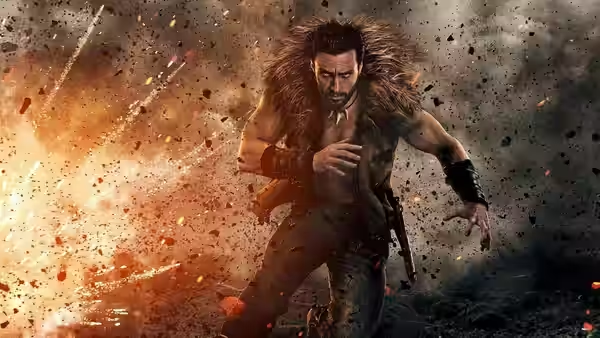
The pleasures after that are in the supporting cast. Crowe plays Nikolai as a bully with a heavy accent and a view on everything, a man who would rather his sons feared him than liked him, and he is plainly having a better time than anyone else on screen. Alessandro Nivola’s Aleksei Sytsevich is a rival with a medical condition and a great deal of nervous energy, and Nivola plays him as if he has read a different, funnier script. Fred Hechinger’s Dmitri, the soft brother who does impressions of other people’s voices, is the only character we felt anything for. Taylor-Johnson is committed throughout, and the film rewards him with a leather waistcoat, a scowl and little to say.
The script is the problem, and it is a problem of quantity. Art Marcum, Matt Holloway and Richard Wenk explain the premise in the prologue, then have Ariana DeBose’s Calypso, now a lawyer in London with a deck of tarot cards, explain it again, then have Sergei explain it to his brother. Christopher Abbott’s Foreigner is an assassin with a party trick we never fully understood, though it was described to us twice. The story hops from Russia to London to Turkey on captions, and every stop begins with someone stating who they are and what they want, as if the film were worried we had wandered off. By the middle we had.
Then there is the lion. It is a computer-generated animal and it looks like one, weightless and a little too clean, and since the whole film rests on the moment it takes a boy in its jaws, that moment ought to frighten us. We laughed instead, and felt bad about it, because the small boy under the animation was doing his part. The effects do not improve. What happens to Sytsevich, when the film finally arrives at what the trailer has already shown, is rubbery. Eve Stewart’s production design gives Nikolai a house of dark wood and trophies, which is right, and Sammy Sheldon dresses Kraven in about as much as the certificate allows. Three composers are credited, Sacha and Evgueni Galperine and Benjamin Wallfisch, and we left without a tune.
Most critics have landed near where we have, and a fair number have said this is better than Morbius and Madame Web, the last two films Sony made from the same drawer. That is true, and it is not a recommendation. Chandor once made a film about one man, a boat and a leak, and it was tense for its whole length. Here he has a cast of a dozen, three countries and a lion, and the tension comes and goes in ninety-second pieces.
See it if the prison fight in the trailer is what you want, because there are two or three more like it and they are done properly. Between them is a good deal of standing in doorways being told things. At home you can skip the doorways, and the film would not notice.