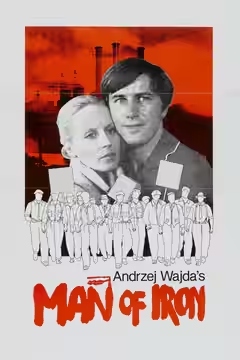
Andrzej Wajda’s follow-up to Man of Marble was made in a hurry, in the middle of the events it describes, and it shows in both directions. The framing story creaks; the flashbacks to 1970 and the footage from the shipyard gates do not.
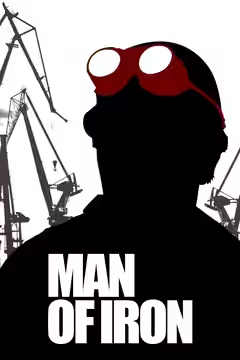
Andrzej Wajda made Man of Marble in 1977 about Mateusz Birkut, a Nowa Huta bricklayer built up as a hero of labour and then thrown away. He made Man of Iron four years later, quickly, while the events it describes were still going on. The shipyard strike at Gdańsk in August 1980 gave him his setting and his archive; the state, for a few months, gave him permission. The result is part fiction, part newsreel and part pamphlet, and we would rather have it, rough edges and all, than most tidier films about revolutions made a safe twenty years afterwards.
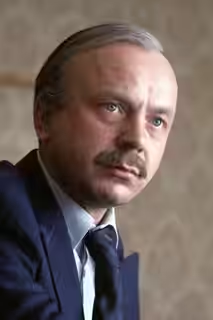
The way in is Winkel (Marian Opania), a radio journalist who used to be good and now drinks. His superiors send him to Gdańsk with a tape recorder and a task: dig up anything that might discredit Maciek Tomczyk (Jerzy Radziwiłowicz), the strike leader who is also Birkut’s son. It is a serviceable device and Aleksander Ścibor-Rylski’s script leans on it harder than it can bear. People who have every reason not to talk to a man from state radio sit him down and tell him the last twelve years in order. Opania is good enough that we forgive most of it. He plays Winkel’s shame as a physical thing, a man who cannot get a bottle open with steady hands and knows exactly what that looks like.
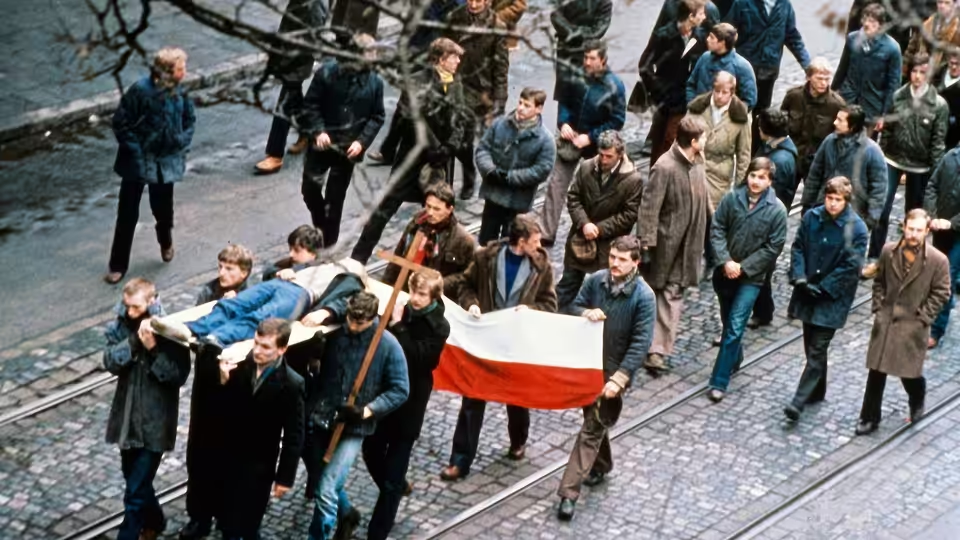
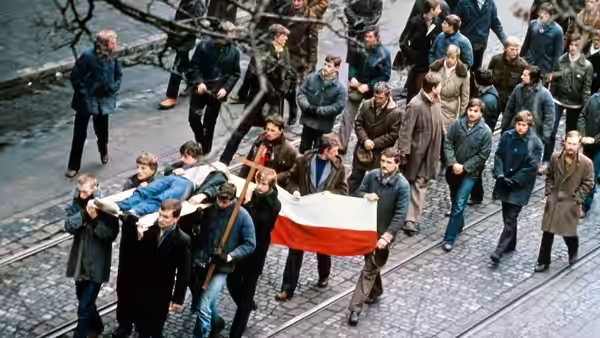
The stories he collects are the film. They go back to 1968, when Maciek was a student and his father would not join the protests, and to December 1970, when the shipyard workers marched and the father went out and the son stayed home. Radziwiłowicz plays both men, and he does it without a trick: Birkut is settled and heavy, Maciek narrow and watchful, and the distance between them is what the film is about. Edward Klosinski shoots the 1970 material in flat grey daylight with a hand-held camera, so that it sits beside the real newsreel without embarrassment. The sequence around Birkut’s death and the burial that follows, a family trying to find out where the state has put a body, is the strongest thing here, and Halina Prugar-Ketling cuts it slowly, on faces, where a lesser editor would have gone for the crowd.
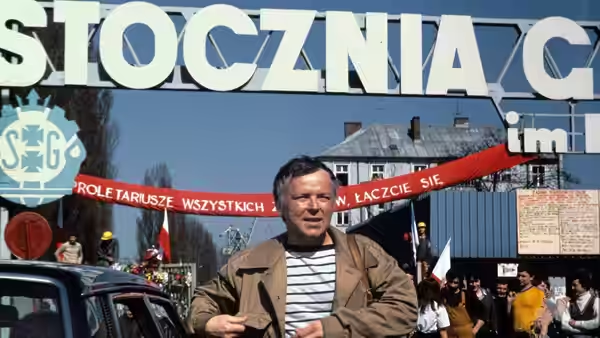
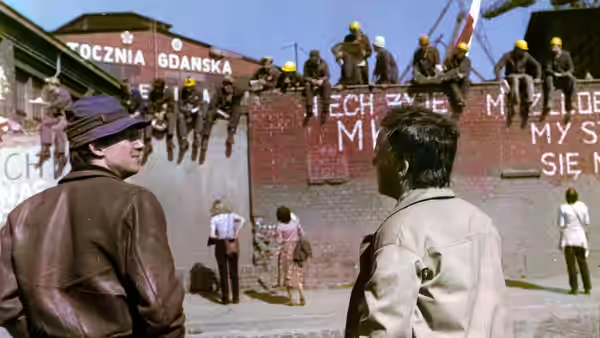
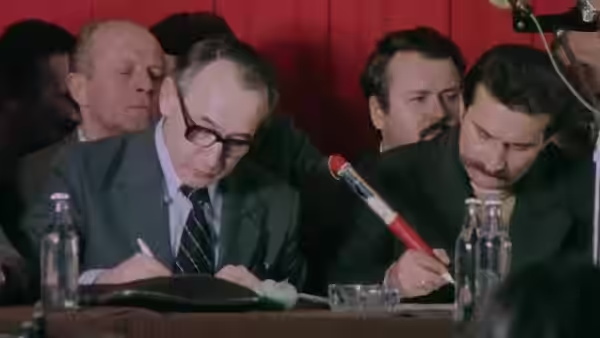
Then there is the footage itself. The film uses material shot inside the shipyard during the strike and keeps returning to the gate: flowers tied to the railings, a photograph of the Pope, a crowd standing in the rain waiting for news. We were moved more than we expected by these shots, and we should be honest that the film has borrowed the feeling from history rather than made it. That is not a complaint. Wajda knew what he had and does not tart it up. Andrzej Korzyński’s music stays out of the archive for the most part, and when Lech Wałęsa turns up inside the fiction, as a witness at a wedding, he is filmed like any other guest.
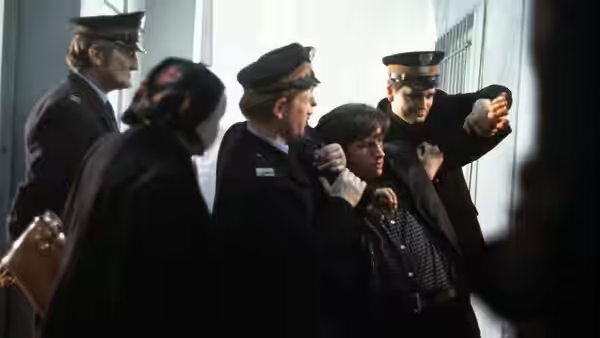
Krystyna Janda’s Agnieszka, who drove Man of Marble, has less to do here. She is in custody for most of the running time, and her one long scene, across a table in a visiting room, is the moment we most wished the film had been built around her rather than Winkel. Bogusław Linda’s Dzidek and Irena Byrska’s Mrs Hulewicz, who lets rooms and remembers everything, carry their flashbacks with more life than the hotel scenes around them.
Wajda is not a subtle polemicist and does not pretend to be. Everyone in authority is a coward, a drunk or a thug, and Franciszek Trzeciak’s Badecki and Andrzej Seweryn’s Captain Wirski are given little to play beyond the job. Allan Starski’s hotel rooms and offices, brown and beige and hung with heavy curtains, say more about that side of the story than the dialogue does. There are speeches, and one or two are delivered more or less to camera. At 147 minutes it is long, and the middle hour repeats itself.
Set against Man of Marble, this is the rougher film. That one was built; this one was grabbed. Watch them in order if you can, and do not expect Man of Iron to tell you how the story ends. It could not. It was finished before anyone knew.