Welles shot his Othello in fits and starts wherever the money took him, and you can hear it in every dubbed line. You can also see, in every frame, a director who knew exactly where to put the camera. We recommend it, with patience.
Orson Welles’s Othello is a film that should not exist, and it looks like it. It was shot over years, in pieces, and it reached British cinemas on 24 February 1956. Welles cut Shakespeare’s play down to 93 minutes and turned it into a nightmare of walls, bars and stairs. We think it is one of the best-looking films he made, and one of the worst-sounding, and we recommend it on the first count knowing you will have to forgive the second.
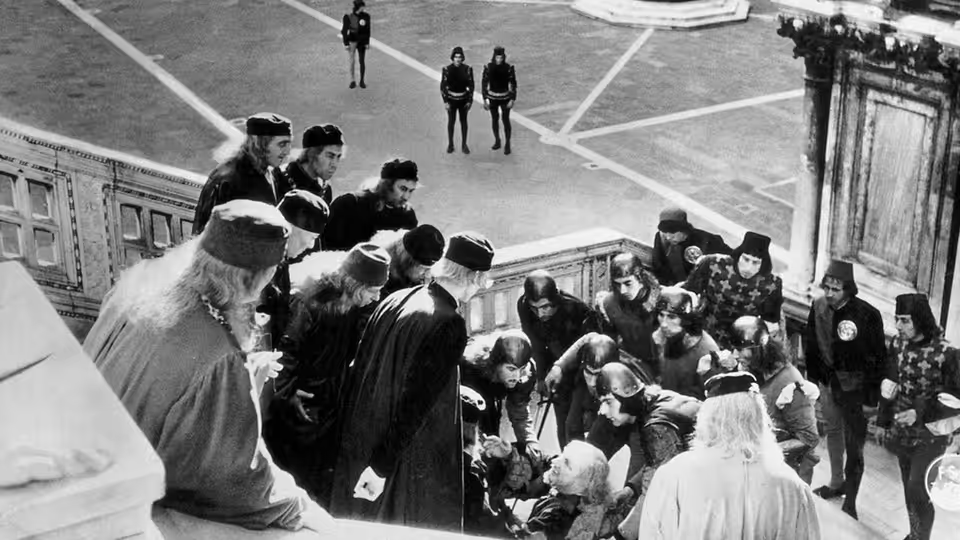
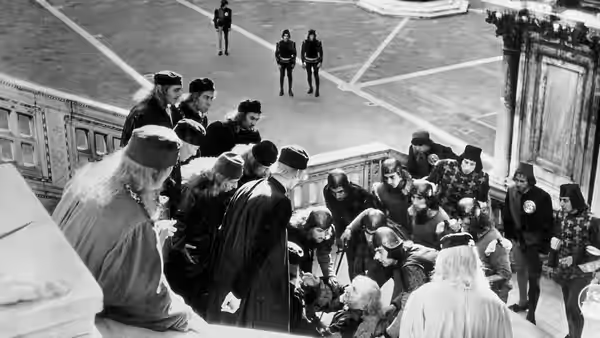
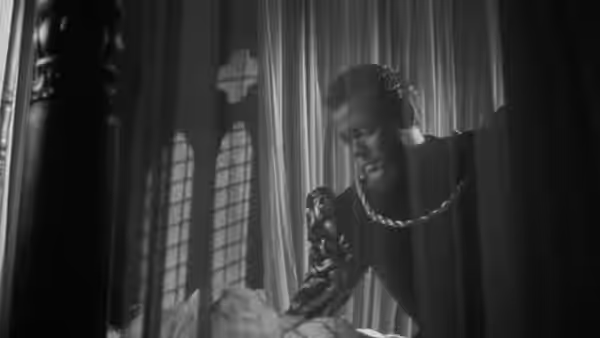
The opening is the best thing in it. A coffin is carried along the battlements against a white sky, monks in black file past, an iron cage is hauled up a wall, and Angelo Francesco Lavagnino and Alberto Barberis put drums and a chant under it that sound like something being nailed shut. Only then do we go back to Venice and the beginning. Every bright scene afterwards has a shadow already over it.
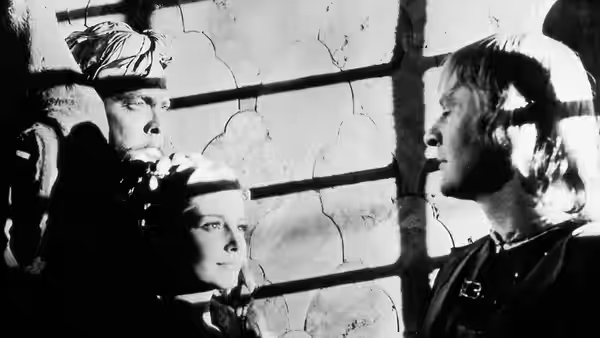
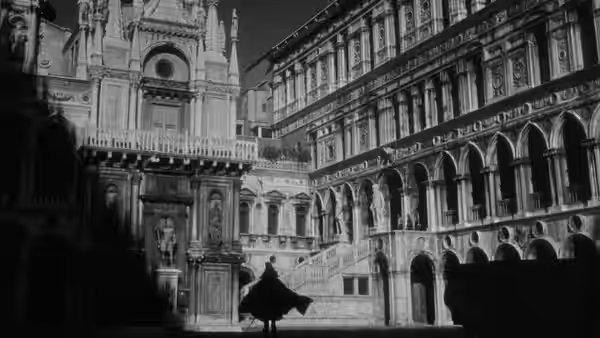
Three cinematographers are credited, G.R. Aldo, Anchise Brizzi and George Fanto, and you cannot tell where one stopped and the next began. The camera sits low and looks up at people against vaults and arches. Faces are lit from one side and cut in half. The production designers Luigi Scaccianoce and Alexandre Trauner had to make a dozen real places into one imaginary Cyprus, and the joins rarely show. Maria De Matteis dresses Othello in dark robes and everyone else in pale ones, so that he is the only black shape in a white world.
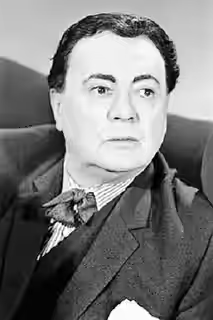
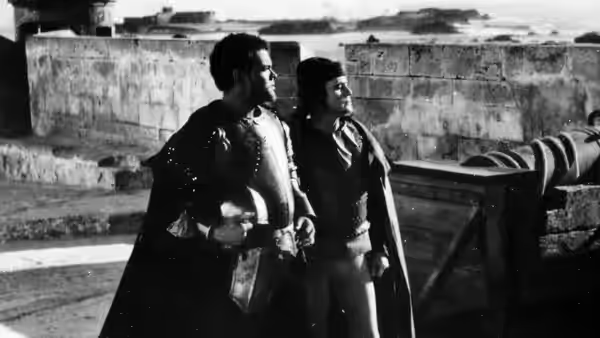
Micheál Mac Liammóir’s Iago is small, dry and unsmiling. He does not twinkle at the audience the way stage Iagos do; he looks like a clerk who has been slighted and has all afternoon. The scene where he first puts the idea into Othello’s head is played as a long walk along the ramparts, the two men side by side, the camera keeping pace, the sea below. We found it frightening, because nothing happens. Two men walk. One of them says less than he means. By the end of the wall the other one is a different person.
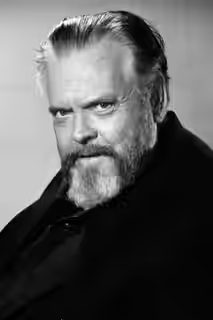
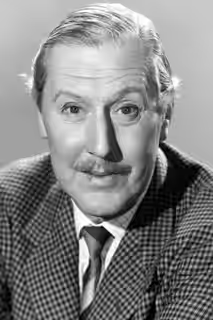
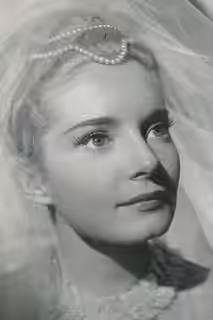
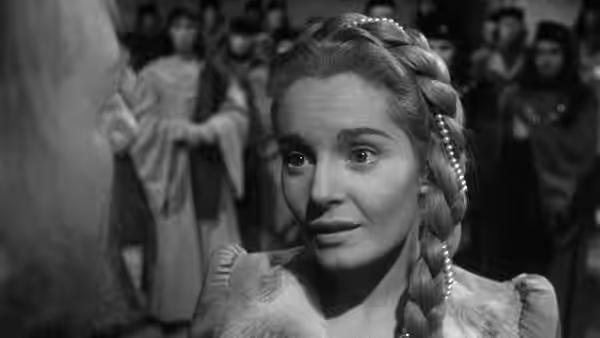
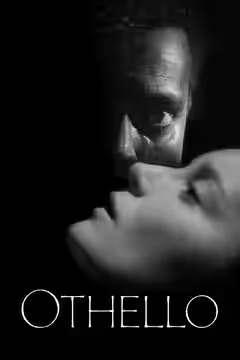
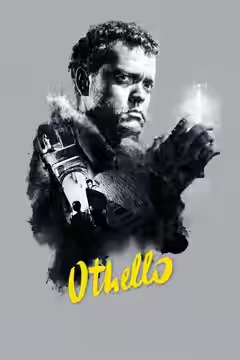
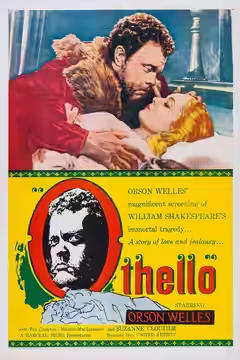
Welles plays Othello inward, the voice low and slow, the eyes doing most of it, and the voice is magnificent. The make-up is a problem, and it is a harder thing to look past now than the sound. Suzanne Cloutier is given little to do as Desdemona beyond be looked at and be lit, and she is lit beautifully. Fay Compton’s Emilia gets the film’s plainest, angriest lines. Robert Coote’s Roderigo is funny, a rich idiot in a feathered hat who keeps handing over money and asking why nothing has happened yet.
Then the sound. Lines arrive a fraction after lips move, or before, or from somewhere behind the actor’s head. Voices were laid on afterwards, and it shows: Nicholas Bruce’s Lodovico is credited with one face and Robert Rietti’s voice. The three editors, Renzo Lucidi, Jenö Csepreghy and William Morton, had to build scenes out of footage shot at different times, and there are moments when a character starts a sentence in one place and finishes it in another. The middle stretch, where Iago’s scheme needs its props and its witnesses, is hardest to follow. We lost the thread and resented it, because the pictures had been so clear.
Most critics have come round to the film over the years. We are close to them, a little cooler. The early complaint, that Welles cared more about staircases than about Shakespeare, is not fair; the staircases are how the film thinks. But the sound is a real failure, and it costs the actors. It is not as whole as Citizen Kane or as sure-footed as Touch of Evil, and it is more alive than either in its single shots.
Watch it at home, where you can turn the sound up and go back when a line escapes you. It is a U certificate. We would not put a child in front of it, not because of anything on screen but because the child will ask what everyone just said, and you will not be able to tell them.