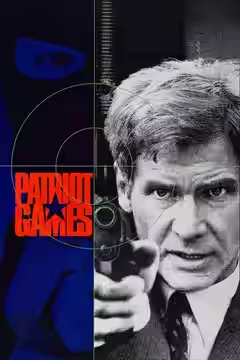
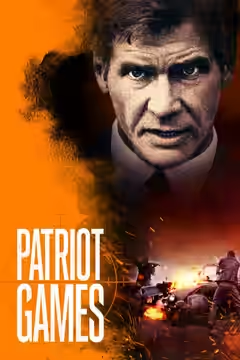
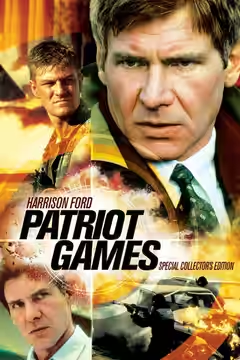
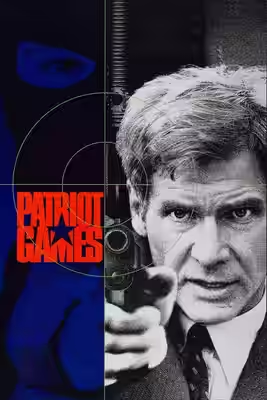
Harrison Ford gives Patriot Games enough weight to make it a serviceable thriller, but Phillip Noyce’s action is uneven and the treatment of Irish politics is thin. Worth considering for the suspense rather than the political insight.
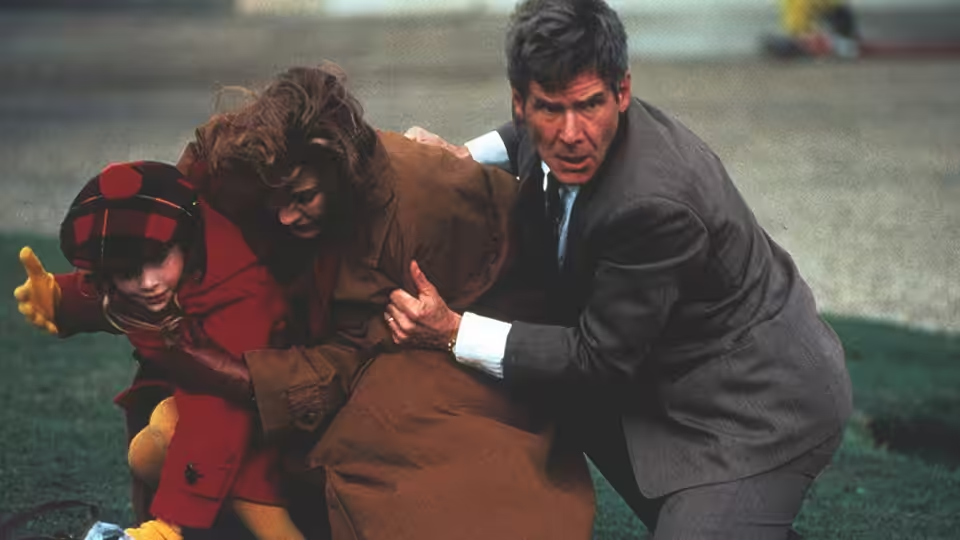
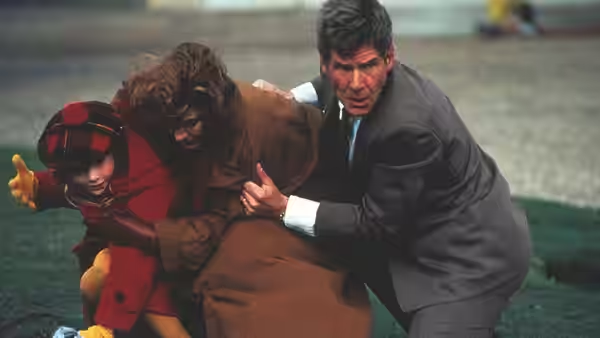
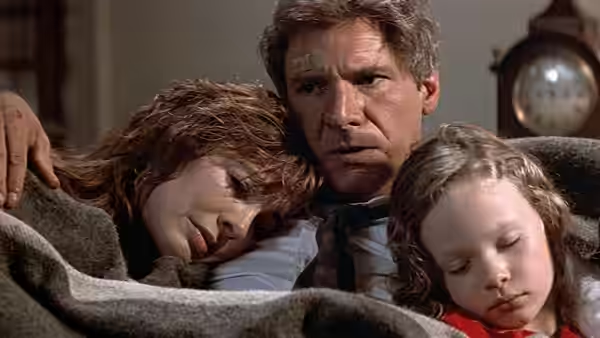
Phillip Noyce’s Patriot Games is a serviceable thriller with a dependable lead and some conspicuous shortcuts. Harrison Ford gives Jack Ryan enough seriousness to make the danger matter, even when the writing is doing little to help. This adaptation of Tom Clancy’s novel puts a wife and child ahead of honour and country, a readily understandable priority. The trouble comes when concern for that family has to justify how little the film examines its politics.
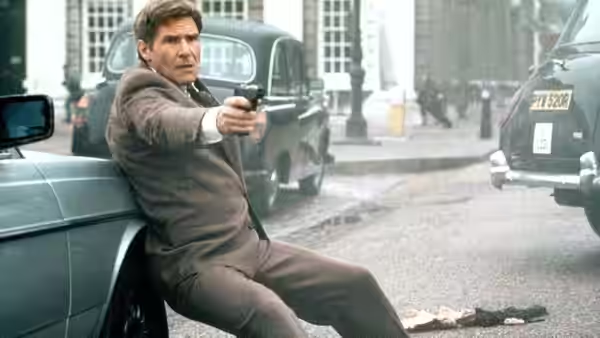
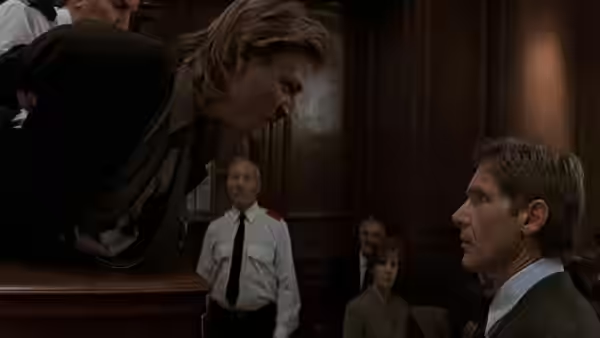
Harrison Ford is useful here because we believe him when he looks troubled. His performance gives us something to concentrate on through the less persuasive passages, without making Ryan seem too pleased with his own importance. Sean Bean brings a harder, more abrasive presence to Sean Miller, and that contrast helps sustain the tension. Neither actor needs much time to establish himself, which is fortunate in a film considerably more interested in danger than in explaining people.
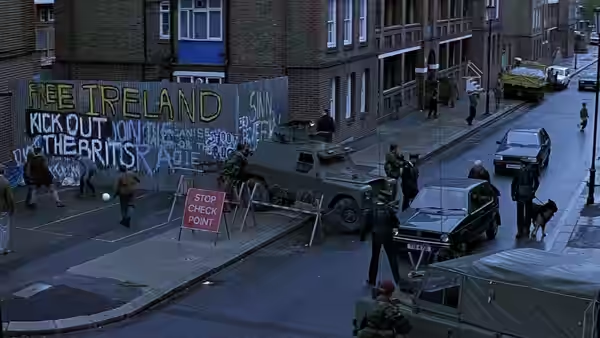
Screenwriters Donald E. Stewart and W. Peter Iliff keep the personal stakes accessible, but their treatment of the Irish conflict is disappointingly incurious. Political violence supplies the threat without receiving much serious examination. A thriller need not interrupt itself for a history lesson, but it should make the people involved seem capable of thinking beyond the requirements of the next confrontation. Here the simplifications become distracting because the film keeps asking us to take its subject seriously.
The satellite-monitor sequence shows how much more unsettling the film can be when it lets us think. We were chilled by it, specifically by the distance between watching violence on a screen and having to confront what it means. Donald McAlpine’s photography is most effective in this detached passage, where the images invite scrutiny without making the violence feel comfortably exciting. Phillip Noyce allows the act of watching to become unpleasant in itself. For a while, the film trusts us to recognise the problem without having it explained.
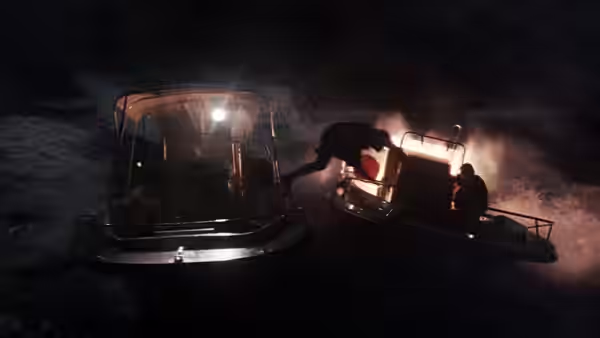
That control does not reliably carry over to the action. Editors William Hoy and Neil Travis maintain forward movement, but the staging does not always give their cuts a clear sequence of events to communicate. There are passages where we are still trying to understand the danger while the film is already demanding that we react to it. The resulting confusion weakens suspense that the performances have worked to establish, and speed cannot quite disguise it.
Joseph Nemec III’s production design is most persuasive around the surveillance equipment, where the machinery makes watching feel like ordinary professional work. That setting contributes directly to the discomfort of the monitor sequence. James Horner’s music supplies urgency elsewhere, although its insistence can make the threat feel overemphasised. The score helps keep the film moving through its uncertain stretches, but we would sometimes rather be left with the actors and the situation.
At 117 minutes, this is a reasonable prospect for viewers already interested in political thrillers, provided expectations remain modest. The family concern is easy to understand, and the lead performance gives it sufficient weight. Against the genre’s demands for clear action and credible motives, however, the film is only intermittently convincing. Choose it for Harrison Ford, and do not expect the Irish conflict to receive the same care as his worried face.