New directors, a proper villain and one good robbery cannot hide that Jeff Nathanson’s script is the first film run again with the life let out. Bardem earns his floating fringe; Depp is doing an impression of himself.
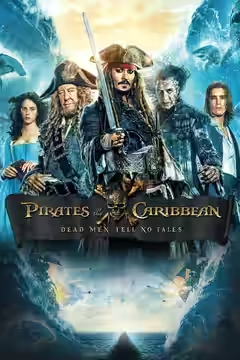
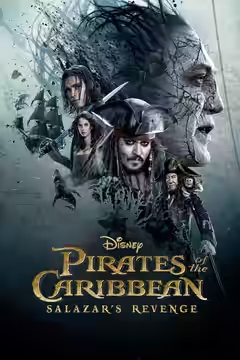
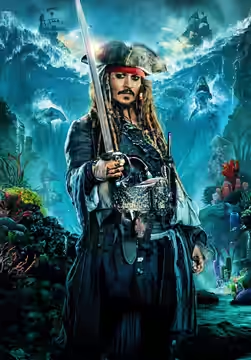
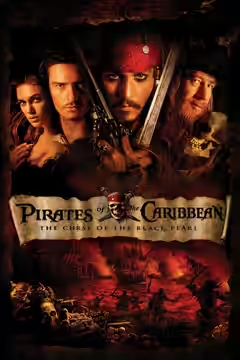
Fourteen years after Gore Verbinski’s The Curse of the Black Pearl, the fifth Pirates film sets out to be the first one again: a young couple with a mission, a cursed crew, an object at the bottom of the sea, and Jack Sparrow somewhere between them. Jeff Nathanson’s script, from a story he wrote with Terry Rossio, does not pretend otherwise. Joachim Rønning and Espen Sandberg were brought in to get the series back on the water and down to a sensible length. At 129 minutes they have managed the second. The first depends on how much you still want to watch Depp do this, and there we have bad news.
The best thing comes early. Jack’s crew mean to rob the new bank in Saint Martin and instead haul the entire building off its foundations behind a team of horses, with Jack inside it. Nigel Phelps has built a town designed to be knocked down, and Roger Barton and Leigh Folsom Boyd cut the chase so that every collision is set up a beat before it lands. We laughed out loud, more than once. The rescue that follows, Jack strapped to a guillotine that swings the blade towards and away from his neck while Carina waits on the gallows opposite, is nearly as good.
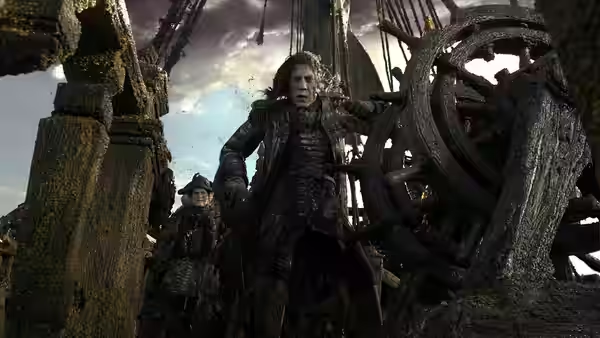
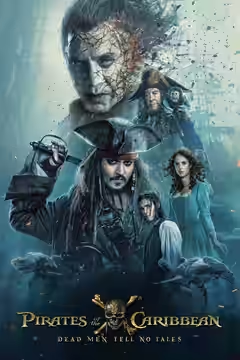
Javier Bardem is the other reason to stay. His Salazar is a Spanish captain who spent his life hanging pirates until a young Jack tricked him into the Devil’s Triangle, and has come back with a cracked head and black water running from his mouth. Bardem gives him a wrecked, hissing voice and the bearing of a man who has been insulted and will not stop until it is answered. Then the effects team get in the way. His hair floats as though he were still underwater, on deck, in daylight, and it is impossible to look at anything else. We admired the performance and kept being pulled off it by a fringe.
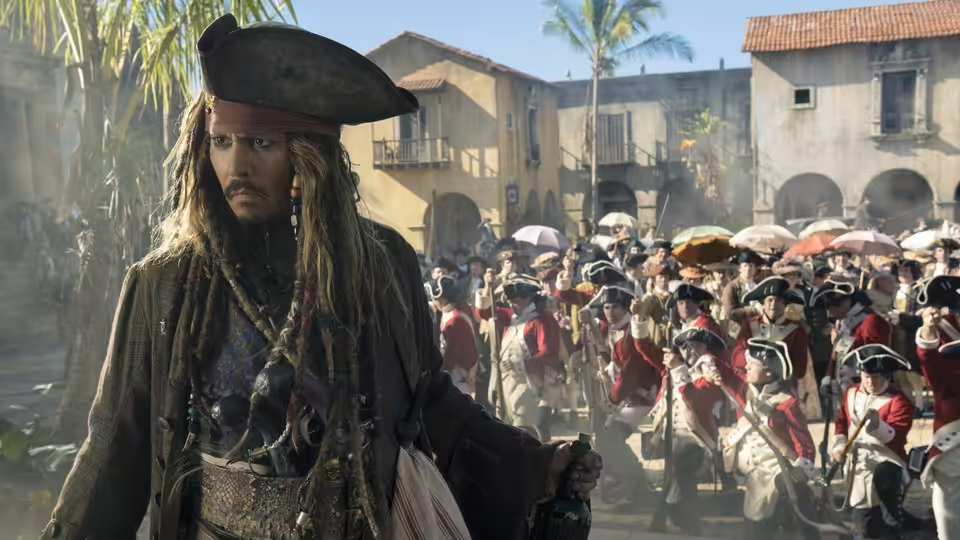
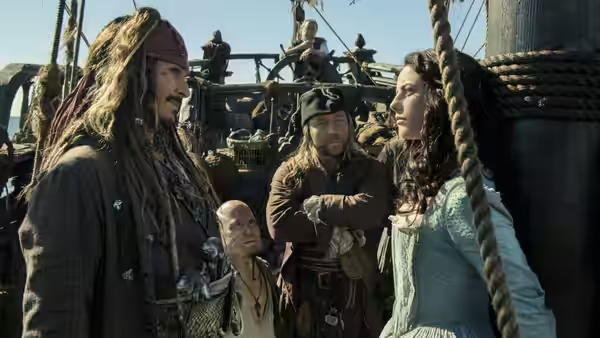
Depp is the problem. Jack Sparrow in 2003 was a drunk who was always three moves ahead. Here he is a drunk. The slur is thicker, the eyes are somewhere else, and the jokes are the old jokes with the timing gone. Nathanson writes him as a man his own crew have given up on, which reads as an excuse for a performer who has not turned up. He trades his compass for a bottle in the first act, and it is hard to argue with the exchange rate. We found this sad rather than annoying, which surprised us.
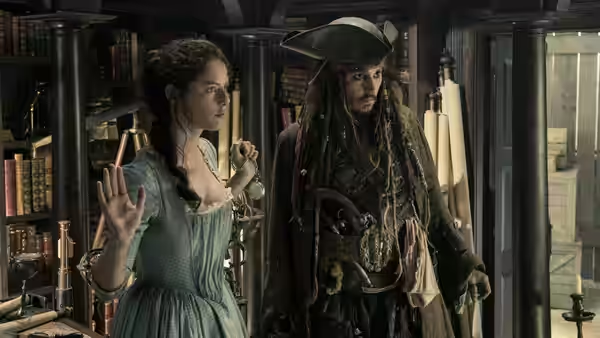
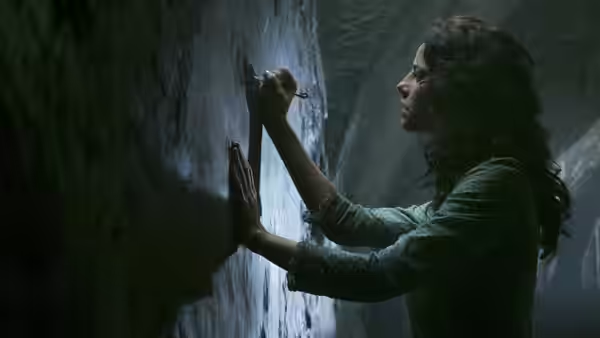
Brenton Thwaites and Kaya Scodelario have the young-lovers parts and less to do in them. Scodelario’s Carina is an astronomer who keeps correcting the men, which is one joke, and Thwaites is earnest and blank. Geoffrey Rush, in Penny Rose’s biggest coat and a wig the size of a small dog, walks off with the second half. Barbossa is handed the one thread with any weight, and it takes a turn we will not describe; Rush plays it with a seriousness nothing else asks of him. Golshifteh Farahani has two scenes as a sea witch and deserved a third.
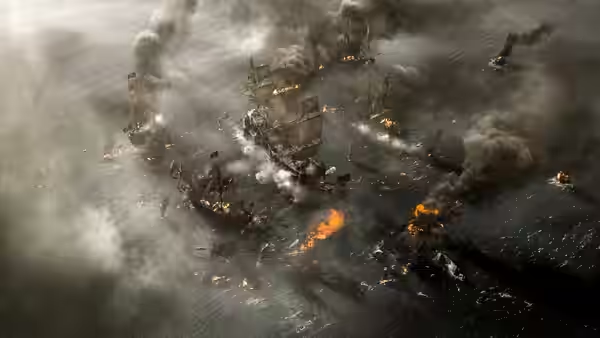
The finale is where it goes wrong. Paul Cameron shoots the daytime scenes in a hard, bright Caribbean light that suits the comedy, but the last half hour happens at night, at sea and then under it, and the screen becomes a grey-blue wall of water and debris in which we lost track of who was where. Geoff Zanelli brings the old themes back loudly, as if he knows something is missing. We were bored, and then we were cross about being bored, because the first act had shown these directors can stage a thing so that you know where you are.
Most critics have landed near us, with a few insisting it is the best of the sequels; we can see what they mean if the measure is the bank. See it for the robbery, the guillotine and Bardem, and if there is a child in the house who has not seen the 2003 film, put that on instead.