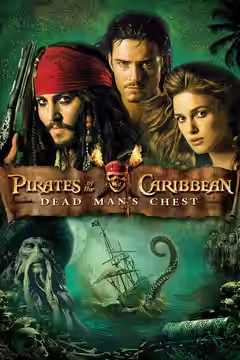
Gore Verbinski’s second voyage has a magnificent villain in Bill Nighy’s Davy Jones and two set pieces we would show anyone, and it buries them under a plot with more moving parts than a clock. Worth it for the monster.
Gore Verbinski’s second voyage with Jack Sparrow has plainly been told to be bigger than The Curse of the Black Pearl (2003), and it is. It has a sea monster, a ghost ship whose crew are turning into coral, a cannibal island and a plot that requires a compass, a drawing of a key, the key, a chest and the thing inside the chest. It runs 151 minutes and carries a 12A. A great deal of it is people telling each other where the next object is.
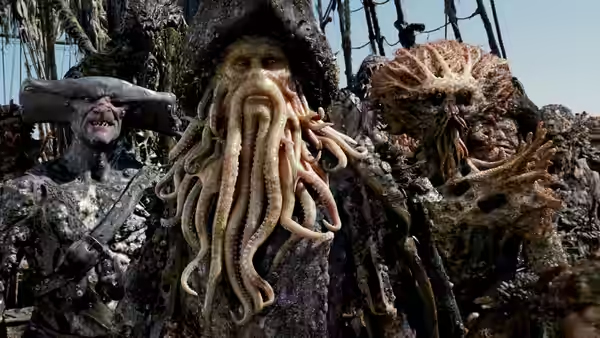
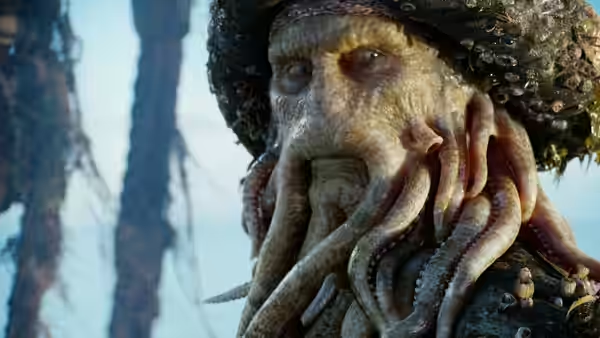
The best thing in it is Davy Jones. Bill Nighy plays him under a computer-generated face of tentacles, with a crab claw for a hand and a Scottish accent you could stand a spoon in, and what surprised us is how much of Nighy survives: the sour pauses, the way he rolls the word ‘aye’ around before letting it go. He sits at a pipe organ built into his ship and plays it with his beard. Rick Heinrichs designs the Flying Dutchman as a wreck that has forgotten to sink, every plank furred with weed and barnacle, and its crew are men halfway to becoming the sea, one with a hammerhead where his face was, one who is mostly shell.
Then there is the Kraken. The first time it takes a ship we were properly frightened. Verbinski does not show the whole animal. Dariusz Wolski keeps the camera on the deck, and what we see is a stillness in the water, then a tentacle the width of a tree coming quietly over the rail behind a sailor who has not turned round. The crew go in ones and twos, the mast goes, the hull folds. Hans Zimmer gives the creature a low brass shudder we felt through the seat.
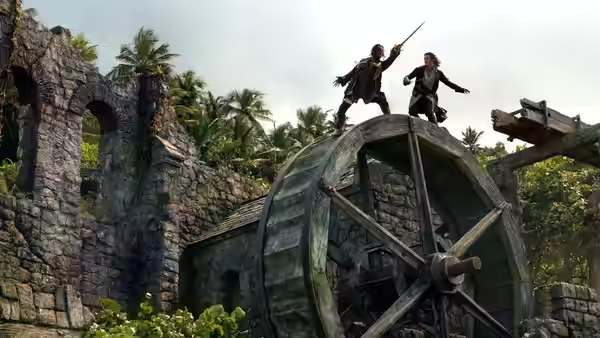
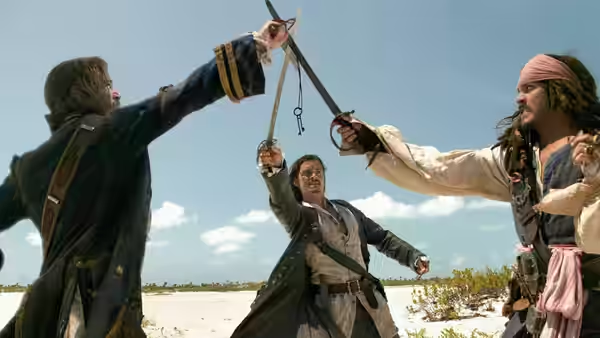
The other set piece is the fight over the chest between Jack, Will and Norrington (Jack Davenport), which starts on a beach and ends inside a mill wheel that comes off its axle and rolls away with two of them still in it. It is silent-comedy engineering at enormous expense, and Stephen E. Rivkin and Craig Wood cut away to Pintel (Lee Arenberg) and Ragetti (Mackenzie Crook) at exactly the moments the joke needs a witness. We laughed out loud, twice, which a fight scene rarely manages.
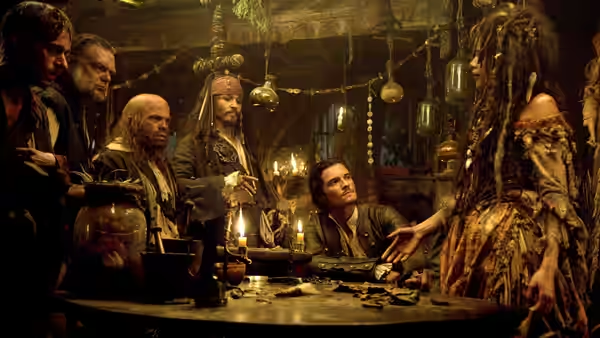
Between those peaks the film keeps stopping to explain itself. Ted Elliott and Terry Rossio’s screenplay is a chain of errands, and every link needs a scene of instruction before anyone can move on; by the hour mark we had heard the rules of the chest three times. The cannibal island is Jack painted like a totem pole and men rolling downhill in cages of bone, and it belongs to a sillier film. We were bored, and then cross at being bored by something this expensive. Orlando Bloom is asked to be earnest for two and a half hours and manages it. Keira Knightley gets more to do than last time, mostly with a sword, and she is good when allowed to be sly. Neither can hold a frame that Depp or Nighy is also in.
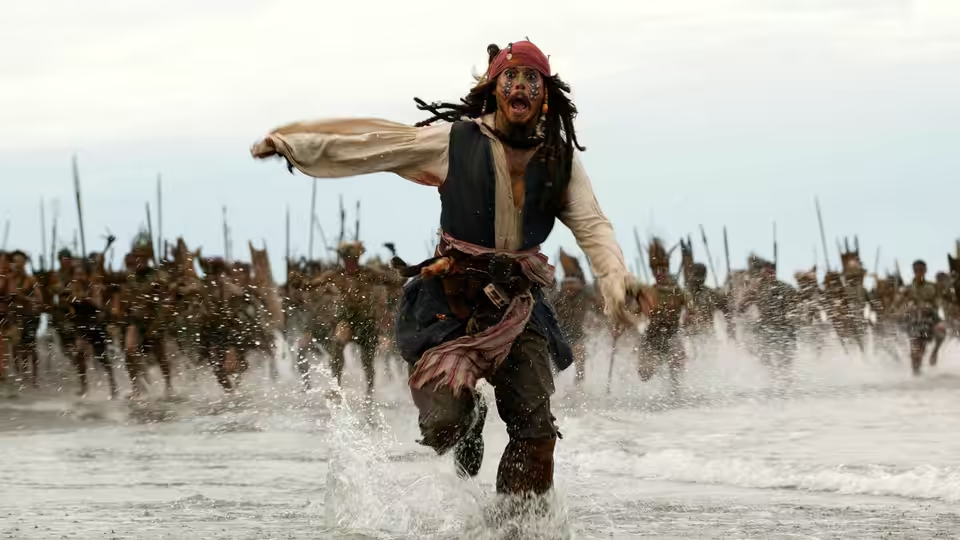
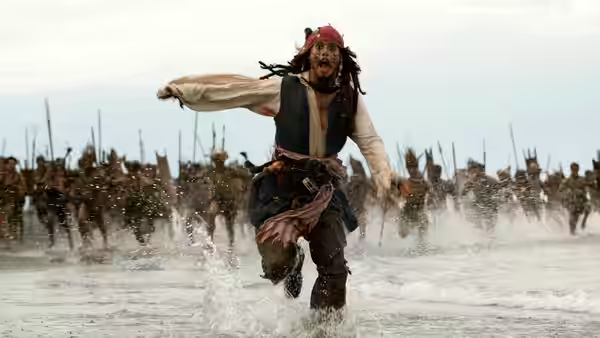
Depp is still funny, though the performance has set a little into its own impression: the run, the hands, the pause before the word ‘savvy’. He is best when frightened, and the black spot on his palm gives him reason. Tom Hollander’s Cutler Beckett is the quiet success, a small tidy man who never raises his voice and is the only person here who wants something more interesting than treasure. Penny Rose dresses him in cloth so clean it reads as an insult to everyone else, and puts the pirates in layers that look as if they have never been taken off.
The Curse of the Black Pearl had one curse and one rule. This has several, and it finishes on a cliff, with a great deal held over for a third film. See it for Nighy, the Kraken and the wheel, and see it at home, where you can pause the explanations. The monsters do not need them.