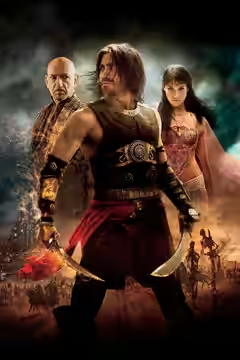
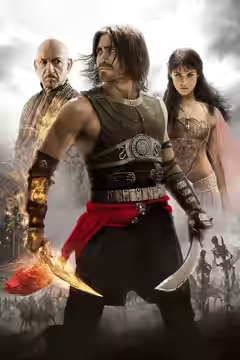
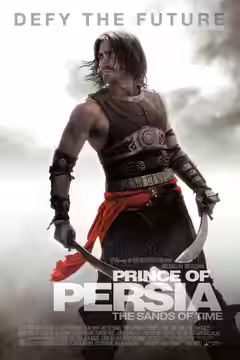
Mike Newell’s game adaptation looks handsome, moves briskly and has Alfred Molina. But the swordfights are cut to confetti, the leads never warm to each other, and the plot stops every twenty minutes to explain its dagger again.
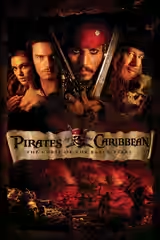
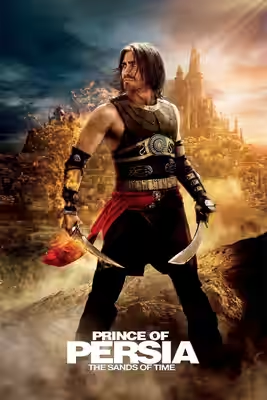
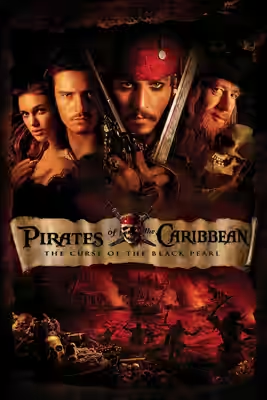
Mike Newell’s Prince of Persia: The Sands of Time is adapted from the video game, and producer Jerry Bruckheimer has plainly built it to do for sand what the Pirates of the Caribbean films did for water. It has a prince, a princess with a secret, a dagger that turns back time, and a 12A certificate to keep all three friendly. Boaz Yakin, Doug Miro and Carlo Bernard’s script is a chase, Dastan and Tamina running with most of Persia behind them. It lasts 116 minutes and feels like a brisk two hours, which is the kindest thing we can say about its shape.
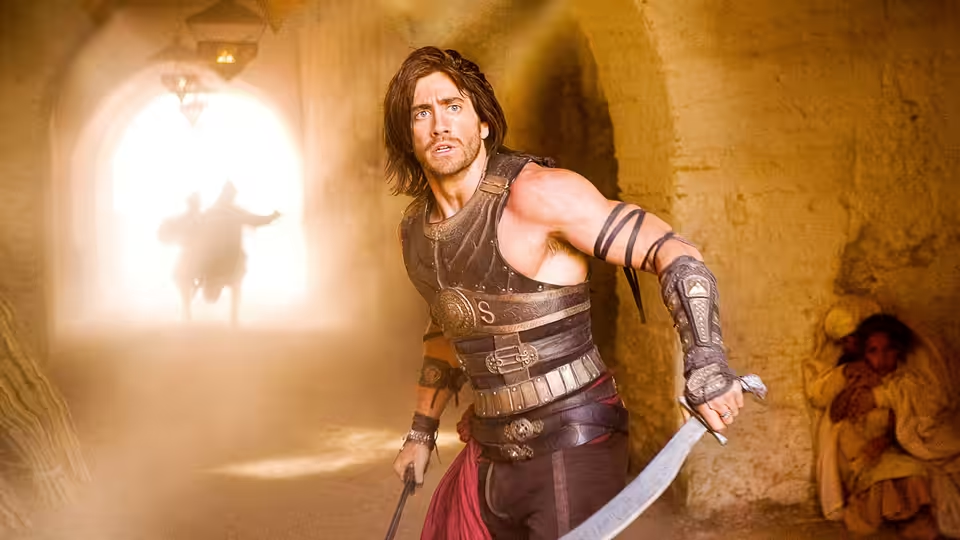
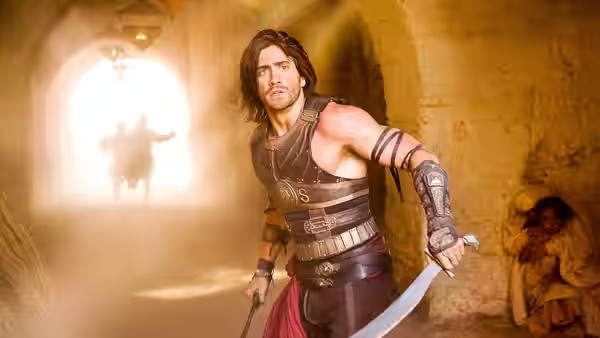
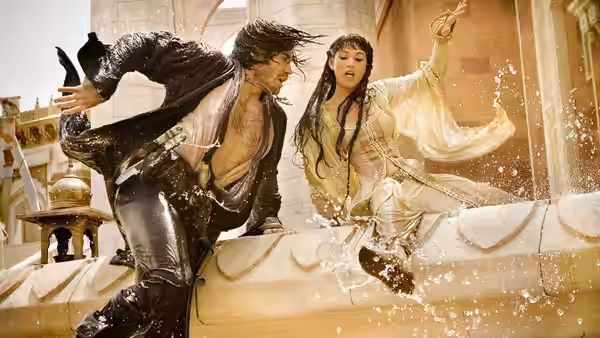
The opening is the best of it. Dastan takes Alamut at night, going up the outer wall while the army waits at the gates, and John Seale shoots it in torchlight and dust so that you can see the height of the drop and the man making it. Wolf Kroeger’s city is built in real tiers, roofs and balconies and ledges a few feet apart, and Gyllenhaal, or a stuntman in his clothes, goes over them at a run. For twenty minutes we were enjoying ourselves without reservation.
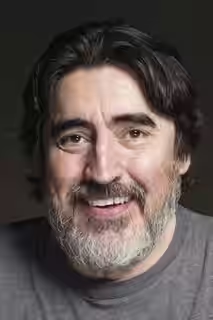
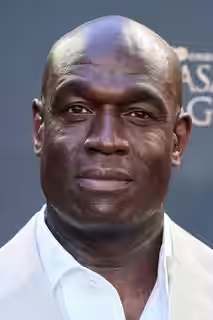
Alfred Molina arrives around the hour as Sheik Amar, who runs an ostrich race and talks about taxes. He is the only person on screen who seems to understand what kind of film he is in. His scenes with Steve Toussaint’s Seso, a knife-thrower who says little and means it, are the loosest in the picture. We laughed, properly, and it was mostly at the birds, which says more about the writing than the birds.
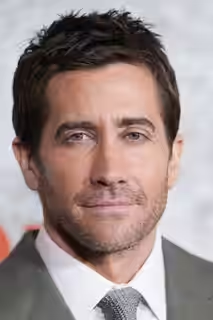
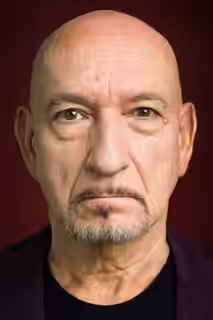
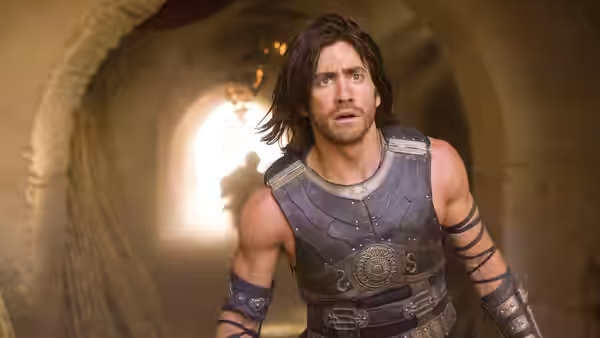
Gyllenhaal is in good shape, good humour and a bronzed beard, and he never quite looks at home. He plays Dastan as an eager boy, but there is no edge to him; when the film needs him to be dangerous he goes earnest instead. Arterton has the harder job, guarding the dagger while being dragged across the desert by the man who took it, and she is better than her lines, which are mostly bickering. The two of them circle each other for ninety minutes and the moment the film is waiting for never comes. Kingsley does his quiet-uncle act and is given little beyond it.
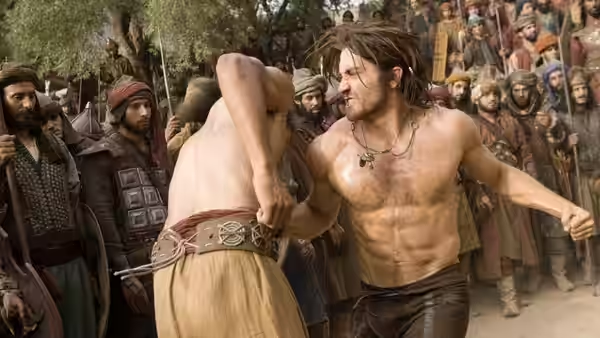
The fights are the problem, and it is a surprising one given who cut them. Mick Audsley, Martin Walsh and Michael Kahn share the editing credit, and the swordplay comes out in half-second pieces: a blade, a face, a fall, a blade. We could rarely tell where anyone was standing. The Hassansins, killers led by Gísli Örn Garðarsson whose credits include a Whip Man and a Porcupine, are a good idea for a monster, and each fight with them is over before we had worked out what they could do. The time-reversal effect is neat the first time, and the film shows it to us, with narration, roughly once a reel.
Penny Rose’s costumes are detailed and dusty, Seale lights the desert in long amber afternoons, and Harry Gregson-Williams keeps the brass and the wordless choir at full volume whenever a horse moves. What it is wrapped around is a story that keeps stopping to explain itself. Tamina tells Dastan what the dagger does; then she tells him again; and by the third telling we had stopped listening and started waiting, and we were still waiting an hour later.
Newell made Four Weddings and a Funeral and Harry Potter and the Goblet of Fire, and he has always been better with people in rooms than with armies. That holds here. The sheik’s tent and a quarrel between the brothers play; the big set pieces feel handed to a second unit and returned. The film it most wants to be is the first Pirates of the Caribbean, which had Johnny Depp doing something nobody had asked for.
Most critics came out about where we have, divided and a little tired, and that seems fair. If you have a twelve-year-old and a wet afternoon it will do the job, and the Alamut climb and the ostriches will do it well. Anyone older will remember the climb, the birds, and not much else.