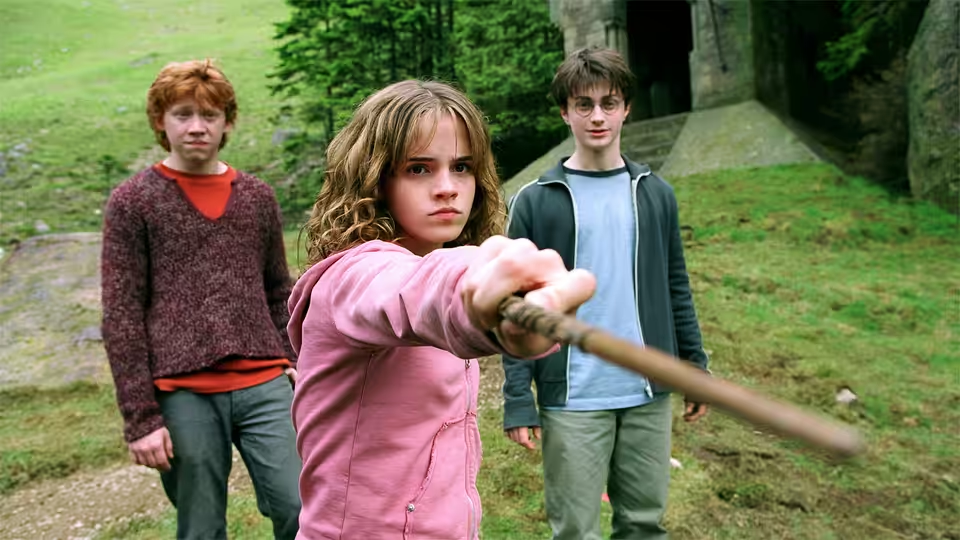
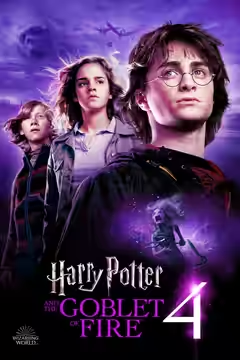
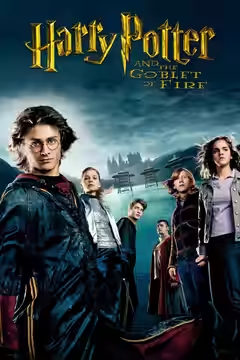
Mike Newell’s Potter is the first to feel like it was made by someone who remembers being fourteen. The tournament set pieces are noisy and the plot is shoved through at a run, but the ball, Gleeson and the ending are worth the wait.
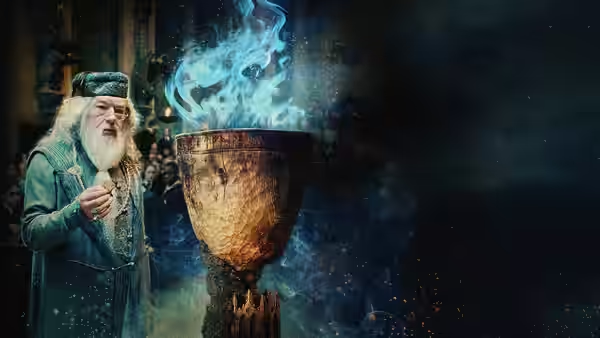
Mike Newell’s Harry Potter and the Goblet of Fire is the fourth film and the first to carry a 12A, and it earns the certificate. The plot: Hogwarts hosts the Triwizard Tournament, a schools competition with dragons in it, and Harry’s name comes out of the goblet when it should not. Steve Kloves has cut J.K. Rowling’s novel to 157 minutes, dropping the Dursleys and most of the Ministry, and the film still moves at a sprint. What Newell has grasped, and the earlier directors did not quite, is that a fourteen-year-old is more frightened of the girl across the classroom than of anything with scales.
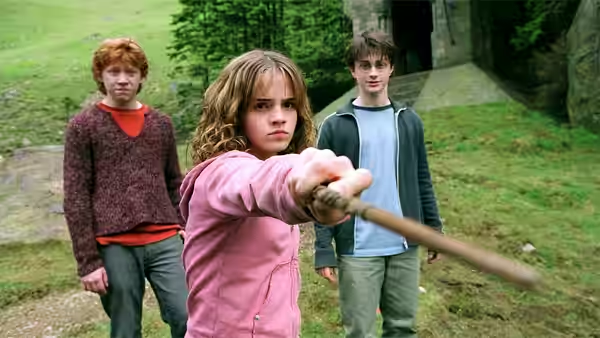
So the best scenes have no effects in them. Ron Weasley (Rupert Grint) unwraps a set of maroon dress robes with lace at the cuffs and holds them as if they had died. The boys are made to waltz with each other in a dancing lesson. Alan Rickman’s Snape patrols a silent study hall and clips heads as he passes. Grint is the funniest he has been, and his sulk about Hermione’s date carries the whole Yule Ball sequence; Emma Watson plays the end of that evening on the staircase and gets it right. We laughed at the robes and then felt for the boy in them, which is the right order.
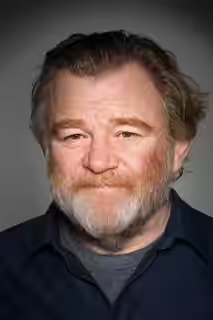
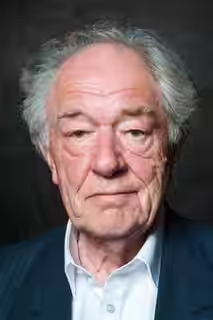
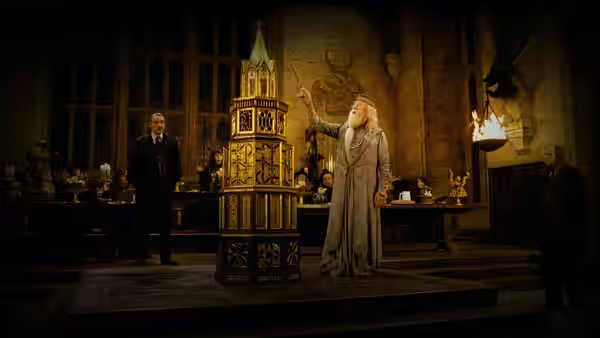
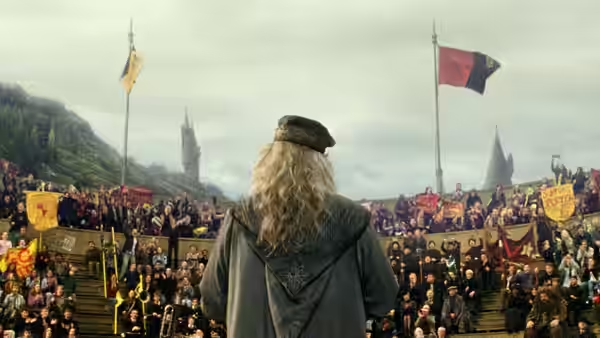
Brendan Gleeson arrives as Alastor ‘Mad-Eye’ Moody with a wooden leg, a hip flask and a glass eye that swivels on its own, and he treats the part as a licence to frighten children for their own good. His first lesson is an interrogation with hexes. He is the film’s best new thing, and Newell holds on him a beat longer than the plot requires. Michael Gambon’s Dumbledore has become a shouter; when he grabs Harry by the collar it is the first time this Dumbledore has looked worried, and it helps.
Stuart Craig builds the World Cup stadium as a tower of tents and turns the Great Hall into a room of ice for the ball. Roger Pratt shoots the castle in November greys, then lights the ball gold, so it is the one place in the film anyone looks happy to be. Jany Temime’s costumes do a good deal of the storytelling: the Durmstrang boys in fur, the Beauxbatons girls in blue silk, the Weasleys in whatever was left. Patrick Doyle takes over the music and writes a proper waltz for the occasion; his tournament cues are brass and hurry.
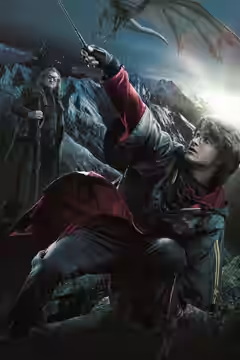
The tournament is the trouble. The first task puts a dragon in an arena and then lets it out to chase Harry over the castle roofs, and once it is a chase it looks like every other chase. The second, underwater, is murky and long. Newell has no particular eye for action, and Mick Audsley cuts the set pieces hard to disguise it. Audsley has the harder job elsewhere, because the film keeps arriving at scenes it has not set up: the World Cup ends before a ball is thrown, and anyone who has not read the book will not know who Barty Crouch is or why the courtroom in Harry’s dream matters. David Tennant, as Barty Crouch Junior, flicks his tongue and is gone. We were bored in the lake and knew we were meant to be thrilled, which is worse.
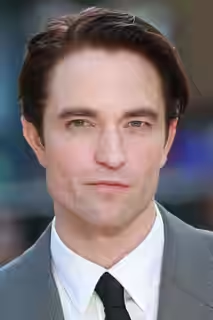
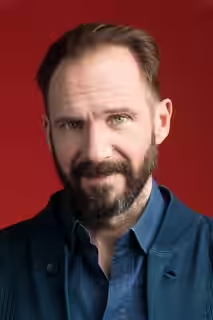
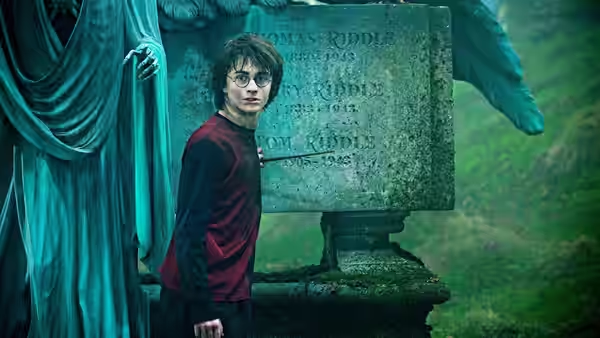
Then Ralph Fiennes arrives, late, as Lord Voldemort, and we will say nothing about the circumstances. He plays him in a whisper, with a face that has lost its nose, and the film goes quiet for him; for perhaps ten minutes this is a horror film and a good one. We were unnerved, in a 12A, and had not expected to be. Daniel Radcliffe spends much of the film looking as if he is waiting for his cue and is at his best here, with nothing to do but be afraid. Robert Pattinson’s Cedric Diggory is upright, decent and slightly dull, which is the part.
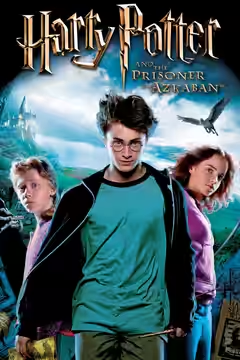
Alfonso Cuarón’s Harry Potter and the Prisoner of Azkaban (2004) is the better-made film, shapelier and stranger. Newell’s is warmer and has too much in it. See it if you were ever fourteen and remember it without fondness, or if you have read the book and can forgive what the film threw away. Everyone else should sit through the tournament, keep a reader within reach, and wait for the ball and the last twenty minutes.