Rowling’s first screenplay returns to her world with a pleasant zoologist, a suitcase of creatures and a warm supporting turn from Dan Fogler. The beasts are a delight; the rest is scaffolding for films not yet made, and the two stories never quite meet.
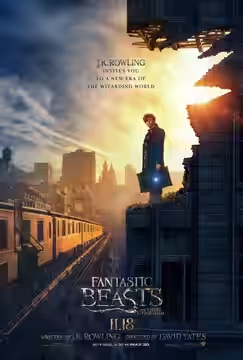
J.K. Rowling has written her first screenplay and David Yates, who directed the last four Harry Potter films, has shot it. The book of the title is a pretend textbook with no story in it, so a story had to be found. They have found two: a gentle comedy about a shy zoologist chasing his escaped animals around 1926 New York, and a dark thriller about something smashing that city’s streets while a preacher blames witches. The first is a pleasure. The second exists to start a franchise. They share 133 minutes and not much else.
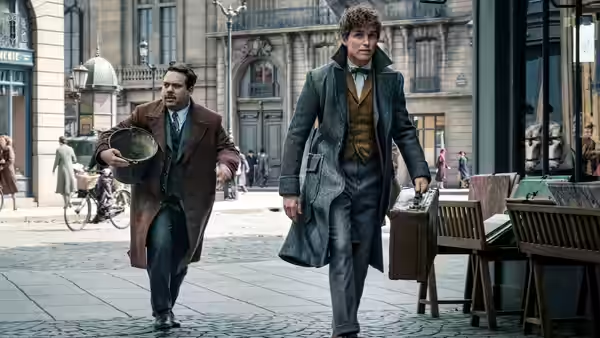
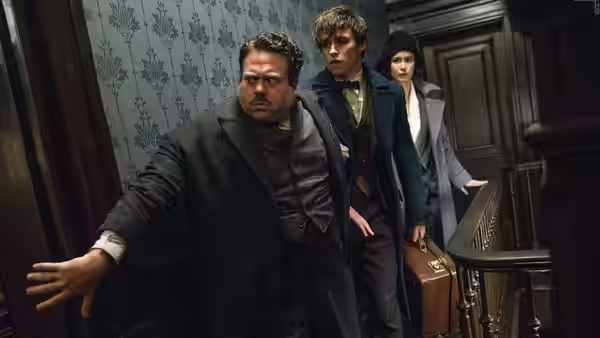
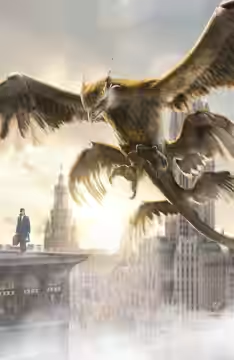
The pleasure first. When Jacob Kowalski (Dan Fogler) finally climbs down into Newt’s suitcase it opens onto a shed and then onto a landscape. Stuart Craig has built it as a row of habitats, a patch of savannah, a snowfield, a nest, each with its own weather, joined by a wooden walkway. It is the best set in the film and the one the film spends least time in. The creatures are drawn with care, above all the Niffler, a duck-billed thief with a pouch that holds a jeweller’s window, working through a bank vault like a burglar with a deadline. We laughed at it every time it appeared, and we cannot say that of anyone human on screen.
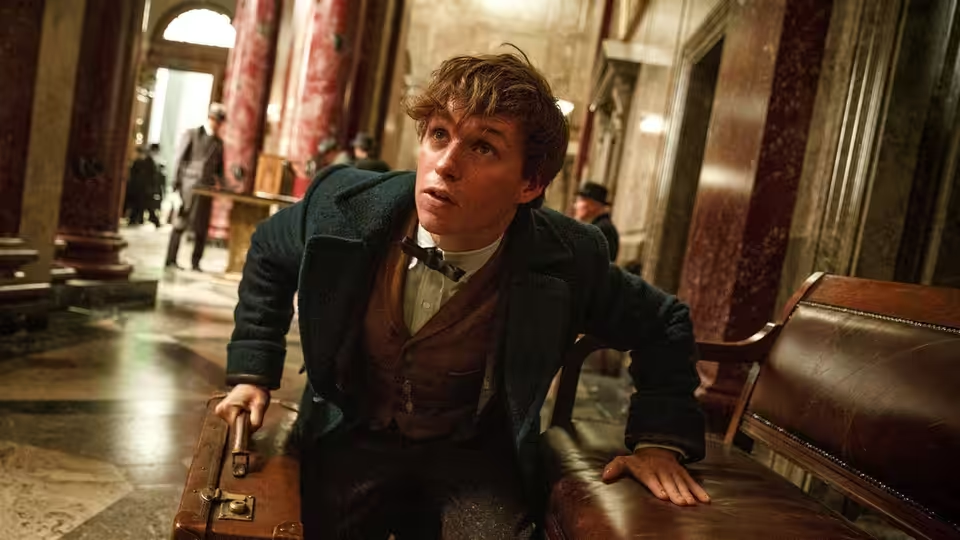
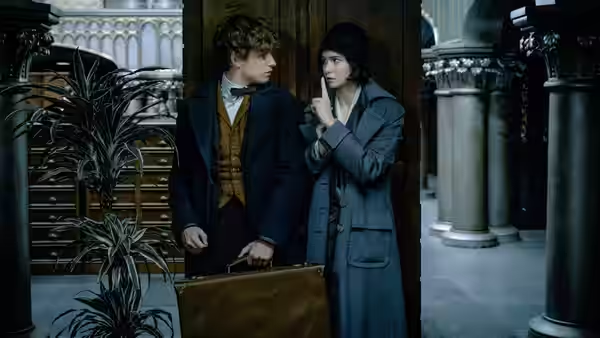
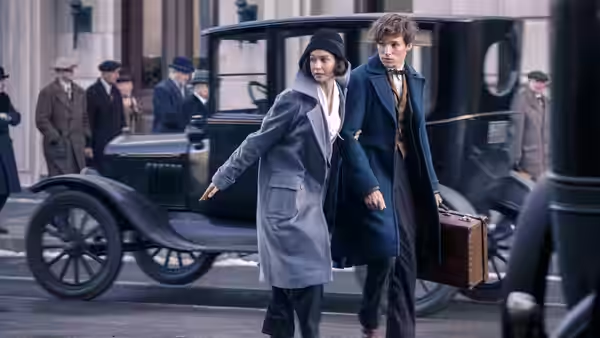
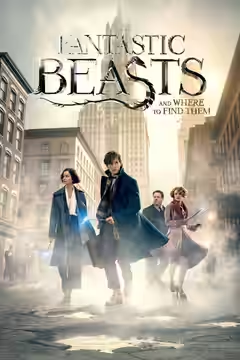
Colleen Atwood dresses everyone precisely: Newt in a teal coat a size too big, Tina Goldstein (Katherine Waterston) in a mackintosh that says she has been demoted, her sister Queenie (Alison Sudol) in pink silk nobody on her wages could afford. Philippe Rousselot shoots the city in brown and rain-grey and the inside of the case in full colour, and the film is plainly happier in the case. James Newton Howard’s score swells at every reveal, whether or not the reveal deserves it.
Fogler and Sudol are the reason to stay. Jacob is a cannery worker who wants to open a bakery and has just been refused the loan; he has no magic and is delighted by everything, and Fogler plays that delight without a trace of the gormless sidekick. Queenie reads minds and is bored by most of them. When she reads his, over a dinner that assembles itself in mid-air, Sudol makes it tender rather than cute. A late scene between the two of them, which we will not describe, was the only point at which we felt a lump in the throat, and it has nothing to do with the wizard plot.
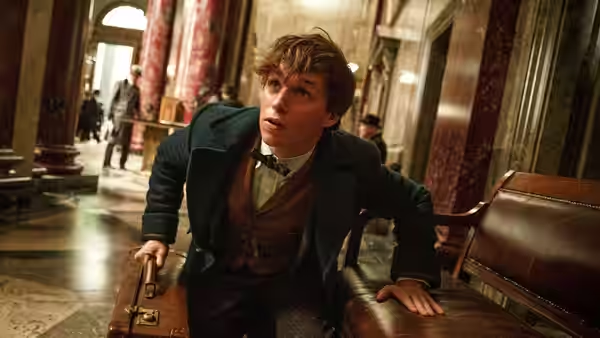
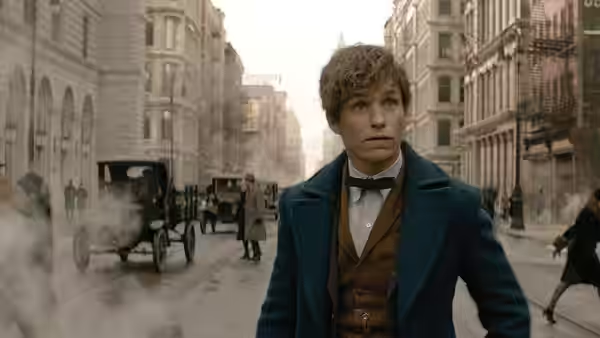
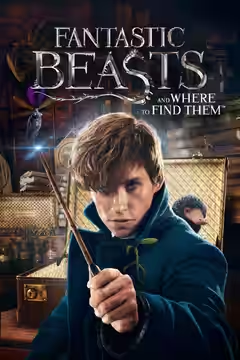
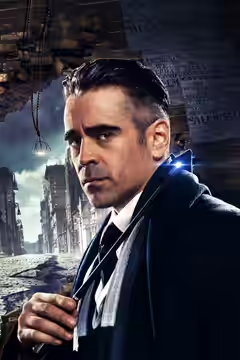
Eddie Redmayne plays Newt with his chin tucked and his eyes on the floor, addressing his lines to the side of the frame. It is a coherent idea of a man who prefers animals to people, and it wears thin by the second hour, when the script needs him to carry a thriller and he keeps stepping out of it. Waterston has anxiety to play and little else. Colin Farrell, as Graves, the Congress official who takes an interest in Newt’s case, is the one adult who speaks as though the plot matters, and the film steadies whenever he is in it.
The thriller is where it comes apart. Mary Lou Barebone (Samantha Morton) preaches against witches on church steps and keeps her adopted children in fear; Credence (Ezra Miller) flinches through his scenes. Rowling the novelist builds by accumulation and trusts the reader to hold it all. A screenplay cannot, and Mark Day, cutting between the animals and the anti-witch rallies, is left joining scenes that do not want to be joined. The last half hour is buildings coming apart in grey dust, and we were bored by it, and then annoyed at being bored, because the film had spent two hours telling us that the people in these streets mattered and then stopped looking at them.
Against the Potter films it is missing the school. Hogwarts gave those stories a home and a term to fill; Newt has a suitcase and a boat to catch, and the film never decides whether he is a visitor or a lead.
See it for the case, the Niffler and Fogler, at home, where the middle hour can be paused for tea and the grey finale looks like what it is. Children under ten may fidget; the church scenes earn the 12A. It is a first chapter, and it never forgets it.