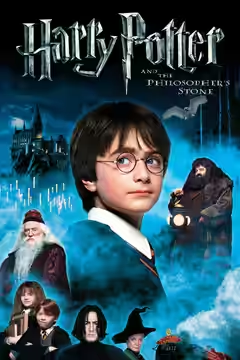
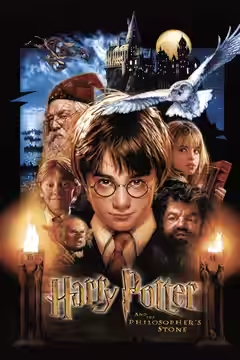
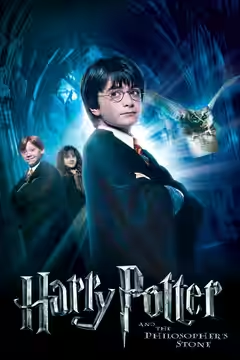
Chris Columbus has put J.K. Rowling’s book on screen in order, with nothing broken and nothing risked. Stuart Craig’s Hogwarts is worth the ticket on its own; the film around it is faithful, handsome and forty minutes too long.
Chris Columbus was handed a book its readers knew by heart and asked not to break it. He has not broken it. Working from Steve Kloves’s screenplay, he puts J.K. Rowling’s novel on the screen chapter by chapter, at 152 minutes, and the result is exactly what the title promises: an adaptation. It is well built, well cast and cautious to the bone. Children will love it. Adults will find plenty to look at and, somewhere past the ninety-minute mark, will look at their watches.
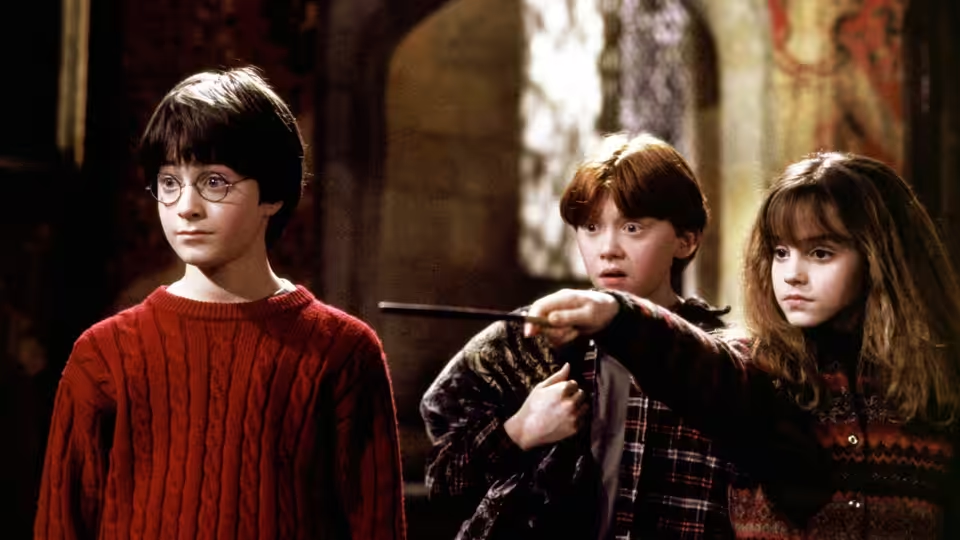
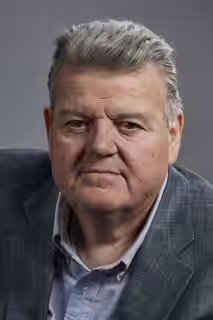
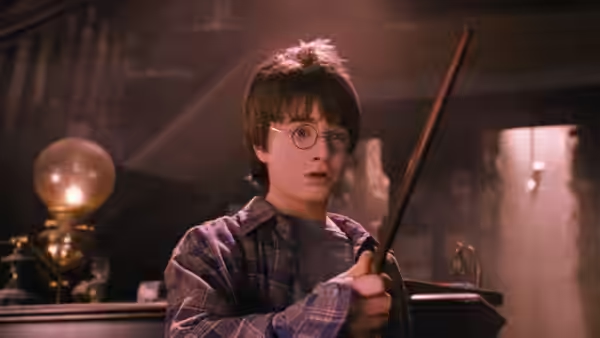
The opening hour is the best of it, because it is the hour with a shape. Harry (Daniel Radcliffe) lives in a cupboard at Privet Drive with an uncle (Richard Griffiths) who goes purple and an aunt (Fiona Shaw) who goes thin-lipped, and the pair of them play the Dursleys as a short, sharp cartoon of suburban meanness. Then Hagrid (Robbie Coltrane) arrives with a squashed birthday cake, and the film opens like a door. Diagon Alley leans in over the street, John Hurt’s Mr Ollivander stands among his wand boxes as if he has not left the shop in a century, and a train pulls out from a platform that should not exist. Every scene has a new thing in it, and the new things are good.
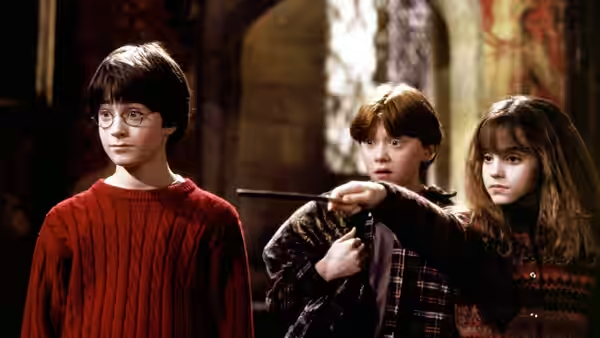
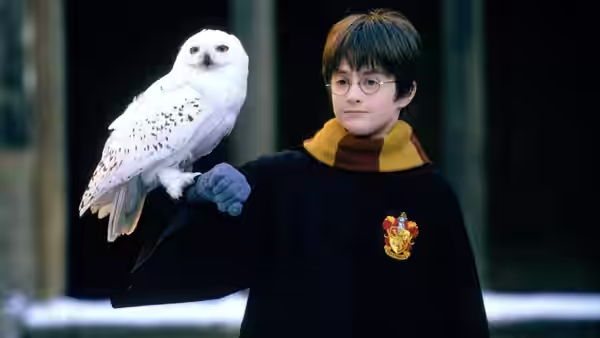
Stuart Craig’s production design is the reason to see this in the largest form you can. His Hogwarts is stone, dark wood and candle grease, a real school that has been left to a thousand years of eccentrics, and John Seale lights it with lamps and fires so the light is always the colour of something burning. We will own the moment: when the first-years walk into the Great Hall under its floating candles and painted sky, we felt a lift we had not budgeted for, and it came from the set, not from the story. Judianna Makovsky’s robes are heavy black wool that moves like school uniform, which is what it is, and Hagrid’s moleskin coat looks as though small animals live in it.
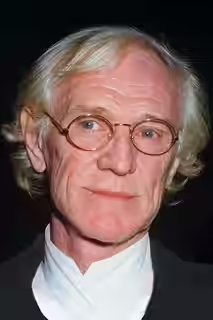
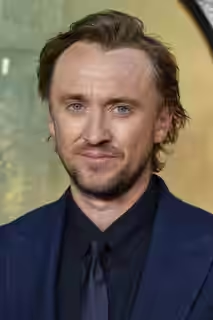
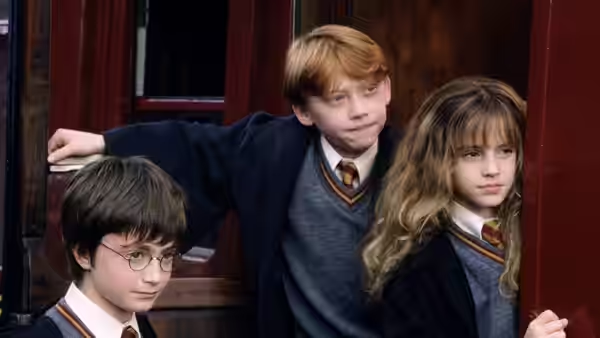
The grown-ups are cast with care and used sparingly. Coltrane is warm, huge and slightly out of his depth, which is right for Hagrid. Maggie Smith’s McGonagall can silence a corridor with one look over her spectacles. Richard Harris plays Dumbledore as a man who has forgotten more than the rest of the staff will ever know and does not mind. And Alan Rickman, as Snape, gets perhaps six minutes of screen time and steals every one of them, drawing out his vowels as if each were a pupil he was disappointed in. The children are children. Radcliffe is watchful and open and not yet an actor; Rupert Grint has a rubber face and knows it; Emma Watson pronounces every syllable as though it were being marked. Tom Felton sneers competently.
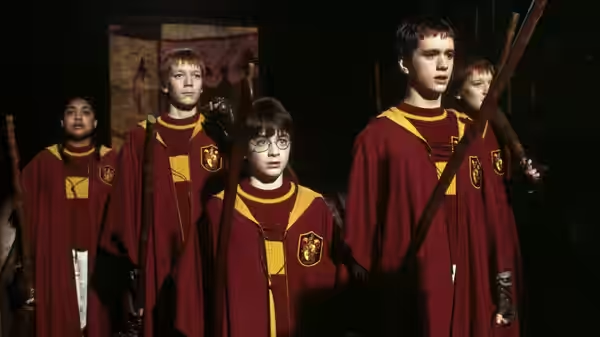
What goes wrong is measure. John Williams has written a lovely score, and the tinkling melody that opens the film is one of his best, but it is under everything, swelling at every doorway and every reveal, telling us to feel wonder while Craig’s sets were already doing the job. Richard Francis-Bruce cuts the Quidditch match into a blur of broomsticks and balls, fast and loud and hard to follow, and the film’s one set piece of pure action turns out to be its least legible sequence. And there is simply too much. Columbus keeps every episode because the readers would miss it, and so the second half becomes a list: a lesson, a corridor, a lesson, a feast. Around the two-hour mark we were restless, and then faintly cross at being restless in a room this well furnished.
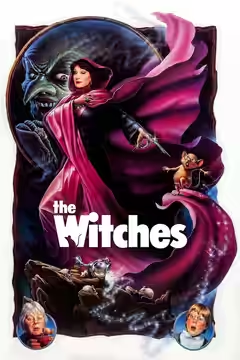
Columbus made Home Alone (1990), and he directs children the same way here, for broad reactions and quick laughs, which serves the Dursleys and lets down the quieter scenes. He is a safe pair of hands, and safe is what the producers wanted. Set against the children’s fantasies that frightened us as children, Nicolas Roeg’s The Witches (1990) chief among them, this has almost no edge at all; the one moment near the end that does unsettle, and we will not describe it, is over in a minute.
Watch it at home, with a child if you have one to hand and with the volume a notch lower than you would choose. The sets survive the small screen, the score becomes bearable, and the length matters less when you can pause for tea. It carries a PG and it earns it, just.