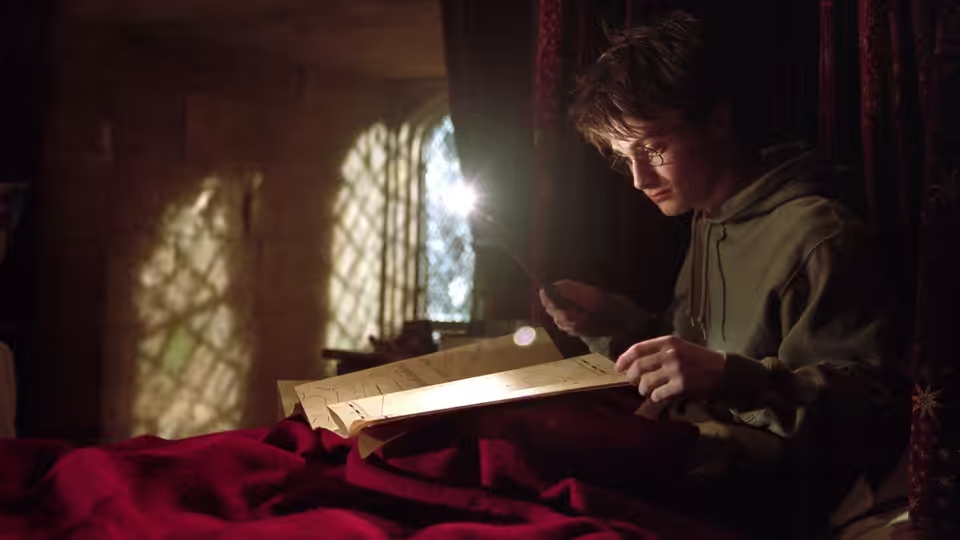
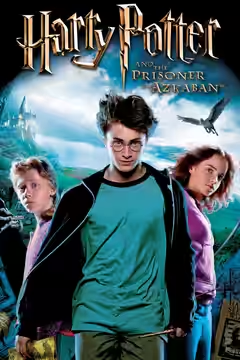
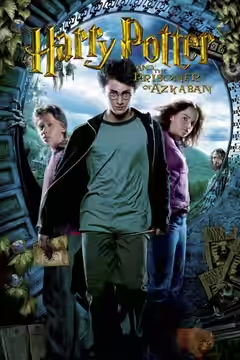
Alfonso Cuarón takes the third Potter book and makes the first Potter film that looks as if rain might fall in it. It is darker, funnier and better acted than the two before, and it fumbles its own plot in the last half hour.
The first two films were faithful, bright and made mostly indoors. For the third, producer David Heyman hired Alfonso Cuarón, and Harry Potter and the Prisoner of Azkaban is the first of these films with a point of view. It is the best of the three, and anyone who found the earlier two too polite should try again here.
Harry (Daniel Radcliffe) is thirteen and angry, and Cuarón lets him be. He runs away in the night and is picked up by the Knight Bus, a purple triple-decker that squeezes between two London buses like toothpaste from a tube. Sirius Black (Gary Oldman), a murderer, has escaped from the wizard prison, and the school is guarded by Dementors, hooded things that drift in and freeze the windows. The one that boards the train and leans into Harry’s compartment went through us like a draught. Michael Seresin lights the carriage from its lamps alone, frost climbs the glass, and John Williams’s score stops. It frightened us because it took its time.
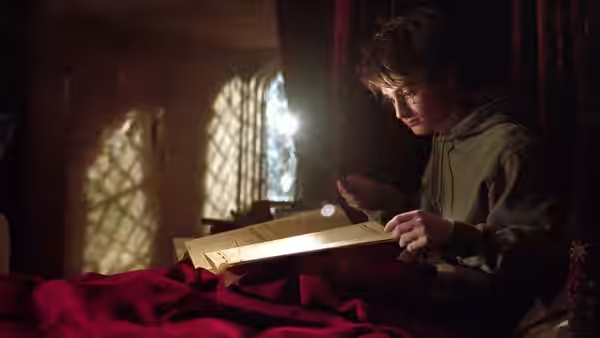
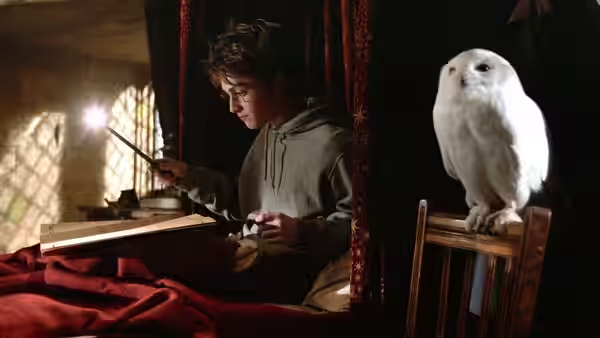
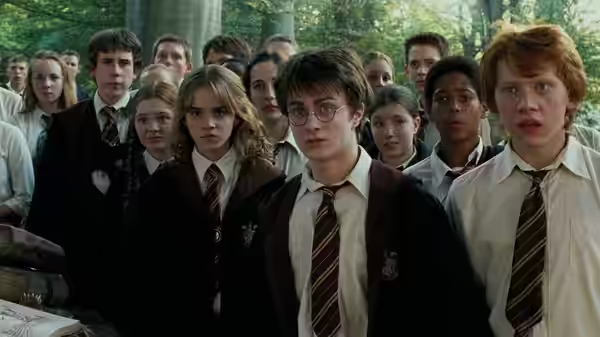
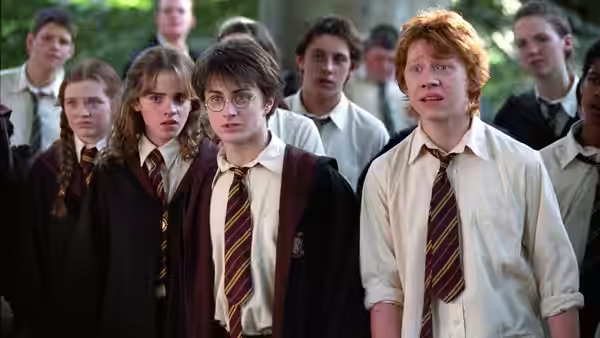
Stuart Craig has rebuilt Hogwarts around a hillside, with a covered wooden bridge, a stone courtyard and a clock tower whose pendulum swings behind the actors. Seresin shoots it in grey Scottish daylight with a wide lens that makes the corridors long and the children small. Jany Temime puts the pupils in jeans and hooded tops when they are off duty, and they look like pupils at a school. Steven Weisberg closes scenes with an iris shrinking to black, and the film has a rhythm the earlier two did not.
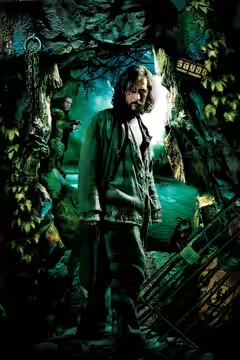
The adults are the best yet. David Thewlis’s Remus Lupin, the new Defence Against the Dark Arts teacher, is shabby, tired and kind. His lesson in which the class takes turns making its worst fear ridiculous, with Alan Rickman’s Snape ending up in a grandmother’s hat and handbag, is the funniest set piece in the series; we laughed out loud. Emma Thompson’s Sybill Trelawney is wrong about nearly everything and sincere about all of it. Oldman appears mostly on wanted posters, screaming, until the last act, and then earns his billing in a few minutes.
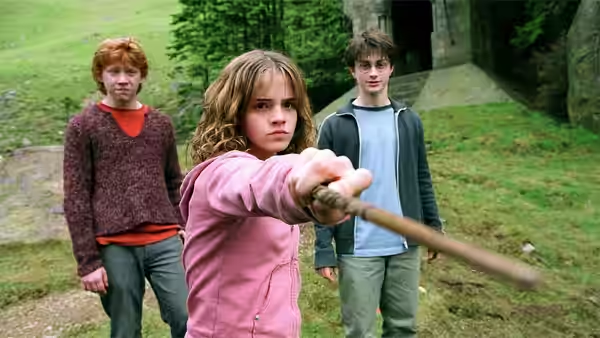
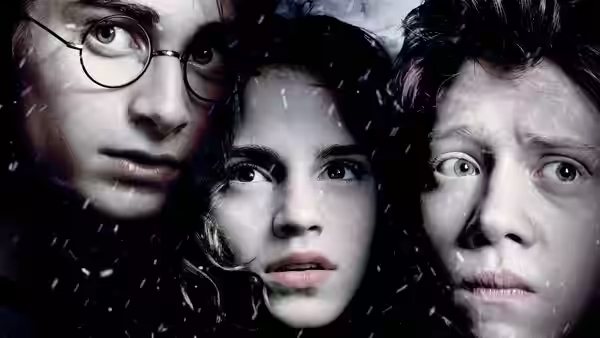
The children have grown unevenly. Emma Watson is acting now, properly; when Hermione throws a punch it is thrown by someone who means it. Rupert Grint is broader and gets away with it because Ron is broader. Radcliffe is better than before and still watchful rather than expressive. When the film asks him for grief, on the bridge in the snow, he gives it stillness and Thewlis does the rest.
Then the flight. Harry is thrown onto the back of Buckbeak, the hippogriff, it runs off a cliff, and the camera goes with them down over the lake, his hand trailing in the water, Williams bringing the theme up underneath. We were moved, and slightly embarrassed to be, because it is only a boy on a large bird. Cuarón has spent an hour making the school cold and shadowed, and a minute of open sky lands like a gift.
The problem is the plot. Steve Kloves’s screenplay keeps the pace up by cutting explanation, and the last half hour, which takes a turn we will not describe, delivers a great deal of history at once, with several people shouting. Anyone who has not read J.K. Rowling’s book will follow what happens and be hazy about why, and one important question about who did what to whom is never answered on screen. The film runs 141 minutes and feels it in the middle, where a Quidditch match in a thunderstorm is spectacular and advances nothing.
Even so, this is the one we would put on. It is a PG, and the Dementors are well up to that certificate; a nervous eight-year-old may want a hand to hold on the train. Everyone else can watch the weather come in over the hills and be glad someone finally let it.