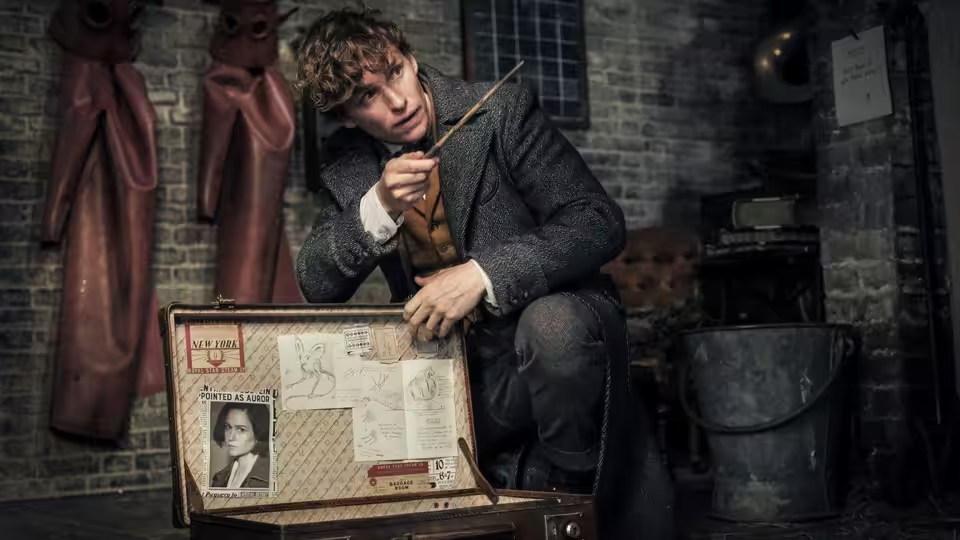
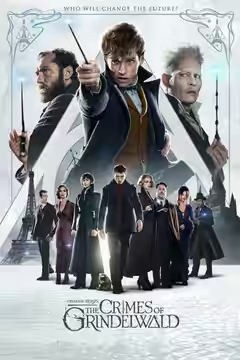
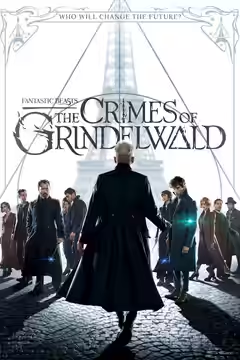
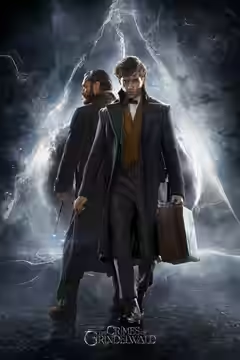
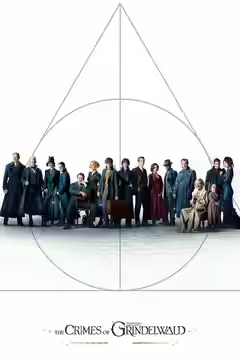
The second of Rowling’s planned five prequels is the best-dressed and worst-plotted film in the series: a wizarding Paris built to the last brass fitting, in service of a story that keeps stopping to check its own family trees and never gets going.
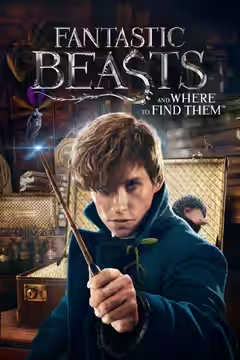
Two years after Fantastic Beasts and Where to Find Them, J.K. Rowling’s second screenplay sends Newt Scamander to Paris after a boy who may be a weapon, and sends the audience after the plot. This is the middle chapter of a long series and it behaves like one. People are introduced so that they can be useful later, revelations arrive that only mean something if you have been keeping notes, and the story stops rather than ends. It is handsomely built and, for long stretches, a chore.
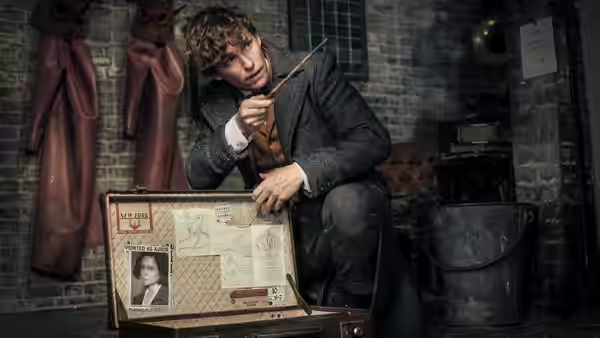
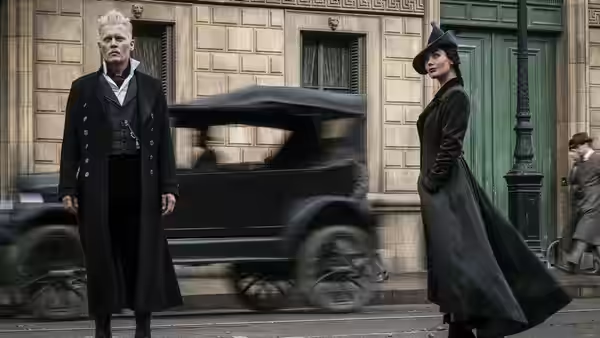
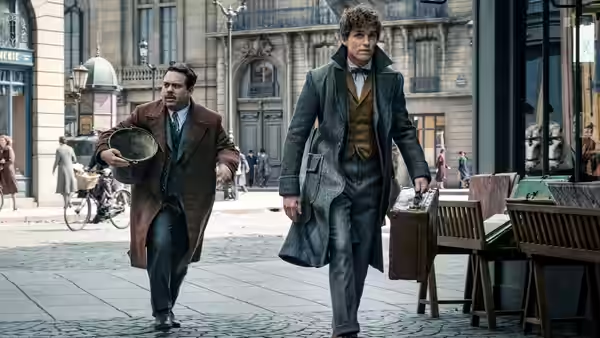
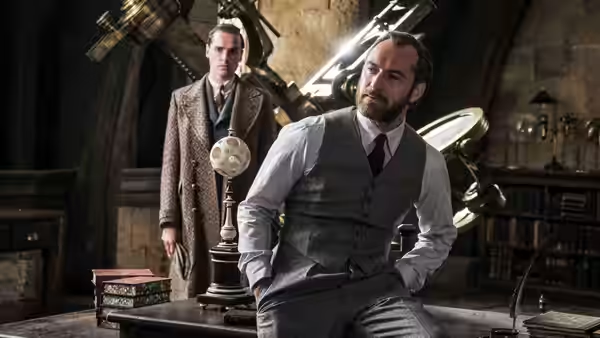
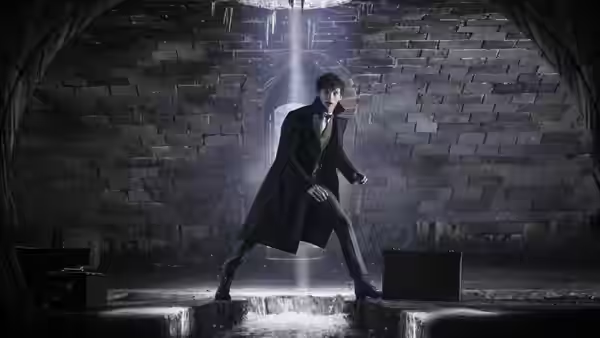
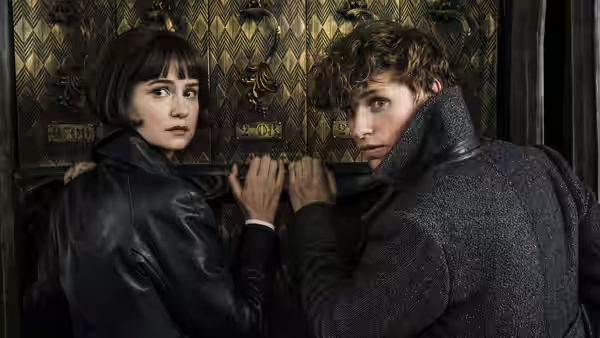
The building is the good news. Stuart Craig, who designed all eight Potter films, gives us a wizarding Paris entered through the skirts of a bronze statue, a Ministry of Magic of green tile and brass lifts, and a travelling circus of striped tents lit from inside. Philippe Rousselot shoots it in rain and slate grey, with lamplight the colour of weak tea, so that even the daytime scenes look like early evening. Colleen Atwood’s costumes do a good deal of the characterisation the script never gets round to: Newt’s blue coat, Leta’s severe black tailoring, Grindelwald in pale wool with his hair bleached to match. It is a fine thing to sit in front of.
The creatures are still the best actors. There is a kelpie in Newt’s basement that he rides like a horse, a litter of baby nifflers stealing anything that shines, and a Chinese cat the size of a bus loose in the Paris streets, pacified with a feather on a stick. We grinned at all of it. These sequences have a problem, a solution and a joke, which is what a scene needs, and they have almost nothing to do with anything else in the film.
What they are attached to is a great deal of talking. Rowling writes as a novelist here, giving every character a secret and every secret a scene, and Mark Day cuts them together in short blocks so that we are never in one place long enough to want to stay. A stranger explains his lineage. Somebody else corrects him. Somewhere around the hour we realised we had been handed a family tree instead of a story, and we were cross about it, and the crossness did not lift. James Newton Howard’s score swells with choir at each disclosure to tell us we have learned something important, which is considerate, because the dialogue frequently has not made it clear.
The humans are a mixed lot. Redmayne’s Newt, all mumble and averted eyes, was a charming oddity in the first film and is a set of tics in this one. Depp plays Grindelwald almost in a whisper, still and pale-eyed, and there is a reasonable idea in it, a demagogue who persuades rather than shouts; the trouble is that nothing else in the film shouts either, so his calm has nothing to push against. Katherine Waterston’s Tina, the co-lead last time, is here mostly to be looked for. Dan Fogler and Alison Sudol carry what feeling the film has, and Fogler in particular can make a man asking a woman not to leave sound like a real person in a real kitchen.
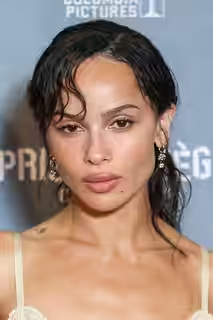
Jude Law is the one clear pleasure among the wizards. His Dumbledore is quick and warm and evasive, a man who plainly enjoys being cleverer than everyone present and is plainly ashamed of something, and the film’s single visit to Hogwarts, where he takes a class, was the only stretch in which we forgot we were waiting. Zoë Kravitz is the best of the newcomers, giving Leta a guilt she carries in her shoulders, though the film eventually explains it at a length that undoes the work.
David Yates directed the last four Potter films and knows this register better than anyone. He directs traffic here, competently, and traffic is what he has been given. Those films, at their best, had one school, one year and one problem; the first Fantastic Beasts had one suitcase and one city. This has three cities, a dozen principals and a plot that turns on who was born to whom.
The reviews so far are split more or less down the middle, and we can see both halves. If you loved the first one, there is enough here to pass the time, and the coats alone repay a big screen. It runs 134 minutes and carries a 12A, and when the lights come up the story the title promises is just about to begin.