Chris Columbus’s second trip to Hogwarts is darker, better built and a good half hour too long. Kenneth Branagh’s preening Lockhart and Stuart Craig’s sets earn the evening; the film around them is a book read aloud with pictures.
Chris Columbus’s second Harry Potter film does most things a little better than the first. It is darker, faster when it moves and more handsomely built, and it is 161 minutes long, which for a story about a school year and a monster in the plumbing is about thirty too many. Steve Kloves’s screenplay keeps nearly everything from J.K. Rowling’s novel, and the result is complete rather than shaped. Children who know the book will not mind. Anyone else should know what they are signing up for.
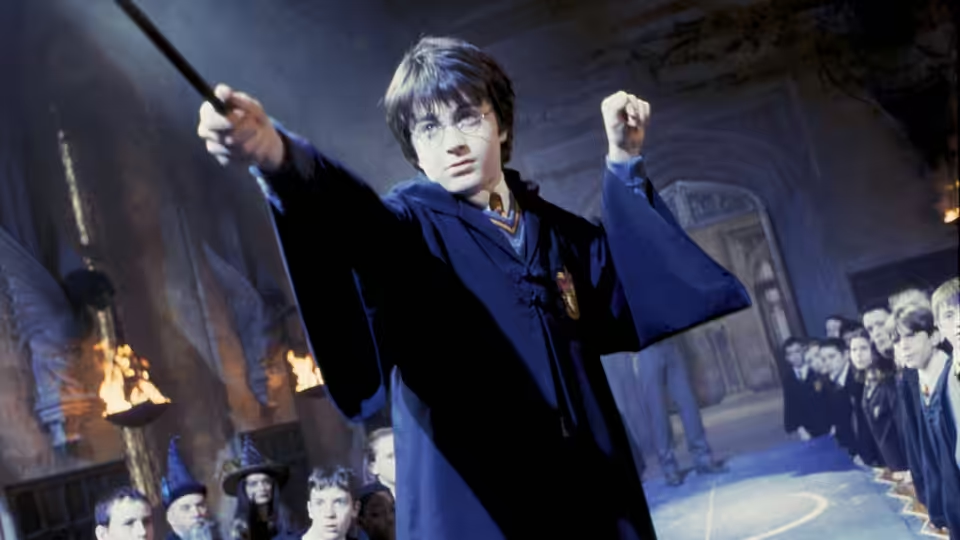
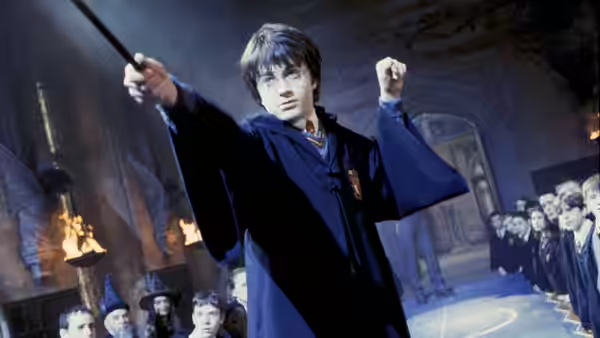
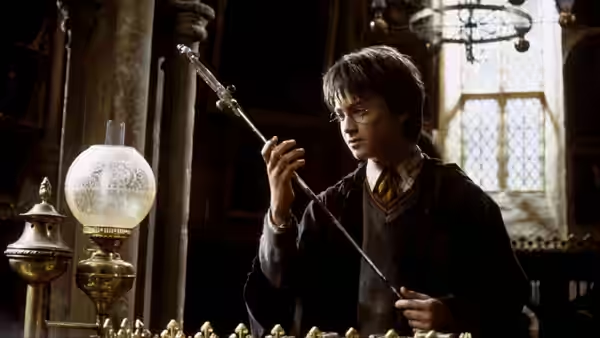
Stuart Craig has widened the world. The Burrow is a house that should have fallen down years ago, rooms stacked on rooms, a kitchen where the washing-up does itself. Lockhart’s classroom is hung with portraits of Lockhart. Roger Pratt lights the school with less sunshine than before: the corridors are amber, the courtyards grey, and when the message appears on the wall it is lit by torches so the letters look wet. Lindy Hemming puts Lockhart in robes the colour of his own book jackets.
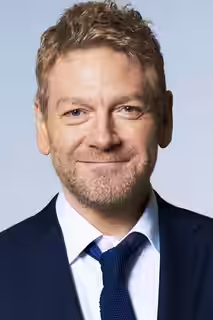
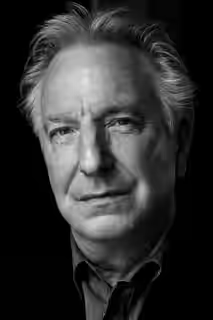
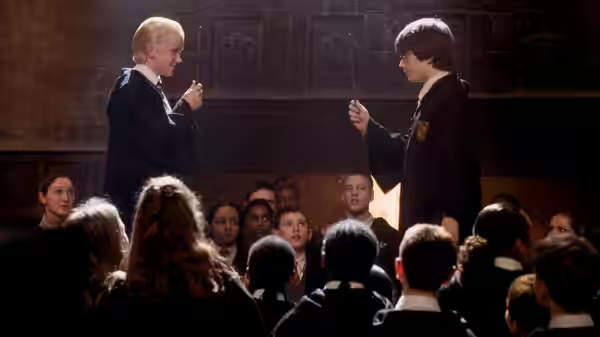
Kenneth Branagh is the reason to sit through it. His Gilderoy Lockhart has the smile of a man watching himself in a mirror that is not there, and whenever the plot needs him to be useful he is elsewhere signing photographs. We laughed out loud at his duelling club, where Alan Rickman’s Snape throws him the length of a hall and he gets up insisting that was the plan. Jason Isaacs plays Lucius Malfoy as patient contempt: white hair, black cane, a voice that never rises. Shirley Henderson, a grown woman playing a teenage ghost who has been sulking in a lavatory since she died, is the film’s oddest and best joke.
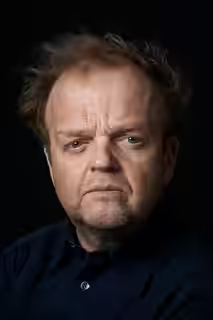
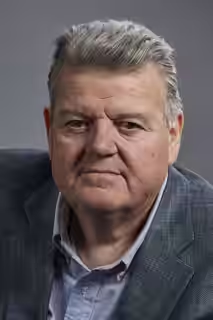
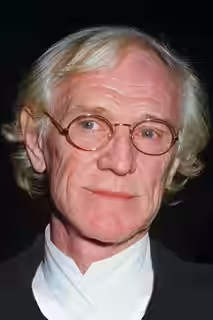
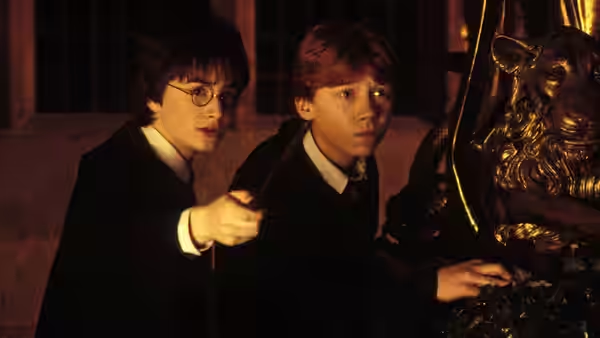
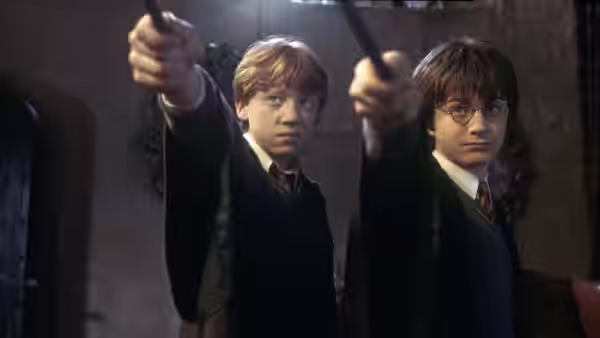
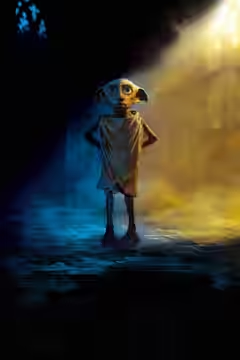
The children are as they were, a year taller. Daniel Radcliffe has settled into the part; he is still stiff whenever he has to say a line rather than react to one. Rupert Grint carries the film’s fear with his whole face, especially in a forest sequence involving spiders that frightened us more than a PG has any business doing; Grint’s terror was half the reason. Emma Watson delivers her lines as if each one were being marked. The adults are mostly furniture: Richard Harris’s Dumbledore is gentle and largely absent, Robbie Coltrane’s Hagrid is given one thing to do, and Rickman is on screen for perhaps six minutes. Dobby, voiced by Toby Jones, will divide a sofa; Jones does what is asked, and what is asked is squeaking.
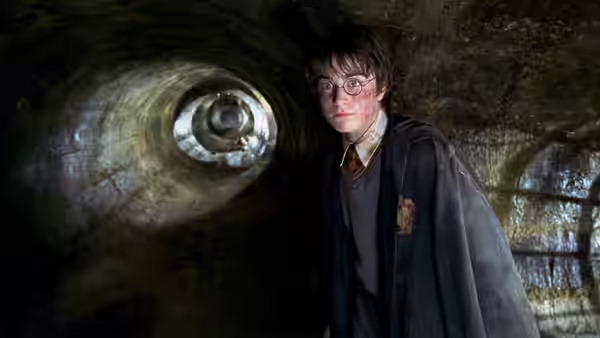
Here is what we felt. When Harry first hears the voice in the walls, a hiss moving along a corridor under John Williams’s low strings, we sat up; it is the film’s best idea and Columbus handles it with a restraint he shows nowhere else. Somewhere in the second hour, during a Quidditch match faster and rougher than the first film’s, we caught ourselves checking our watch and were annoyed, because the pictures were still good. The trouble is Peter Honess’s cut, or the brief he was given: nothing goes. Every subplot from the book gets its full scene, so the mystery, which is a good one, keeps stopping to let something else through.
Williams brings back the flying theme from the first film and adds a sliding minor-key motif for the Chamber that is unsettling the first time and less so the eighth. Columbus directs as he did before: he points the camera at the thing and lets the thing be spectacular. That works for a flying car chasing a steam train and less well when a scene needs shaping rather than displaying, and the climax runs on well after its point has been made.
Against Harry Potter and the Philosopher’s Stone (2001) this is an improvement in every department except length. If you have children who know the book, put it on and let them tell you what is coming; they will be right. If not, watch it at home over two evenings. The film is long enough to have an interval built in, and generous enough not to notice you have taken one.