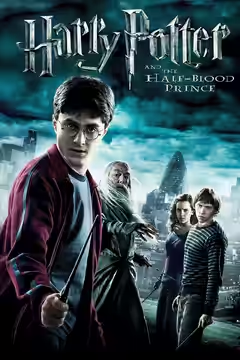
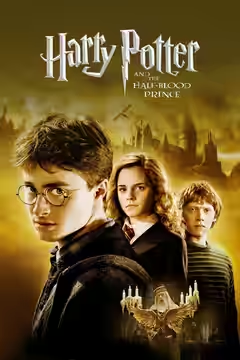
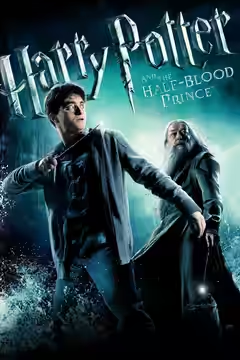
The sixth Potter is the funniest and best-looking of the series, with Jim Broadbent and Rupert Grint carrying the middle hour. It is also the one in which least happens, and when the story finally arrives it is over in ten minutes.
The sixth Harry Potter film has a war coming and a school year to get through first, and it is far more interested in the school year. David Yates, back after Order of the Phoenix, and Steve Kloves, adapting J.K. Rowling’s novel, have made a teenage comedy of manners with a thriller bolted to the side. The comedy is the best thing the series has done. The thriller is hurried, and the thriller is what the title is about.
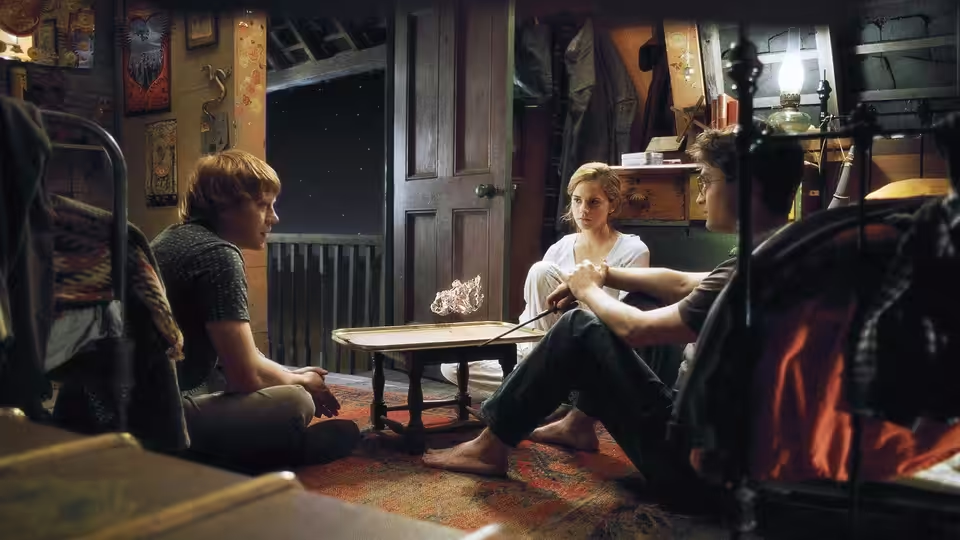
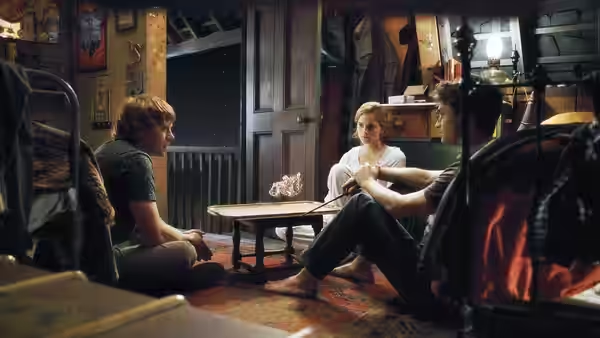
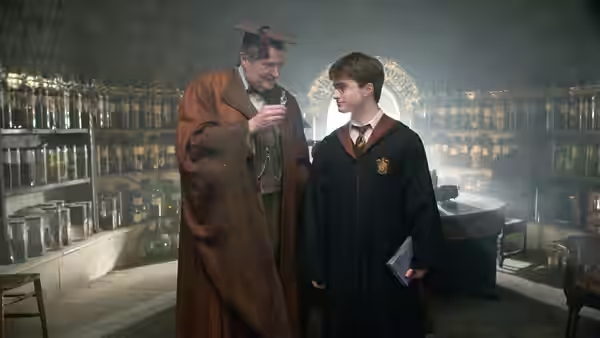
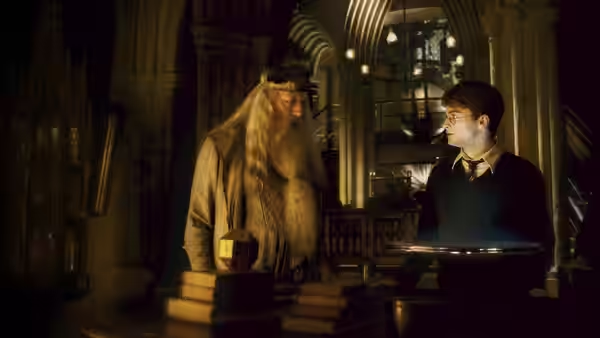
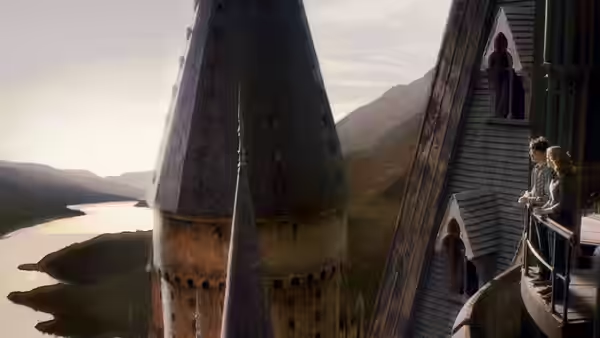
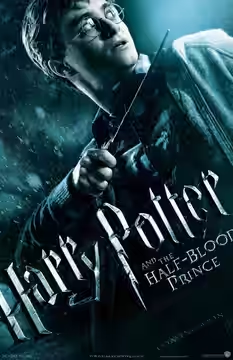
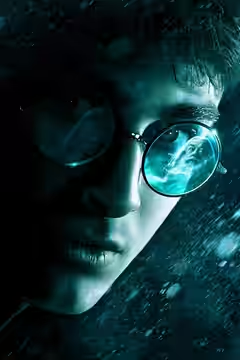
Bruno Delbonnel has drained the colour out of Hogwarts. Everything is green-grey and lit from windows and candles, so the castle sits in a permanent November afternoon and faces come out of the dark one at a time. It is the handsomest the series has looked and the gloomiest. Stuart Craig gives Slughorn rooms crammed with cushions and framed photographs of pupils who went on to do well, and the potions dungeon a basin of something that smells of whatever you most want. Jany Temime loosens the ties, so the uniforms hang the way they do on sixteen-year-olds, badly and on purpose.
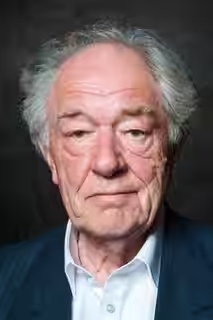
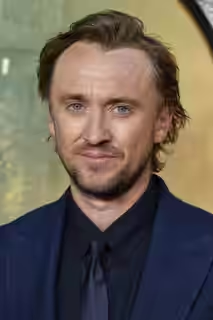
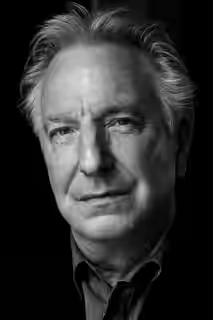
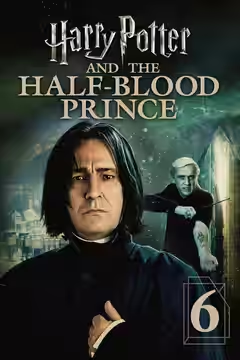
The older cast do the heavy lifting. Jim Broadbent plays Horace Slughorn, the potions master Dumbledore lures back to teach, as a man who collects promising children the way others collect stamps, and knows there is something shabby in it. He is funny and then, in a single scene by a fire, not funny at all. Alan Rickman has a handful of lines as Snape and makes each one an event, with pauses you could park in. Tom Felton, given more to do than ever, plays Draco Malfoy as a boy handed a task too big for him who cannot tell anyone, and his scenes alone in a bathroom are the closest the film gets to dread. Michael Gambon’s Dumbledore is gentler than before, and rather good.
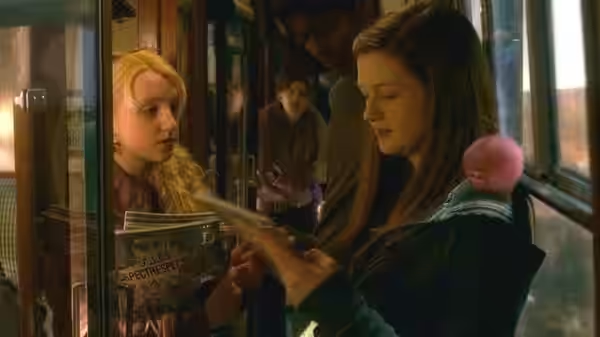
The children have mostly grown into actors. Rupert Grint is the surprise: his Ron, dazed by a love potion or being kissed against his will by Jessie Cave’s Lavender Brown, is a proper comic performance, all slack jaw and wounded pride. Emma Watson does her best work of the series watching him, and a scene on a staircase in which Hermione says almost nothing is played with real delicacy. We laughed a good deal in the middle hour, and nearly all of it was Grint and Broadbent. Daniel Radcliffe is steadier than he was, and gets one funny scene under a luck potion, but he is playing the one person in the building not allowed a life. Bonnie Wright’s Ginny, who is meant to be the reason he wants one, gets a few short scenes to become it.
The plot is the trouble. Dumbledore sets Harry to get close to Slughorn and draw a memory out of him, and the film forgets the job for forty minutes at a stretch. The Half-Blood Prince’s annotated potions book, which gives the film its name, is introduced with a flourish and then left in a bag. Mark Day cuts the school scenes with patience and the story scenes as if late for something, so an attack on the Weasleys’ house at Christmas arrives from nowhere, burns for three minutes and is not mentioned again. Quidditch is back, and stops the film dead. Nicholas Hooper’s score is quiet, mostly strings and a few piano figures, and rarely tells us what to feel, which is a relief until the one moment we needed telling.
That moment comes at the end, and we will not describe it. What we can say is that it is the event the film has been walking towards for two hours, staged in Delbonnel’s best light, and we sat through it dry-eyed. We noticed the camera moves, and then felt cross that the film had spent so long on snogging and Quidditch and left itself ten minutes for the thing that mattered. The cave sequence just before, lit by one wand over black water, frightened us far more.
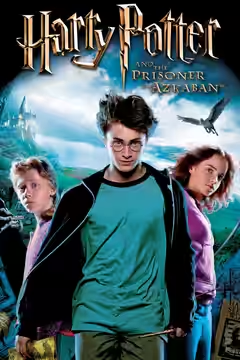
Yates’s Order of the Phoenix (2007) was rushed and this is not. Alfonso Cuarón’s Prisoner of Azkaban (2004) is still the only one of these films that works for someone who has not read the book, and this one does not try. It runs 153 minutes and carries a 12A. Watch it for the middle hour, for Broadbent and Grint and the light, and accept that the story is being saved for the next film.