David Yates takes the seventh Potter film out of Hogwarts and into the rain, and the quiet suits the three leads better than any castle did. It is handsome, sad and honest, and for half an hour in the middle nothing happens at all.
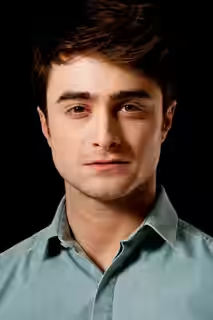
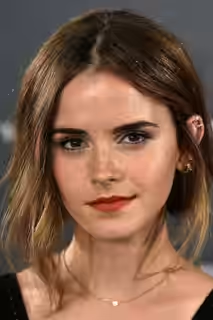
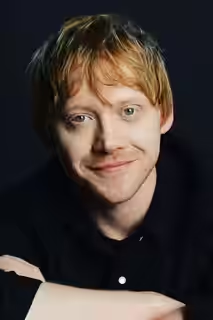
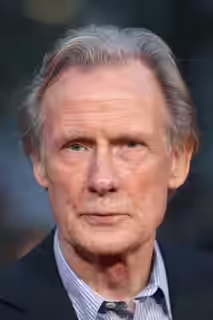
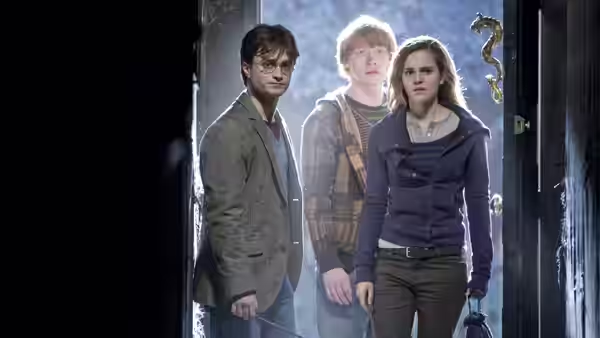
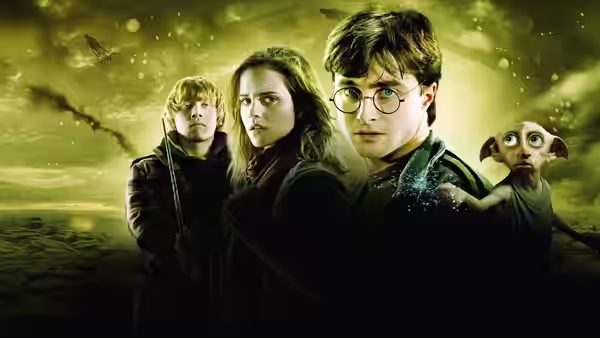
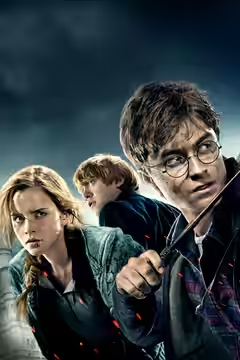
David Yates has directed the seventh Harry Potter film as if it were a different kind of film altogether, and for long stretches it is. Steve Kloves’s screenplay takes the first half of J.K. Rowling’s last book and leaves Hogwarts out of it. The Minister for Magic, Rufus Scrimgeour (Bill Nighy), tells a room of reporters that these are dark times, Lord Voldemort (Ralph Fiennes) takes a wand from one of his own followers at a long dark table, and Harry Potter (Daniel Radcliffe), Hermione Granger (Emma Watson) and Ron Weasley (Rupert Grint) go on the run with a list of objects to find and nobody left alive to tell them how. It is a fugitive film, 146 minutes long, and it is half a story.
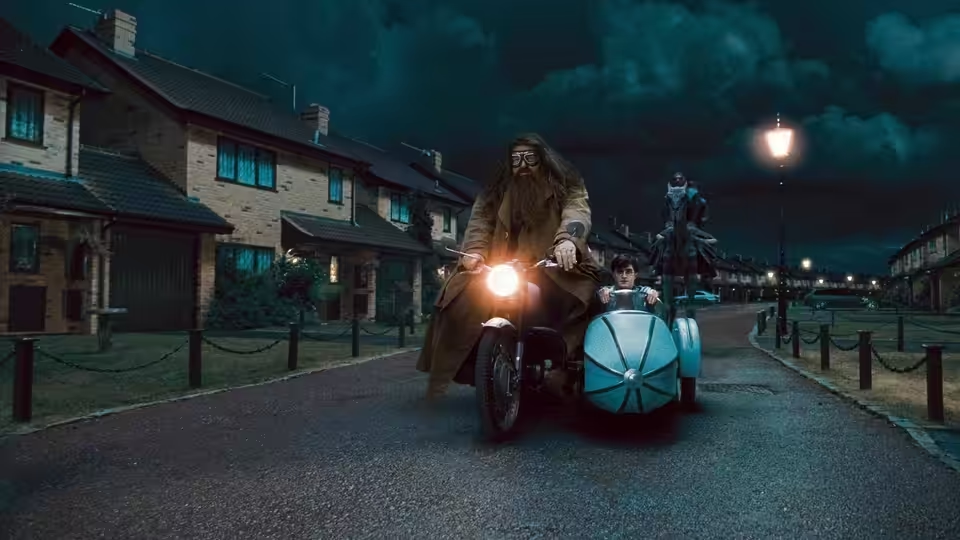
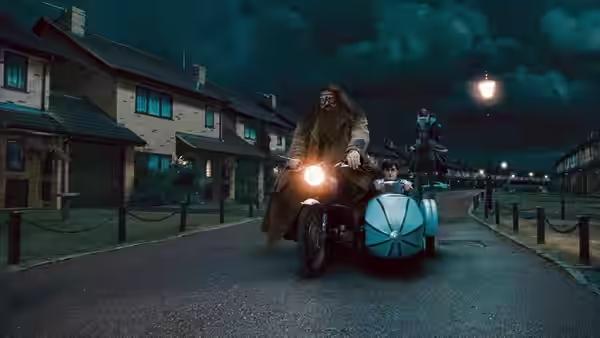
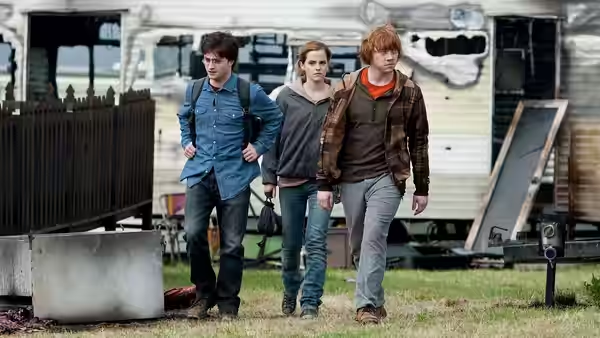
Eduardo Serra shoots it in grey, brown and the dark green of wet bracken. He puts the three of them small in wide frames of moor and cliff and forest, so the country looks enormous and empty and they look like what they are, children who have left home without a plan. Stuart Craig builds the Ministry of Magic’s atrium round a black stone monument of wizards enthroned on a heap of crushed Muggles, and the Malfoys’ dining room as a long cold hall lit from one end. Jany Temime puts the trio in jeans, hoodies and anoraks, the clothes of people with nowhere in particular to be.
The three leads have grown into it. Grint’s Ron is the surprise, sour with hunger and jealousy and the locket round his neck, and the row that comes of it is the best scene the three of them have played together in seven films. Watson carries the film. Early on, Hermione stands in her parents’ front room and makes herself vanish from every photograph on the mantelpiece, and Watson does it without a word. It moved us more than we thought a Potter film could: a girl deleting herself from her own family so they will not miss her when she goes. Radcliffe is watchful and sad and rather good at being unable to explain himself.
Fiennes plays Voldemort softly, all breath and courtesy, and is far more frightening for it than when he shouts. Helena Bonham Carter’s Bellatrix Lestrange twitches and grins and plainly wants to be let off the leash. Alan Rickman gets two scenes as Snape and does more with a pause than most of the cast do with a page. Rhys Ifans’s Xenophilius Lovegood is a rattled eccentric in a house shaped like a rook, Andy Linden’s Mundungus Fletcher is a small-time thief who looks it, and Toby Jones voices Dobby with a squeak that turns out to have a spine in it.
The trouble is the middle. Kloves keeps faith with the book, which means the film has to explain Horcruxes, which were explained last time, and then the Deathly Hallows, which are new, and the two sets of magical objects sit in the script like two shopping lists. Mark Day’s editing cannot find a shape for the weeks on the run: the trio Apparate to a moor, argue, Apparate to a forest, argue, Apparate to a beach. We were bored for the better part of half an hour, and then irritated, because each landscape is beautifully lit and nothing happens in it that had not happened in the last. Alexandre Desplat’s score keeps to piano and low strings and hardly ever swells, which suits the material and does nothing for the pace.
Against the series’ own record this sits in the upper half. It is more grown-up than Half-Blood Prince, less shapely than Prisoner of Azkaban, and it has the honesty to be sad without apologising for it. What it does not have is an ending, because the book’s ending is in the other half. Watch it with the second part to hand and a free evening after it. Watched alone, it stops rather than finishes, and the stopping is the one thing about it that feels like a decision made in an office.