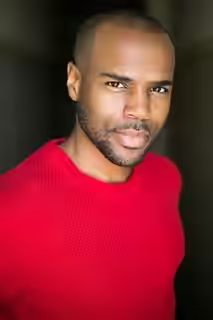
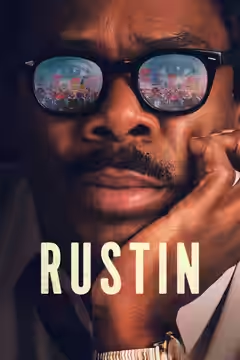
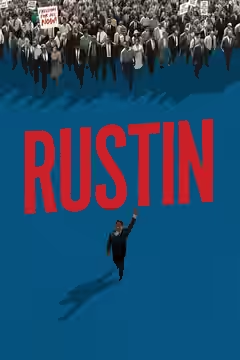
Colman Domingo gives Rustin the warmth and impatience its subject deserves. George C. Wolfe’s biography is worth seeing for him, but its orderly account of political organising leaves too little room for a complicated private life.
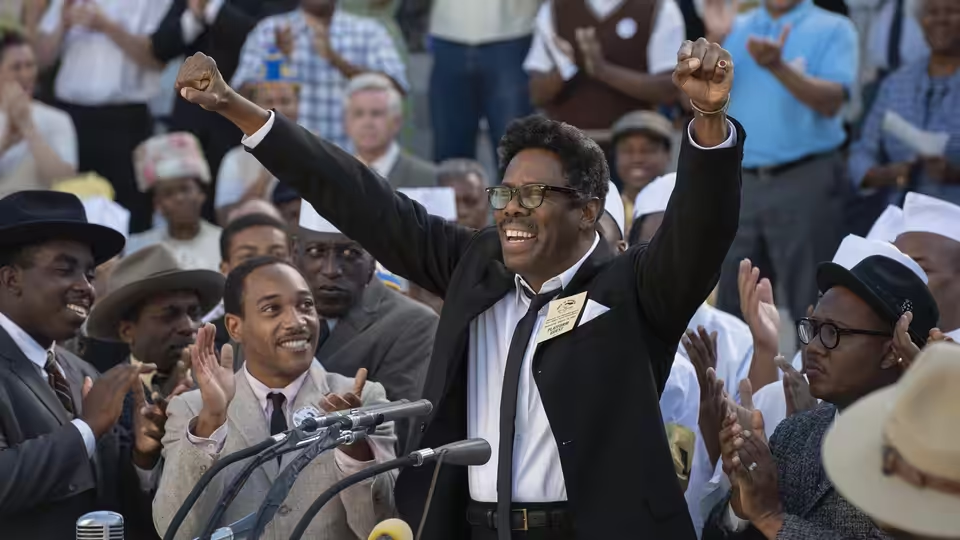
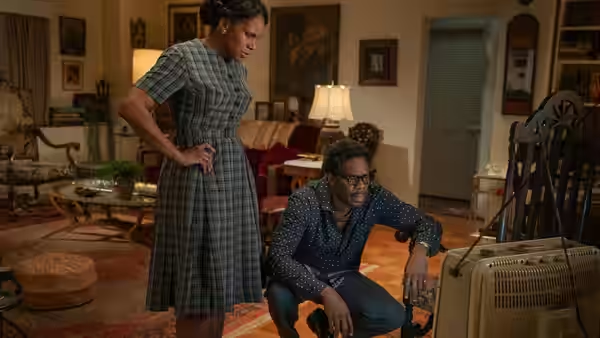
George C. Wolfe’s Rustin is at its most engaging when it watches people work out how to organise the March on Washington. Making that labour dramatic is a worthwhile ambition, and the film often succeeds because Colman Domingo makes persuasion look like something requiring patience, nerve and considerable energy. We recommend it for his performance, with reservations about how neatly the biography arranges the man around it. The writing is much more comfortable explaining his importance than exploring his private life.
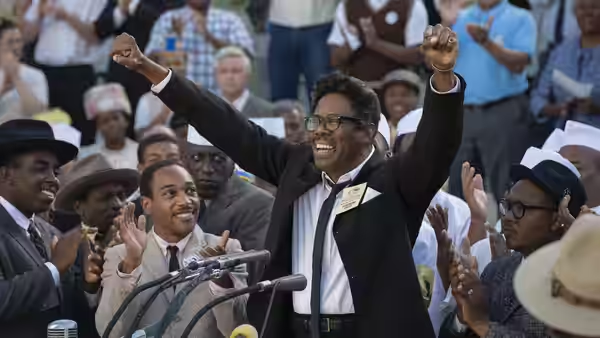
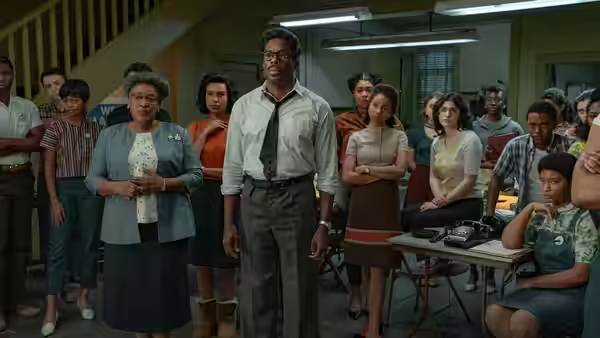
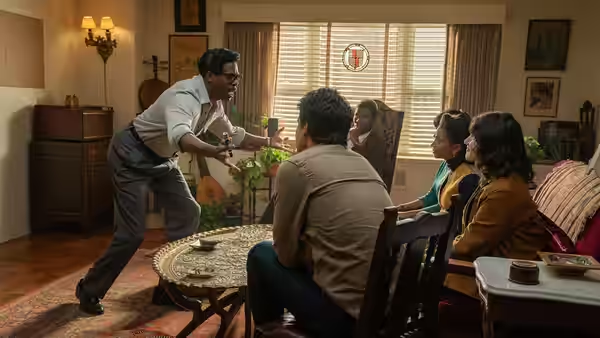
Colman Domingo gives Bayard Rustin a warmth that makes the organising feel personal: getting people to join the effort matters to him, and their reluctance matters too. We were stirred by the coalition-building scenes, because he makes the effort of bringing people together feel urgent and worth the trouble. His theatrical force suits a man trying to mobilise others. There is enough pleasure in watching him persuade people that the film can sustain a stretch of political discussion without losing its pace.
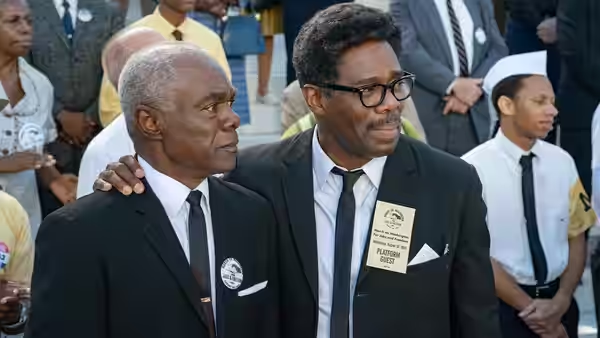
The screenplay by Dustin Lance Black and Julian Breece gives the movement’s debates enough space to establish that agreement takes work. The discussions involving Aml Ameen’s Martin Luther King, Jr. and Glynn Turman’s A. Philip Randolph help prevent the organising from looking like one man’s achievement. Yet the dialogue can sound like information being delivered for our benefit, rather than people finding the next thing to say. The director’s willingness to give the performances some theatrical breadth brings welcome energy to these exchanges.
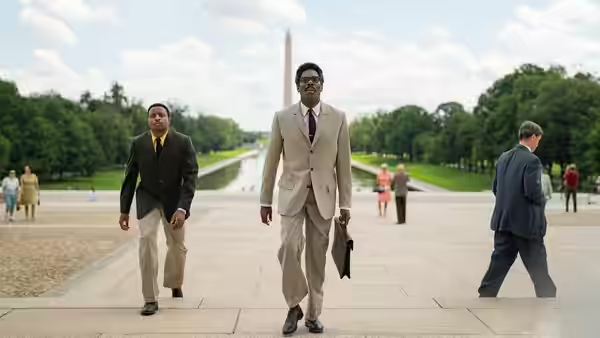
Tobias A. Schliessler’s cinematography keeps the group scenes readable, though the images can feel static beside the leading performance. Mark Ricker’s production design provides credible settings for the planning without making those surroundings particularly memorable. The direction finds more excitement in the arrangement of performers than in the camera. That approach works when we can follow one person trying to convince another; during the more explanatory passages, there is little else to hold our attention.
Andrew Mondshein’s editing gives the preparations a briskness that helps the film across its more dutiful passages. Branford Marsalis’s music keeps the mood buoyant, sometimes more insistently than the conversations need. At 108 minutes, the film does not linger unnecessarily over its explanations. Even so, the pace cannot quite disguise how seldom the writing allows uncertainty to last long enough to trouble us.
The greater disappointment is how cautiously the film approaches Bayard Rustin’s inner life as a gay man. It acknowledges that his sexuality contributes to his exclusion, but gives insufficient attention to what that costs him away from the work. Colman Domingo makes that limited attention frustrating, since his performance suggests feelings the script could have explored at greater length. The writers are so concerned to make the case for his importance that they keep returning to the achievements, leaving his private life underdeveloped.
For a biography seeking to restore attention to someone who has been sidelined, that caution is understandable, and still disappointing. Too many scenes have the reassuring shape of a lesson whose conclusion was settled before anyone entered. Yet the practical work of organising gives Rustin a worthwhile subject beyond the familiar celebration of an exceptional individual. Give it an evening if political organising interests you, or if the prospect of Colman Domingo commanding a conversation is enough.