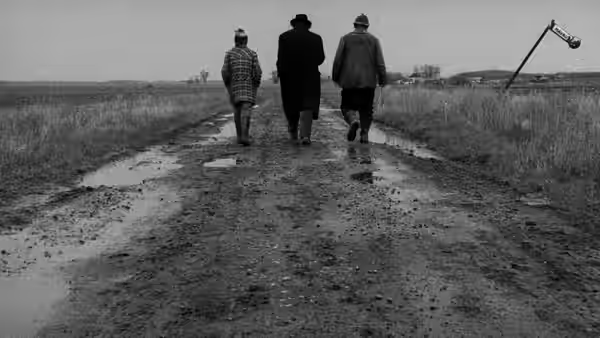
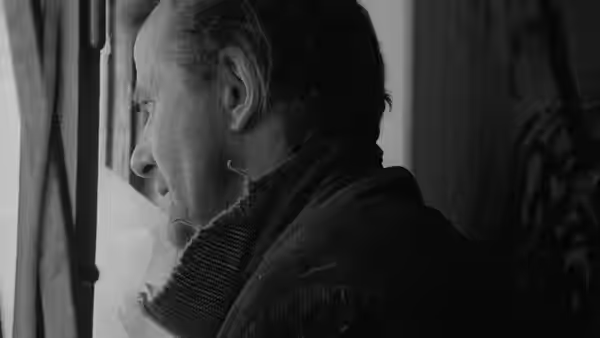
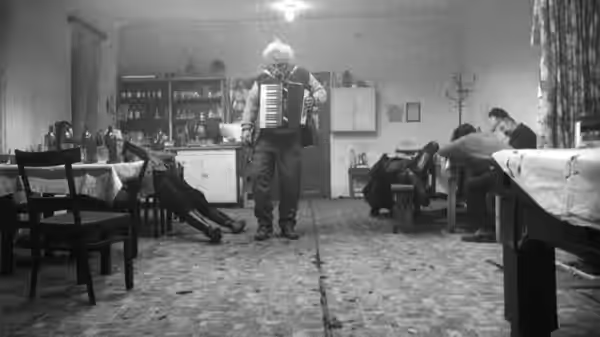
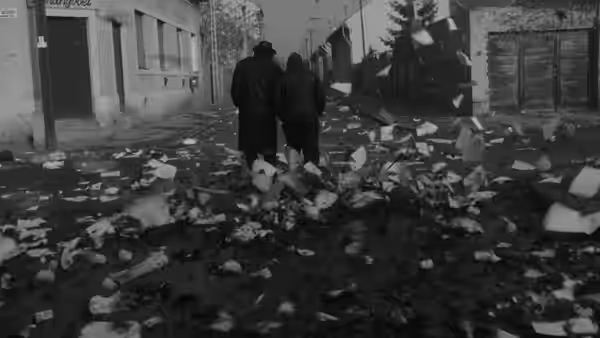
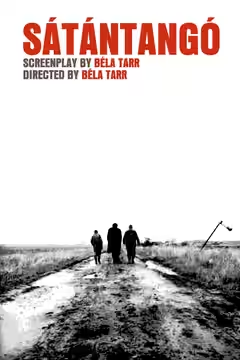
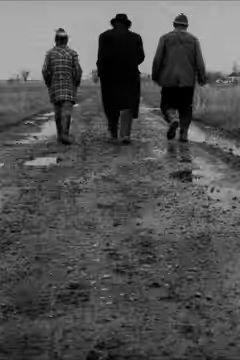
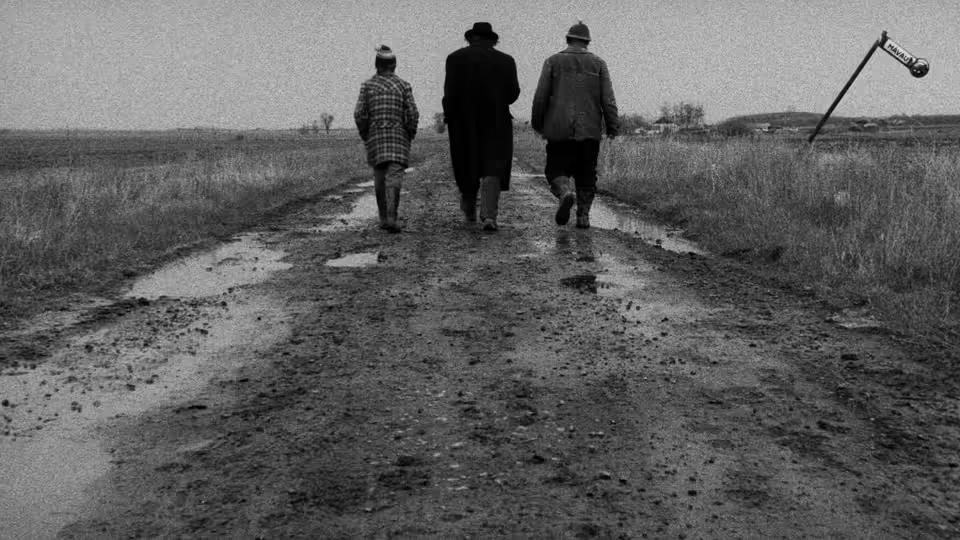
Three men walk away along a muddy country road
Film review

Satantango

1994 · Directed by Béla Tarr · 7h 12m

In a sentenceSeven hours and twelve minutes, so perhaps settle the dinner question first

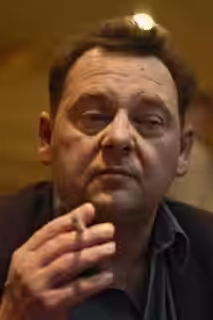
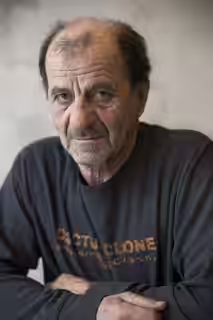
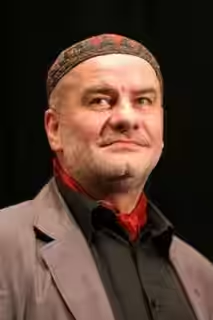
Irimiás (Mihály Víg), Petrina (Putyi Horváth) and Futaki (Székely B. Miklós) are among the central figures in Béla Tarr’s drama, adapted from the novel by László Krasznahorkai. The ensemble also includes Estike (Erika Bók), Schmidt (László feLugossy) and Halics (Alfréd Járai). Tarr and Krasznahorkai share the screenplay credit, with the film unfolding over 432 minutes. Other figures include Kráner (János Derzsi) and Kránerné (Irén Szajki), alongside Schmidtné (Éva Almássy Albert) and Halicsné (Erzsébet Gaál). Peter Berling appears as Orvos, with György Barkó as Iskolaigazgató.

Plays from YouTube when you press play; nothing loads from them until then.

Fi1m review

Béla Tarr’s 432-minute drama rewards a substantial commitment with absorbing monochrome images, concentrated performances and insistent atmosphere. We recommend it with a firm reservation: some passages continue after their effect is clear, and patience should not mean unquestioning acceptance.

Béla Tarr’s Satantango is worth the time, provided the decision to watch it is deliberate. At 432 minutes, it requires a substantial part of a day, and we would not pretend that every stretch rewards attention equally. Its length eventually becomes something we can settle into, although that adjustment takes effort. There are passages when the effort remains more noticeable than the reward, and we would rather acknowledge them than suggest that impatience disqualifies anyone from appreciating the film.

Béla Tarr shares the screenplay credit with László Krasznahorkai, whose novel supplies the source. The adaptation feels unusually confident about how much attention it can ask for. We admire that confidence, but it does not excuse every moment when concentration slips. The writing gradually establishes enough interest in its people to sustain the undertaking, though occasionally we understood what a passage was doing well before the film was ready to leave it.

Mihály Víg’s performance as Irimiás gives us a firm point of attention without making the surrounding cast feel incidental. Putyi Horváth, as Petrina, and Székely B. Miklós, as Futaki, are equally important to the film’s hold on us. The performances do not seem eager to make their characters agreeable, which we appreciate. Across such a long drama, that restraint matters: an actor constantly requesting sympathy would become exhausting, and these performances allow our responses to remain unsettled.

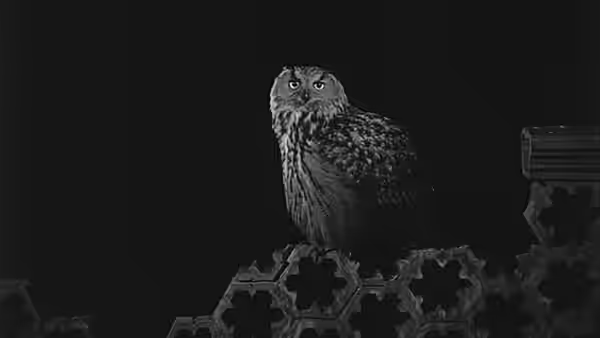
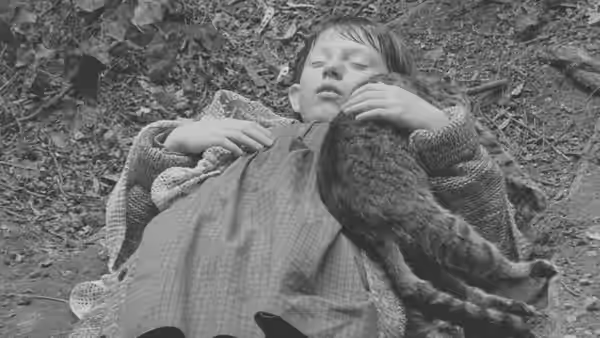
Gábor Medvigy’s monochrome cinematography is the clearest reason to keep looking. The black-and-white images make differences in light and shade absorbing without constantly advertising their own beauty. We were more absorbed than we had expected, and those images first overcame our resistance to the length. Sándor Kállay’s production design also withstands prolonged attention; it feels convincing without repeatedly drawing attention to the work involved. Together, their contributions give the film a visual consistency that makes its demands easier to accept.

Ágnes Hranitzky’s editing is where our admiration becomes less comfortable. The structure requires concentration, and there are stretches in which another minute adds little to what we have already understood. We would have welcomed a firmer cut in those passages without wanting the whole film hurried towards conventional dramatic pace. The editing nevertheless makes the scale feel considered, so our frustration concerns particular stretches rather than a general sense that nobody has decided what belongs.

Mihály Víg also supplies the music, whose atmosphere is essential to the experience. It gives the images an emotional pressure that prevents the film from becoming merely an exercise in looking for a long time. We found that combination moving, particularly when the visual severity might otherwise have become tiring. A demanding drama needs to offer more than the satisfaction of having endured it, and the sound and images provide substantial reasons to remain attentive.

Our reservation about the length remains, even after accepting the decision to make a film this long. We can admire the care involved and still think that some passages have done enough. The performances, photography and music earn the commitment often enough for a strong recommendation, with no promise of an easy evening. Choose it when spending hours with one film sounds like a pleasure, and leave yourself permission to become impatient.
Critical consensus AI synthesised

1 of 6
Positive
1
Mixed
0
Negative
0
Variety
21 February 1994 · festival review · Derek Elley
90*

Elley praises the film as an ambitious, striking work whose long runtime and structure may challenge audiences. He singles out Gabor Medvigy’s monochrome cinematography and Mihaly Vig’s atmospheric score.

Read the full review →

Straight answers AI written, from our review

Is Satantango worth watching?
Satantango is worth watching for those willing to commit to a demanding, slow drama, and we score it 84 out of 100. Its monochrome photography, restrained performances and music reward close attention across 432 minutes, but some passages continue after their effect is clear; we recommend choosing it deliberately rather than treating it as an ordinary evening’s viewing.
How long is Satantango, and what is it rated?
Satantango runs 7h 12m. It is a drama film.
Where can I watch Satantango in Poland?
Satantango is not on any streaming or rental service in Poland at the moment. It is available in 1 other country; change your country at the top of the page to see where. Availability is checked daily.
How violent or frightening is Satantango, and is it suitable for children?
Satantango carries a UK 15 certificate, making it unsuitable for children under 15, though that rating alone does not establish how graphic or frightening it is. We would approach it as a choice for older teenagers and adults prepared for a demanding drama whose 432-minute running time and sustained pace require considerable patience.
How does Satantango compare to Stalker?
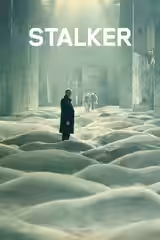
Satantango and Stalker both reward patient attention, and we recommend both with reservations rather than declaring either the better film. Stalker offers unsettling science fiction whose philosophical talk can grow heavy; Satantango asks for a much longer commitment to an ensemble drama. Choose Stalker for its difficult questions and science-fiction setting, or Satantango for sustained attention to performances and monochrome images.
Is Satantango based on a true story or a book?
Satantango is adapted from László Krasznahorkai’s novel, rather than presented as a true story, with Krasznahorkai sharing the screenplay credit with director Béla Tarr. We recommend it on the strength of its performances, photography and music rather than familiarity with the book, without making a claim about how faithfully it follows the novel.

Cast

If you liked this, try…

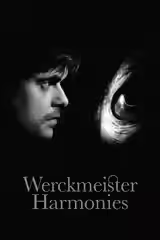
  1. Werckmeister Harmonies (2000) · not on Fi1m yetBéla Tarr makes collective dread more manageable in length, without offering much comfort.

  2. Stalker (1979, Fi1m 86)Another patient journey through damaged surroundings, driven by difficult questions about belief.

  3. Jeanne Dielman, 23, quai du Commerce, 1080 Bruxelles (1975) · not on Fi1m yetHousehold routines demand close attention until small changes become almost unbearable to watch.

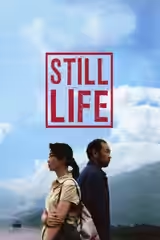
  4. Still Life (2006) · not on Fi1m yetA community facing disappearance, observed with patience and room for unexpected humour.

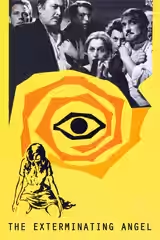
  5. The Exterminating Angel (1962) · not on Fi1m yetA trapped group makes increasingly poor company in a shorter, sharper social nightmare.