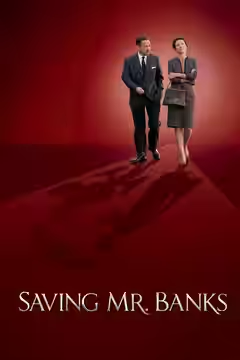
Emma Thompson gives Saving Mr. Banks enough bite to make its comedy worth watching. John Lee Hancock’s drama is less persuasive, repeatedly turning an author’s objections into feelings that other people know how to fix.
John Lee Hancock’s Saving Mr. Banks is an entertaining comedy about people trying to work together, interrupted by a drama that explains them too readily. P.L. Travers and Walt Disney have competing ideas about what should happen to Mary Poppins, and that disagreement is enough to hold our attention. The film keeps reaching back into the author’s childhood to tell us why she resists. We wanted it to let her objections stand a little longer before explaining them away.
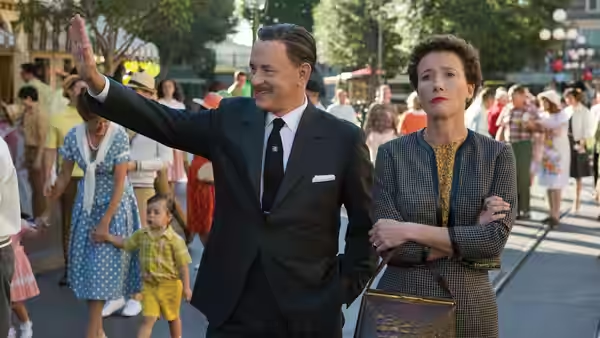
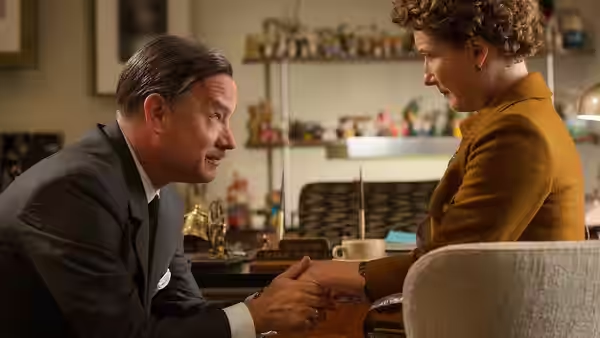
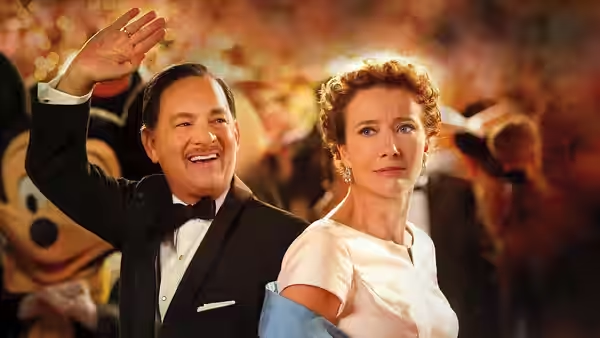
Emma Thompson gives the author enough sharpness to make those objections worth hearing. They are funny because she plays them seriously, rather than asking us to enjoy an eccentric having a tantrum. We laughed at her severity in the writers’ room, then felt uneasy about how readily everyone else treats it as something to be overcome. There is hurt in the performance, but she does not let it account for everything. Her character can be lonely and still have a point.
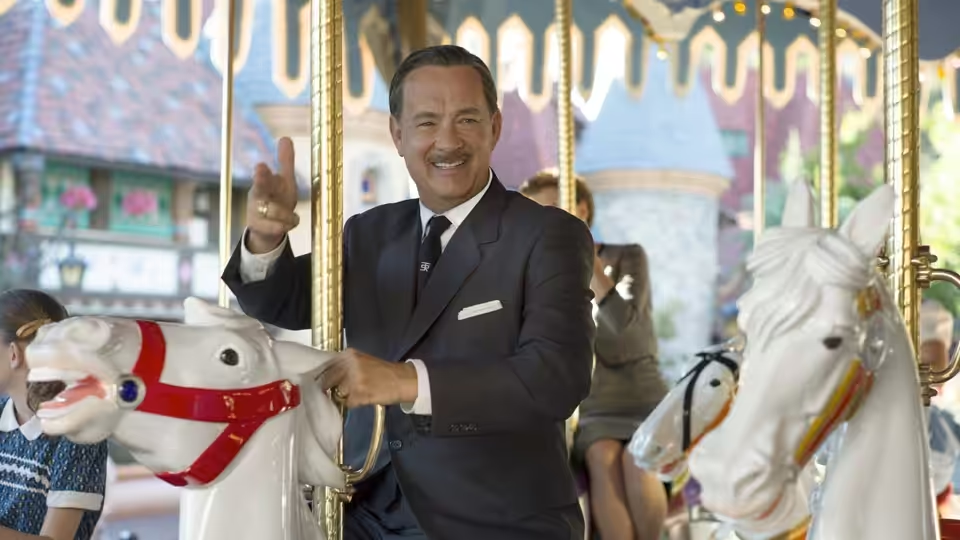
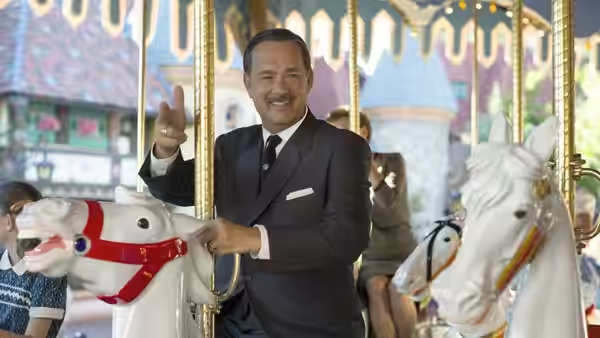
Tom Hanks makes Walt Disney’s affability feel effortless, and the comic exchanges benefit from his willingness to absorb a rebuff without losing his welcome. There is a reason the scenes of creative negotiation are the easiest to enjoy: both leads can make a disagreement entertaining without settling it. The Sherman brothers’ songs add some welcome energy, too. The difficulty comes when the screenplay by Sue Smith and Kelly Marcel treats the genial man’s confidence as proof that he knows what is best for the author.
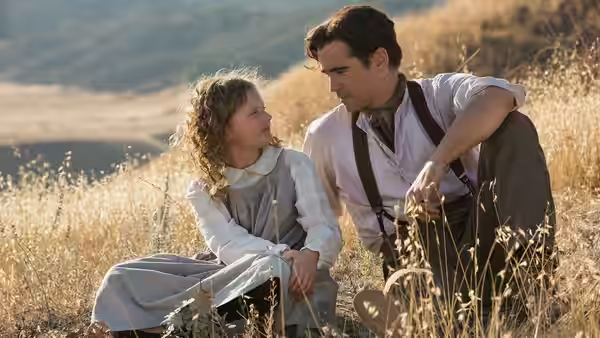
Colin Farrell brings enough tenderness to Travers Robert Goff to keep the childhood passages from becoming mere explanations. We were moved by the sadness he brings to those scenes, even while resenting how insistently the film uses them. Mark Livolsi’s editing keeps breaking up the livelier working scenes with returns to the past. The repeated interruption starts to feel like an instruction to stop questioning the story and feel sorry for its heroine.
John Schwartzman’s cinematography favours a reassuring prettiness which suits the comedy and feels too gentle for the childhood passages. Michael Corenblith’s production design works better in the writers’ room, where the surroundings never compete with the sparring actors. Thomas Newman’s music is less helpful when its warmth presses us towards sympathy that the performances are already earning. The combined effect is too comfortable for a story asking us to take its unhappy memories seriously.
A film about adapting a book ought to have room for the possibility that its author has sound reasons to be unhappy. Here, the lively resistance is repeatedly explained through childhood pain, until artistic disagreement begins to look like a condition needing treatment. That limits the drama more seriously than the obvious sentimentality. The film can make us understand a lonely person, but it seems less interested in understanding her work. At 126 minutes, there is time for both.
Those interested in the performers will find enough here to justify an evening, particularly in the prickly exchanges that the film keeps interrupting. We would be more cautious about recommending it as an account of artistic collaboration, given how readily it dismisses one participant’s concerns. Watch it for Emma Thompson, and allow her a little more authority than the film does.