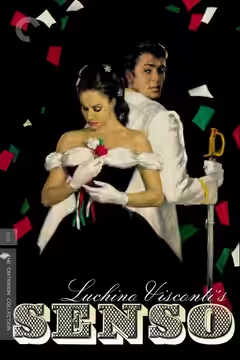
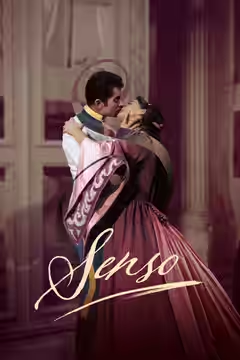
Luchino Visconti’s romantic tragedy is worth the patience for Alida Valli and the exacting visual craft. The central attraction remains underexplained, but the film understands how seriously people take desires they ought to question.
Senso is a moving romantic tragedy, though it leaves the attraction between its lovers underexplained. Luchino Visconti follows an aristocratic affair closely enough to make the lovers’ vanity troubling without dismissing their passion. The splendour is part of the pleasure, and he does not pretend otherwise. We recommend it to anyone with patience for period romance, with a reservation about how much of the central relationship we are asked to take on trust.
The opera-house opening establishes a society accustomed to putting itself on display. We felt uneasy watching it: the careful arrangement of people in that grand public space makes their private conduct seem open to inspection. It is an effective way of making social rank matter before the love story has much work to do. The film begins with people watching a performance, and the sense that appearances are being managed never quite goes away.
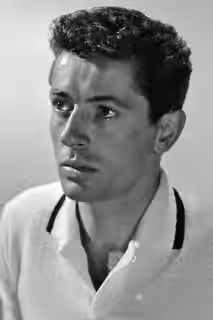
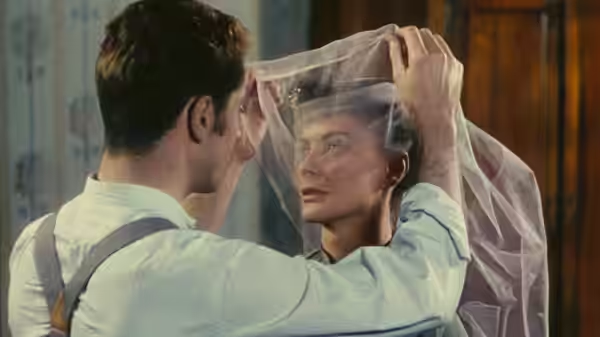
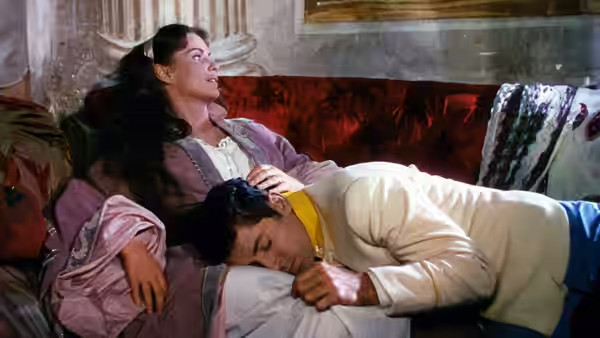
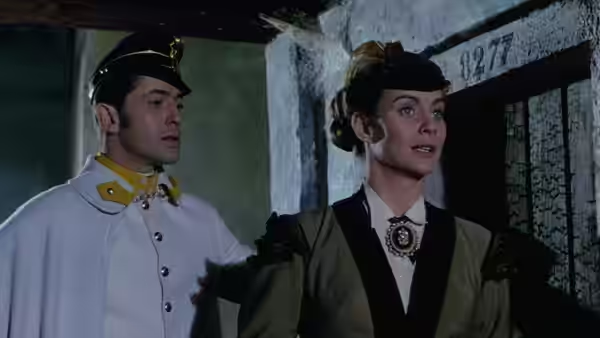
Alida Valli gives the countess’s desire a seriousness that keeps the film from becoming an exercise in looking down on foolish people. She makes the emotional risk credible even when the relationship itself is not. Farley Granger is effective as an object of fascination, but the film gives us too little sense of why this particular lieutenant should command such devotion. Attraction can happen at a glance; the weight placed on it here needs more preparation. The screenplay by Suso Cecchi d’Amico and Luchino Visconti does not quite supply it.
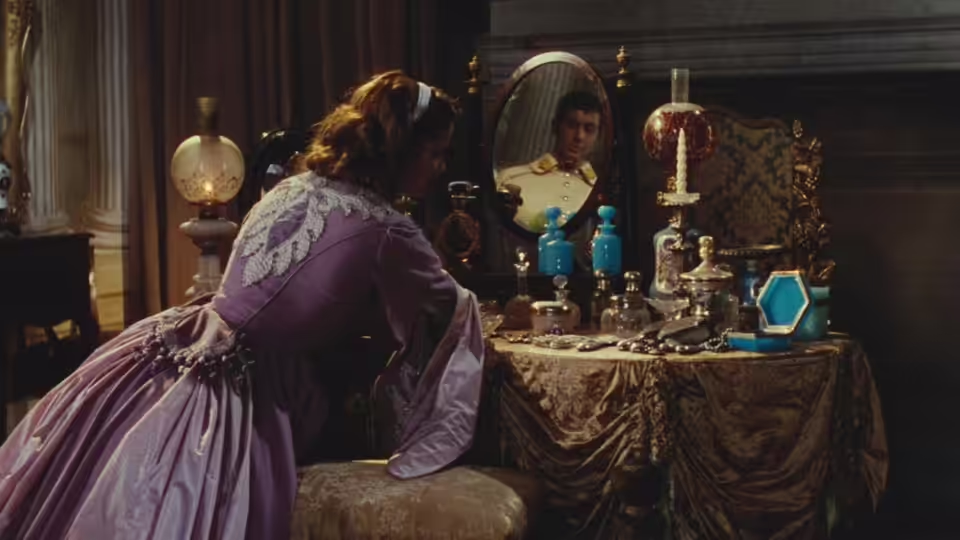
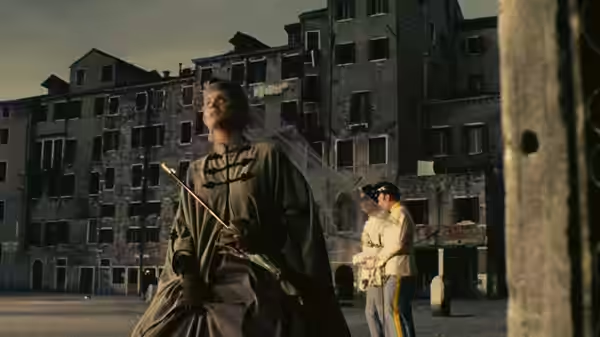
Cinematographers G.R. Aldo and Robert Krasker give Venice a physical presence that helps compensate. Their carefully ordered compositions make us notice where people stand in relation to their surroundings, and how much those surroundings dominate them. The military panoramas widen the film without making the private affair seem trivial. Their scale makes the lovers’ preoccupation with each other look increasingly selfish, although there are moments when the arrangement of figures across the image is more absorbing than either lover.
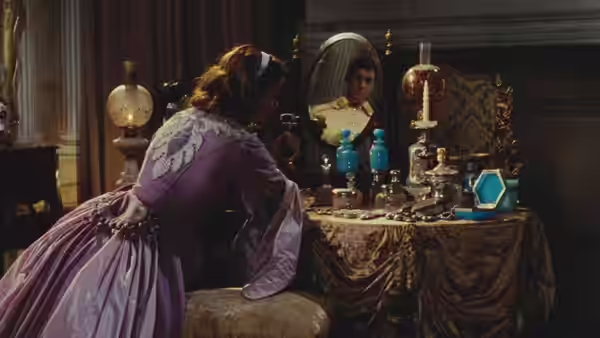
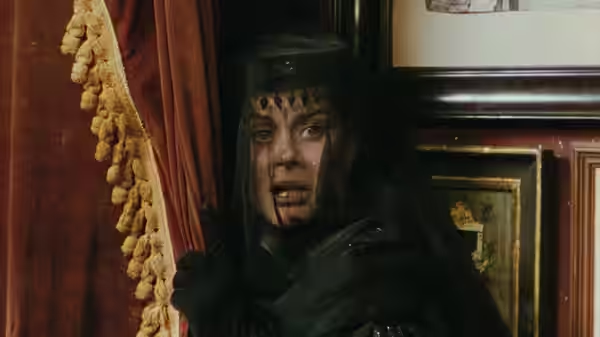
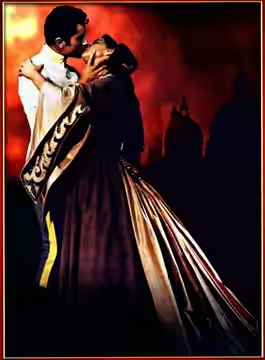
Ottavio Scotti’s production design gives the aristocratic world enough weight to make its hold on the characters understandable. The spaces suggest lives accustomed to being accommodated, an impression reinforced by Marcel Escoffier and Piero Tosi’s costumes. Clothes establish standing before anyone needs to explain it. This is where the film gets beyond the usual handsome period romance: appearances exert pressure on behaviour, and the care spent on them contributes to the drama.
Mario Serandrei’s editing allows that visual detail time to register, but it also exposes the weakness in the lovers’ bond. When the story lingers over their fascination, we have time to wonder about what has not been established. Anton Bruckner’s music supplies an emotional gravity the relationship sometimes struggles to justify. We would not want the film hurried, yet at 123 minutes it asks for a degree of absorption that the writing cannot always sustain.
Even so, the film’s unwillingness to excuse selfishness gives it an edge that many costume romances lack. Alida Valli keeps the countess sufficiently human for that scrutiny to hurt. Give Senso an evening when there is time for a romance that makes room for discomfort. Expect to believe the countess’s suffering more readily than her choice of man.