Jun Fukuda gives Godzilla a child and a tropical island and finds a few minutes of real charm in the pair of them. The rest is scientists arguing about the weather while the wire-worked mantises wait their turn.
Jun Fukuda’s Son of Godzilla is the eighth Godzilla picture and the first in which the monster is asked to be a parent. Shinichi Sekizawa and Kazue Kiba’s script strands a team of weather scientists on a tropical island, hatches a baby out of an egg, and brings Godzilla wading in to raise it. It runs 86 minutes and carries a U certificate, and both facts tell you who it is for. This is a children’s film, made by people who knew the children had arrived and decided to meet them halfway. About a third of it is a small pleasure. The rest is a long afternoon in a hot laboratory.
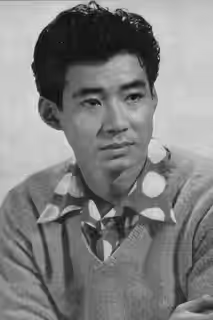
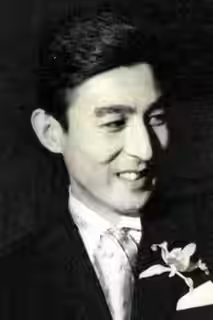
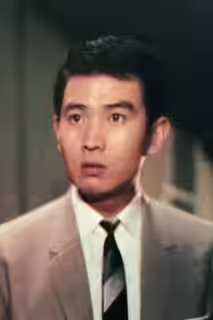
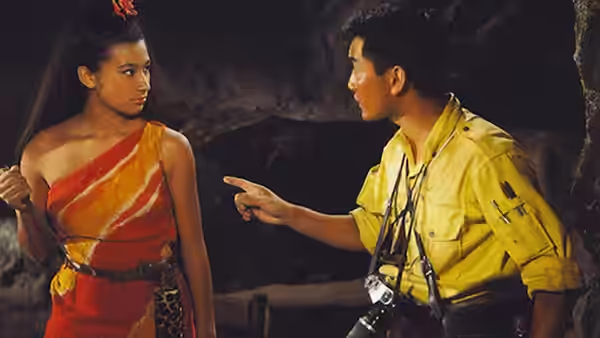
The laboratory is the problem. Tadao Takashima plays Kusumi as a decent, tired man in a sweat-stained shirt, and Akira Kubo’s reporter Goro Maki is there to be told off and handed a frying pan. Akihiko Hirata, Kenji Sahara and Yoshio Tsuchiya fill out the team, and Tsuchiya gets the one strand of human drama, a man coming apart in the heat, which he plays larger than the film can hold. Bibari Maeda’s Saeko, a girl who has grown up alone on the island, is written as a mystery and photographed as a swimsuit. A good deal of the running time is these people arguing about barometric pressure. We were bored, and then we were bored with a wristwatch, counting the minutes to the next monster.
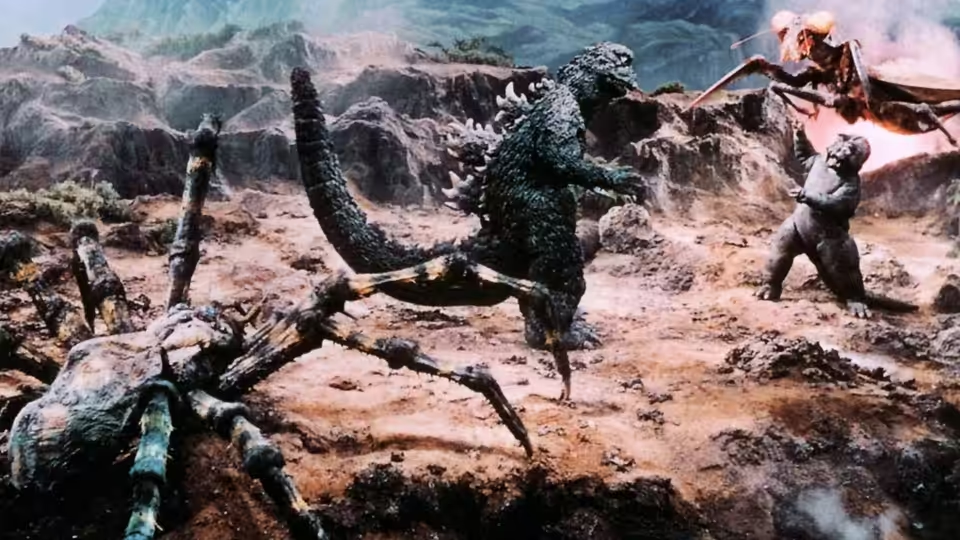
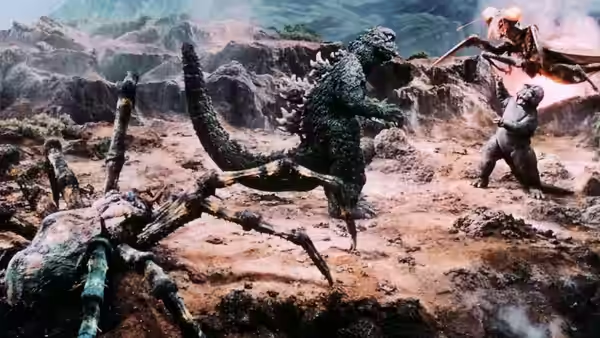
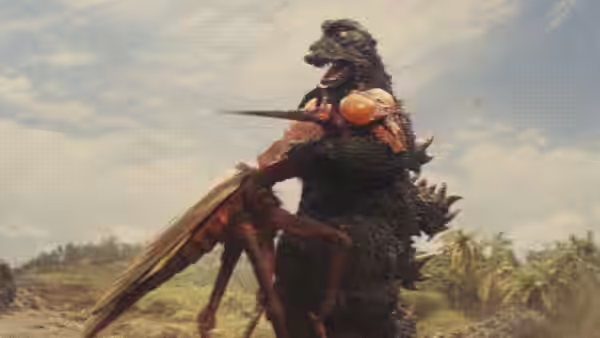
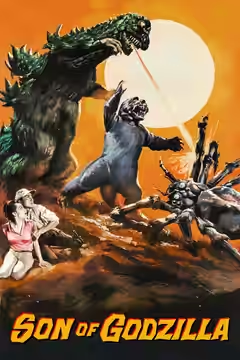
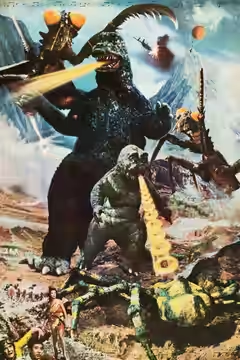
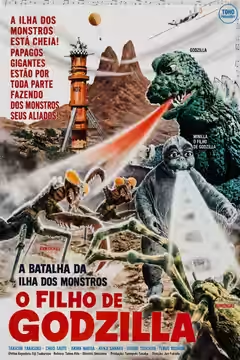
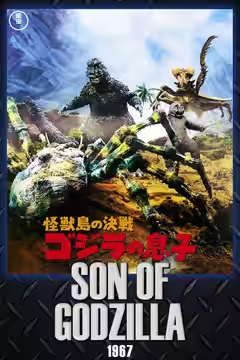
The monsters mostly pay off. The giant mantises are the best thing here, and it is not close. They are puppets worked on wires, all elbows and twitching heads, and when three of them pick at the egg in the red light of the storm, the scale and the movement look right. A second creature arrives in the back half, and we will leave you to meet it, but its attack on the camp is the one sequence in which Fukuda finds something like menace.
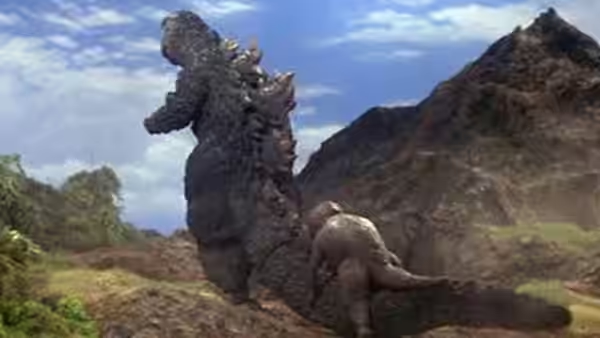
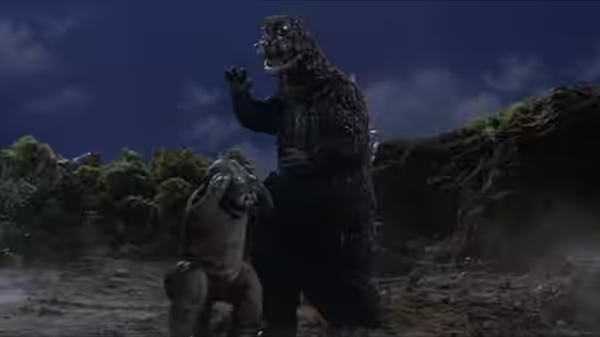
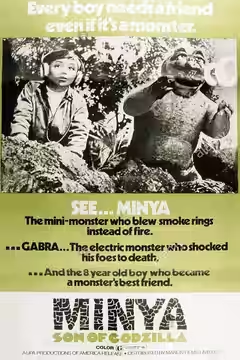
The son is another matter. The baby is a wrinkled, big-eyed thing with the proportions of a toddler in a nappy, and it makes a noise like a donkey with a grievance. It is meant to be adorable and it is faintly horrible. And yet there is a scene in which Godzilla, wanting the child to breathe fire, stamps on its tail; the child coughs out a smoke ring, and Godzilla looks briefly and unmistakably disappointed. We laughed, then felt slightly ashamed of ourselves, then found we were watching the two of them with something close to fondness. Fukuda holds the shots long and lets the suits play it as pantomime, and it works because nobody rushes it.
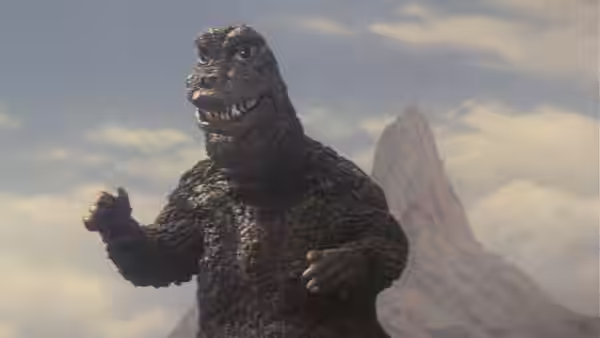
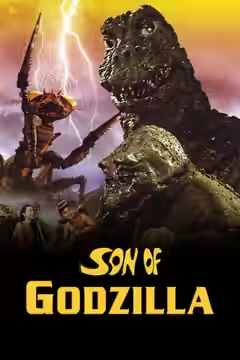
Kazuo Yamada shoots the island in bleached daylight, so the jungle looks like a studio floor with palms stuck in it, which it is, and then finds real colour in the storm, orange and violet skies over black rock. Takeo Kita’s sets are a corrugated hut, a lab bench and a radio room, and they do not pretend to be more. The suits, credited to Nobuyuki Yasumaru, Teizô Toshimitsu and Yasuei Yagi, let the film down at the top: this Godzilla has a broad, doughy face and wide, friendly eyes, and looks less like a force of nature than a large man in a wetsuit who has been told to be kind. Masaru Satō’s score is jaunty, brass and hand percussion, closer to a beach picture than a horror, and it is honest about what the film is. Ryôhei Fujii cuts the fights at walking pace, and they run on longer than the puppetry can support.
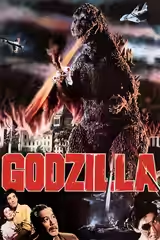
The 1954 Godzilla was a film about a bombed country. Thirteen years on, the same monster is teaching his child to blow smoke rings, and you can either be cross about that or accept that a series has to become something else to survive. Fukuda’s film is at its most comfortable when it stops pretending the humans matter.
Watch it with a child of about seven, who will not mind the scientists and will love the smoke rings. Watch it alone and you have twenty-five good minutes of puppets in eighty-six, and a Godzilla who looks as though he would rather be somewhere cooler.