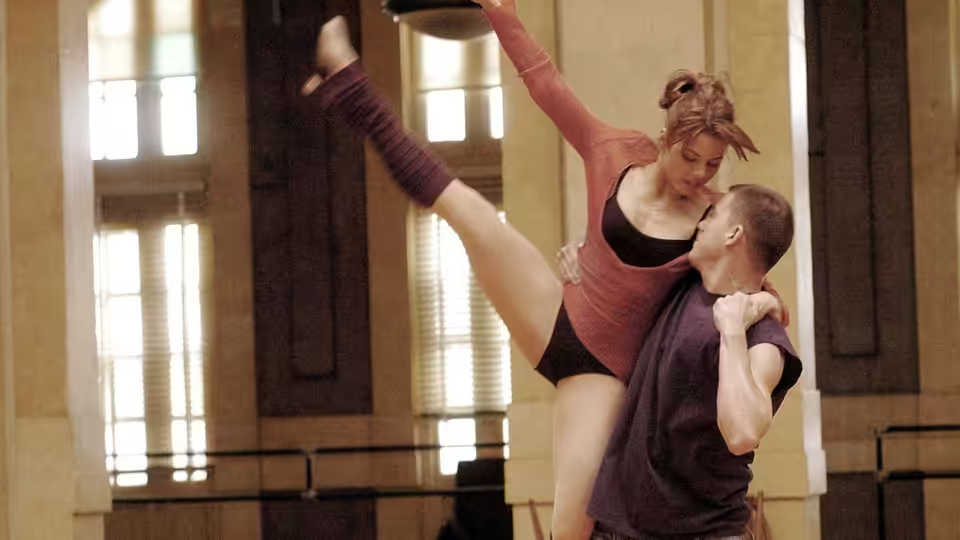
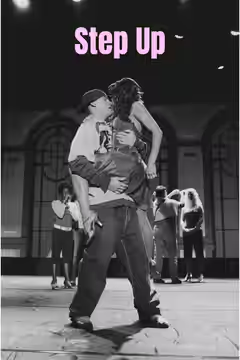
Anne Fletcher’s Step Up is likeable when Channing Tatum and Jenna Dewan dance, and laborious when the script takes over. There is enough chemistry to keep dance fans interested, despite the crowded, predictable story.
Step Up asks for a modest investment: accept that two people might find each other through dancing, and forgive the familiar business arranged around them. Anne Fletcher makes the attraction believable, but the screenplay keeps adding reasons for the pair to stop dancing and discuss their difficulties. It is a decent dance romance whose pleasures survive some clumsy storytelling. At 104 minutes, it could still use fewer subplots and more time with its leads.
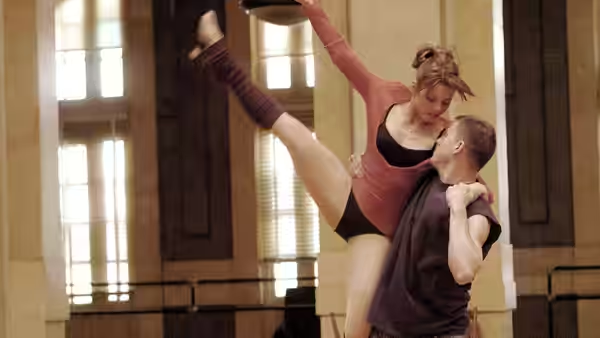
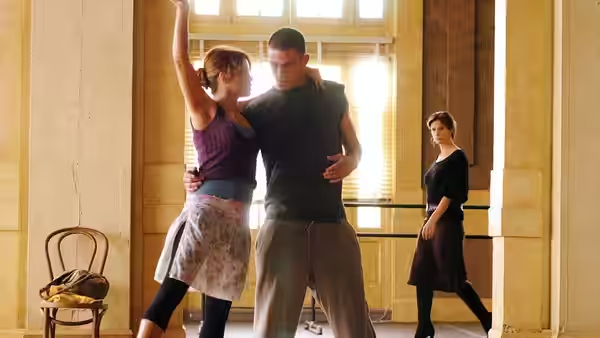
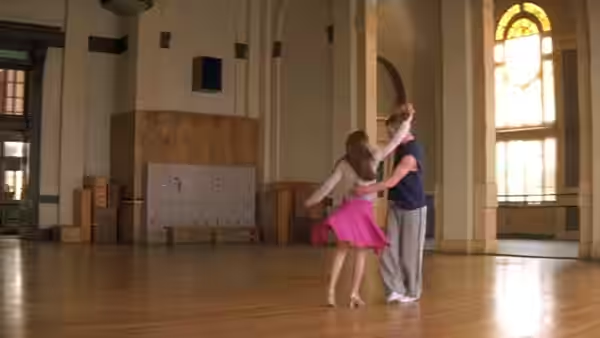
Channing Tatum gives Tyler Gage a physical confidence that the dialogue rarely matches. Alongside Jenna Dewan’s Nora Clark, he makes the dancing feel like an exchange between people, with each performer giving the other something to respond to. We warmed to them when they danced together, because the attraction looked unforced and neither seemed to be doing all the work. Their chemistry supplies a reason to care that the screenplay cannot provide simply by announcing another problem.
The mixture of ballet and breakdance could easily become another lecture about people learning to understand one another. Anne Fletcher is more persuasive when she lets the different styles supply the interest, and Michael Seresin’s cinematography gives the dance passages a welcome clarity. The performers’ skill is apparent enough for their partnership to make sense without much help from the script. These energetic sequences deserve more of the film’s attention than they receive.
Duane Adler and Melissa Rosenberg’s screenplay is less reliable about people. Tyler’s sentence for damaging an arts school supplies a workable reason to bring him into contact with a discipline he might learn to respect, but the film too often reduces that possibility to lessons about better choices. The dialogue tells us what to think before the characters have made us feel it. The predictable story needs less earnest talk to get where we already expect it to go.
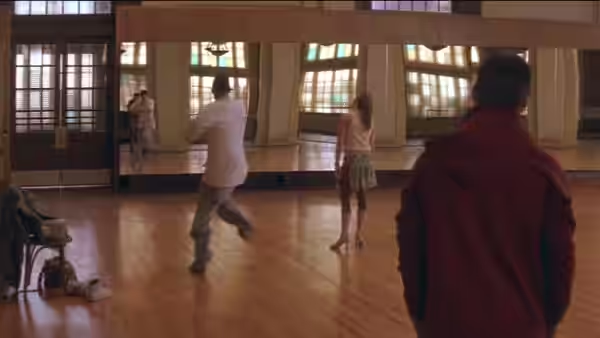
Nancy Richardson’s editing gives the dancing welcome momentum, although it cannot make the competing subplots feel equally necessary. Each additional strand takes time away from the performers whose company we have come to enjoy. Shepherd Frankel’s production design makes the arts school a credible place for concentrated work, which helps us believe that dancing might become a serious occupation for these characters. There is room here for more interest in the practical work of dancing, which the crowded story too often neglects.
Aaron Zigman’s score provides competent support, although its emotional prompting seldom helps the weaker dramatic scenes. The hip-hop soundtrack gives the dancing more lift and makes those passages feel less burdened by the need to teach anyone a lesson. The music suits performers who seem most comfortable when they are moving. It is enough to keep the film agreeable through stretches when the writing has little to offer them.
A dance romance hardly needs a fresh plot every time, but it does need some care over the familiar scenes between its big dance sequences. Here, the enthusiasm and the leads’ chemistry cover a fair amount of ordinary writing without quite disguising it. Dance fans may reasonably decide that is enough for an evening, and we would not argue hard. Try it if the dancing is the attraction; the conversations are unlikely to win anyone over.