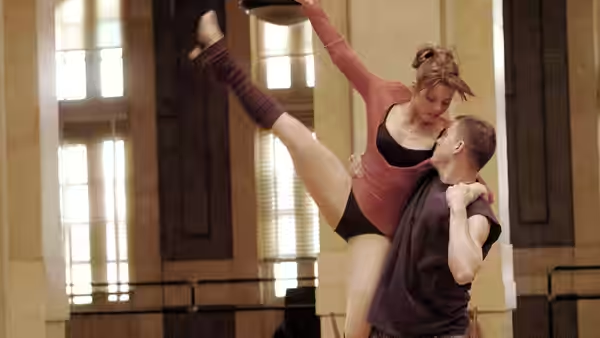
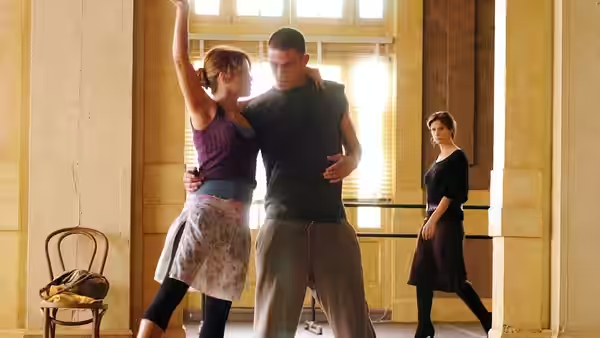
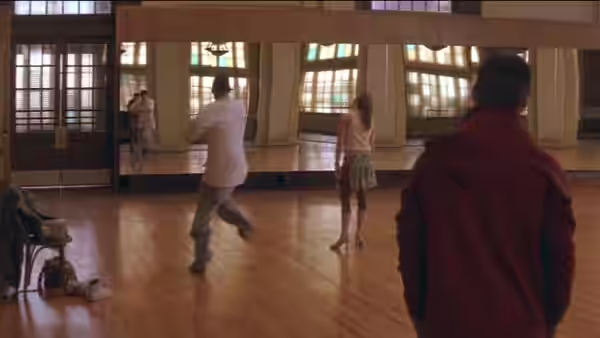
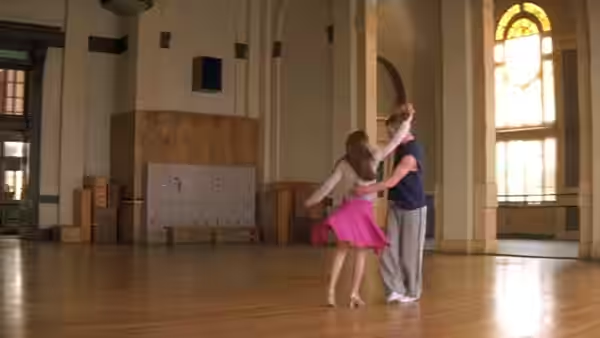
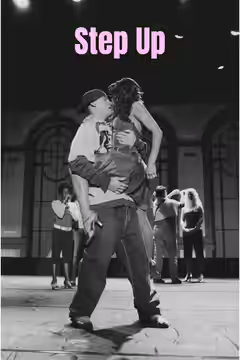
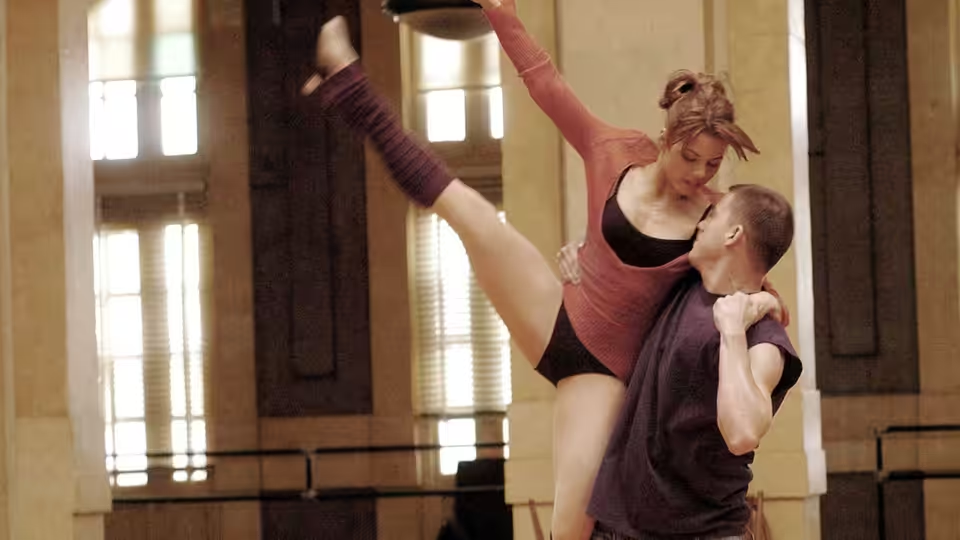
a woman lifts her leg high during a lift in a dance studio
Film review

Step Up

2006 · Directed by Anne Fletcher · 1h 44m

In a sentenceThe dancing makes a good case for cancelling the next conversation

Tyler Gage (Channing Tatum) receives a sentence for damaging an arts school. There he encounters Nora Clark (Jenna Dewan) and Director Gordon (Rachel Griffiths), as dancing draws him into a different set of expectations. Tyler has to deal with the consequences of his behaviour while trying to make a partnership with Nora work. Ballet and breakdance meet through their dancing, and attraction adds another complication. Working together means finding room for different approaches to dance alongside the problems in their lives, with Tyler’s ability offering a possible route beyond his troubles.

Plays from YouTube when you press play; nothing loads from them until then.

Fi1m review

Anne Fletcher’s Step Up is likeable when Channing Tatum and Jenna Dewan dance, and laborious when the script takes over. There is enough chemistry to keep dance fans interested, despite the crowded, predictable story.

Step Up asks for a modest investment: accept that two people might find each other through dancing, and forgive the familiar business arranged around them. Anne Fletcher makes the attraction believable, but the screenplay keeps adding reasons for the pair to stop dancing and discuss their difficulties. It is a decent dance romance whose pleasures survive some clumsy storytelling. At 104 minutes, it could still use fewer subplots and more time with its leads.

Channing Tatum gives Tyler Gage a physical confidence that the dialogue rarely matches. Alongside Jenna Dewan’s Nora Clark, he makes the dancing feel like an exchange between people, with each performer giving the other something to respond to. We warmed to them when they danced together, because the attraction looked unforced and neither seemed to be doing all the work. Their chemistry supplies a reason to care that the screenplay cannot provide simply by announcing another problem.

The mixture of ballet and breakdance could easily become another lecture about people learning to understand one another. Anne Fletcher is more persuasive when she lets the different styles supply the interest, and Michael Seresin’s cinematography gives the dance passages a welcome clarity. The performers’ skill is apparent enough for their partnership to make sense without much help from the script. These energetic sequences deserve more of the film’s attention than they receive.

Duane Adler and Melissa Rosenberg’s screenplay is less reliable about people. Tyler’s sentence for damaging an arts school supplies a workable reason to bring him into contact with a discipline he might learn to respect, but the film too often reduces that possibility to lessons about better choices. The dialogue tells us what to think before the characters have made us feel it. The predictable story needs less earnest talk to get where we already expect it to go.

Nancy Richardson’s editing gives the dancing welcome momentum, although it cannot make the competing subplots feel equally necessary. Each additional strand takes time away from the performers whose company we have come to enjoy. Shepherd Frankel’s production design makes the arts school a credible place for concentrated work, which helps us believe that dancing might become a serious occupation for these characters. There is room here for more interest in the practical work of dancing, which the crowded story too often neglects.

Aaron Zigman’s score provides competent support, although its emotional prompting seldom helps the weaker dramatic scenes. The hip-hop soundtrack gives the dancing more lift and makes those passages feel less burdened by the need to teach anyone a lesson. The music suits performers who seem most comfortable when they are moving. It is enough to keep the film agreeable through stretches when the writing has little to offer them.

A dance romance hardly needs a fresh plot every time, but it does need some care over the familiar scenes between its big dance sequences. Here, the enthusiasm and the leads’ chemistry cover a fair amount of ordinary writing without quite disguising it. Dance fans may reasonably decide that is enough for an evening, and we would not argue hard. Try it if the dancing is the attraction; the conversations are unlikely to win anyone over.

Critical consensus AI synthesised

58
Positive
1
Mixed
6
Negative
1

The reviews lean towards a mixed response: Step Up earns more praise for its dancing and appealing leads than for its story. The clearest agreement concerns the energetic dance sequences, with the combination of ballet and breakdance providing much of the pleasure. Several critics also find the central pairing engaging, praising their chemistry and enthusiasm, while Channing Tatum’s dancing receives particular approval.

Reservations centre on a familiar formula, predictable plotting and dialogue that gives the performers little help. Some find the storytelling merely routine; others object to caricature, sermonising or subplots that leave too little time for dance. The spread is fairly wide: Variety finds an engaging crowd-pleaser despite the formula, while The Guardian dismisses its appeal as limited to tween sleepovers. Between those positions, the prevailing view is of a competent diversion whose pleasures are most likely to satisfy dance fans and teenagers.

Variety
10 August 2006 · Joe Leydon
75*

Leydon finds the film crowd-pleasing and engaging despite its familiar, formulaic storyline. He praises the appealing leads and their strong dancing, as well as the energetic dance sequences.

Read the full review →
The New York Times
11 August 2006
64*

The page is blocked, so the critic’s verdict cannot be verified. No specific praise or complaint is available in the supplied text.

Read the full review →
Time Out
24 October 2006 · Anna Smith
64*

The page is identified as a film review, but the critic’s verdict is unavailable in the supplied text. The standfirst describes Tyler Gage and his sentence for damaging an arts school, without revealing a point of praise or complaint.

Read the full review →
Slant Magazine
9 August 2006 · ★★½/4 · Ed Gonzalez
62

Gonzalez finds the film goodhearted and visually assured, though its storytelling slips into caricature and sermonizing. He especially praises the dance sequences and the leads’ convincing chemistry.

Read the full review →
The AV Club
9 August 2006 · C · Scott Tobias
57

The critic finds the film’s formula breaks down when its perfunctory plot takes over. He singles out the excess of subplots for leaving too little time for the dancing.

Read the full review →
Empire
8 September 2006 · Anna Smith
55*

Smith finds the film predictable and hampered by weak dialogue and acting, but still an appealing guilty pleasure. She singles out the enthusiastic performances and sensational dancing, especially from lead Channing Tatum.

Read the full review →

Straight answers AI written, from our review

Is Step Up worth watching?
Step Up is worth considering for dance-romance fans, and we score it 64 out of 100 for its likeable leads and energetic dancing. Channing Tatum and Jenna Dewan make the attraction believable, but the predictable story and crowded subplots make this harder to recommend if the dancing is not your main reason for watching.
How long is Step Up, and what is it rated?
Step Up runs 1h 44m. It is a music and drama film.
Where can I watch Step Up in Serbia?
Step Up is not on any streaming or rental service in Serbia at the moment. It is available in 45 other countries; change your country at the top of the page to see where. Availability is checked daily.
How violent or frightening is Step Up, and is it suitable for children?
Step Up has a UK PG certificate, which indicates parental guidance rather than suitability for every child. The certificate allows for some potentially unsettling material; we cannot give a precise account of violence or frightening scenes from the material covered in our review. Parents of younger or sensitive children should take that limitation into account.
How does Step Up compare to Save the Last Dance?
Step Up has the clearer, more satisfying dance sequences, while Save the Last Dance makes a more persuasive job of the romance. Both mix ballet with hip-hop and burden their likeable leads with familiar complications. We favour Step Up for viewers chiefly interested in the dancing, and Save the Last Dance for those who put the relationship first.
What should I watch after Step Up?
After Step Up, try Save the Last Dance (2001, Fi1m 66): Another ballet-and-hip-hop romance, with similar pleasures and a familiar taste for complication. Then Strictly Ballroom (1992, Fi1m 83): For competitive dancing, romantic friction and a healthier sense of its own absurdity; and Billy Elliot (2000, Fi1m 81): For a young dancer whose ambitions meet resistance beyond the rehearsal room.

Cast

If you liked this, try…

  1. Save the Last Dance (2001, Fi1m 66)Another ballet-and-hip-hop romance, with similar pleasures and a familiar taste for complication.

  2. Strictly Ballroom (1992, Fi1m 83)For competitive dancing, romantic friction and a healthier sense of its own absurdity.

  3. Shall We Dance? (1996) · not on Fi1m yetA gentler dance romance that takes adult embarrassment and tentative pleasure seriously.

  4. Billy Elliot (2000, Fi1m 81)For a young dancer whose ambitions meet resistance beyond the rehearsal room.

  5. The Fits (2015) · not on Fi1m yetA quieter, stranger account of finding belonging through the discipline of dance.

Step Up (2006) review: good dancing hampered by a crowded story (Serbia) | Fi1m