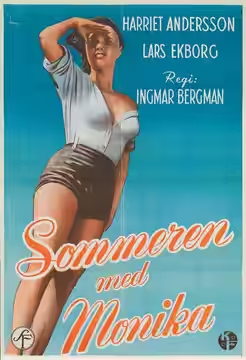
Ingmar Bergman’s romance is worth seeing for Harriet Andersson and the summer light caught by Gunnar Fischer. The writing can be needlessly harsh, but these young people’s hunger for freedom is easy to believe.
Summer with Monika is worth seeing for the frankness of its romance, even when the writing becomes too harsh with its young lovers. Ingmar Bergman lets their desire for pleasure make sense before asking us to worry about responsibility. The working-class courtship gives that desire some weight: getting away means escaping a life that already feels narrow. The trouble comes when the screenplay starts directing our sympathy too firmly.
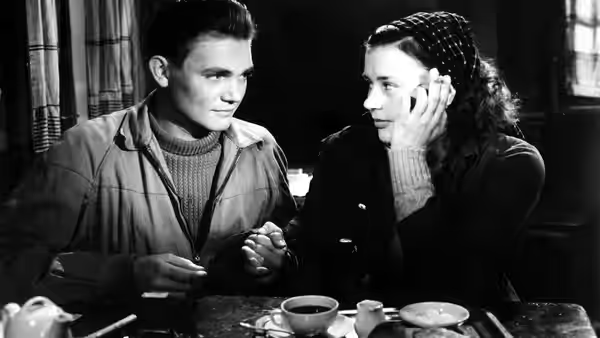
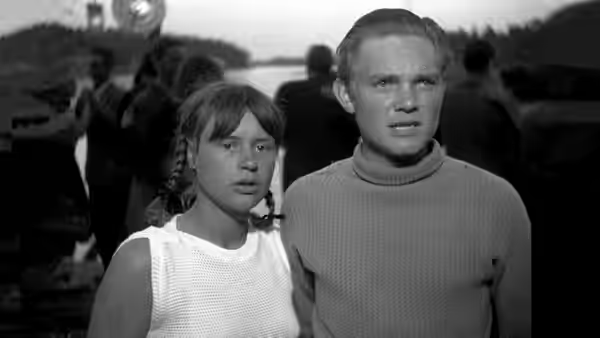
Harriet Andersson is the main reason the film remains so persuasive. As Monika Eriksson, she makes wanting to enjoy herself seem ordinary and urgent, without asking permission to be likeable. There is a physical confidence to the performance that keeps the character from becoming merely an example of youthful recklessness. Lars Ekborg’s Harry Lund is less forceful, but his quieter presence gives the courtship room for uncertainty. The unevenness between them is more interesting than a tidily matched pair would have been.
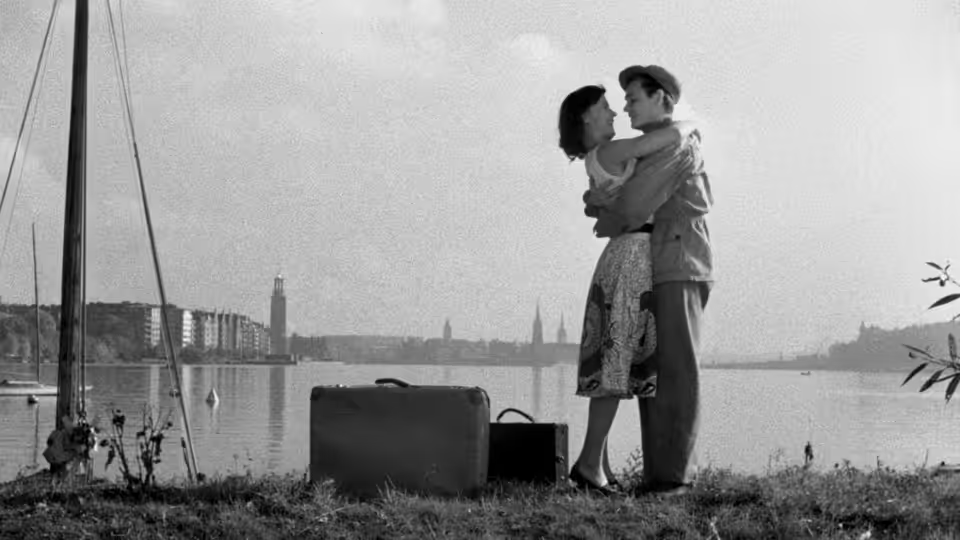
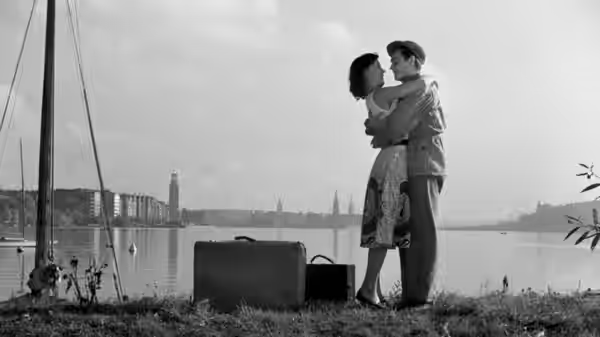
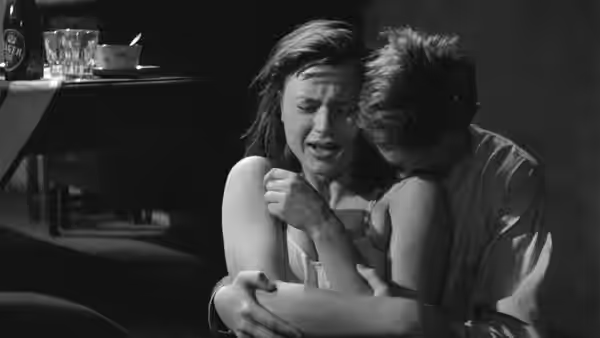
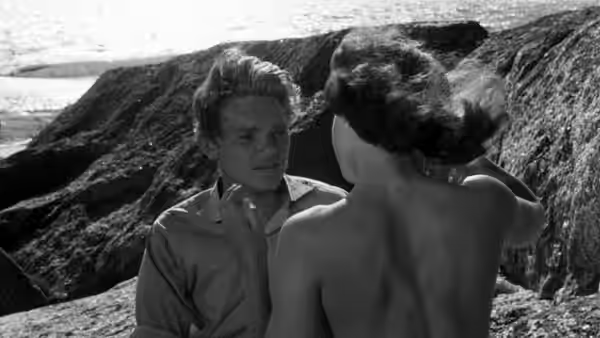
Gunnar Fischer’s photography makes the strongest case for leaving ordinary life behind. The urban shadows have a hard edge, while the seaside light makes the land and water feel open and available. We felt relieved in those bright coastal passages. After the city’s visual pressure, the space around the lovers lets us share their pleasure in getting away. That matters because the freedom has to be desirable in its own right, not merely something to be dismissed as youthful foolishness.
P.A. Lundgren’s production design helps the urban scenes feel restrictive, giving Fischer’s shadows an environment in which to work. The surroundings make the desire for escape understandable without requiring the characters to explain every grievance. The music credited to Erik Nordgren, Eskil Eckert-Lundin and Walle Söderlund lends the romance some softness, though it makes less of an impression than the photography. The lovers’ ease in that light tells us enough about what they want.
The screenplay by Per Anders Fogelström and Ingmar Bergman is less assured when it bears down on the pair. Some of the plotting feels needlessly cruel, as though being clear-eyed about young love required making it suffer on schedule. Tage Holmberg and Gösta Lewin’s editing preserves the intensity, but cannot quite smooth the movement from natural ease into the more oppressive drama. We understand the wish to resist romantic sentimentality; the writing occasionally pushes so hard that the characters seem to have less say in their behaviour. This is a substantial weakness, though it does not undo the conviction of the performances.
This is a better choice for an evening of discussion than for comfortable agreement. Anyone looking for faultless lovers may struggle with Bergman’s interest in appetite, impatience and uneven affection. Within a genre that often makes desire respectable by attaching it to a promise, his willingness to take immediate pleasure seriously is worth the trouble. We would leave time afterwards to argue about how fairly he treats Monika.