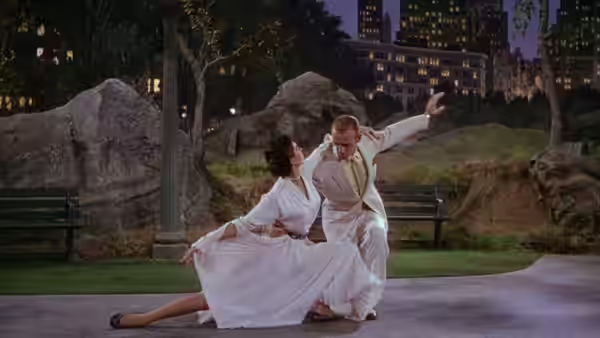
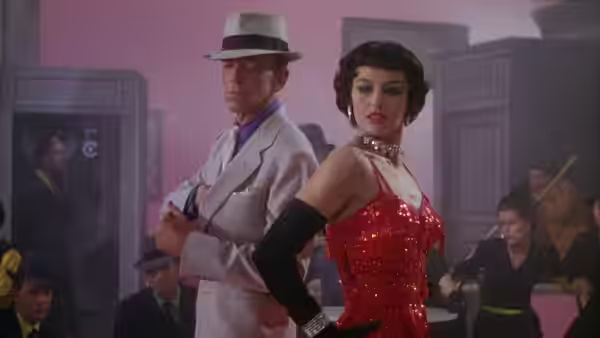
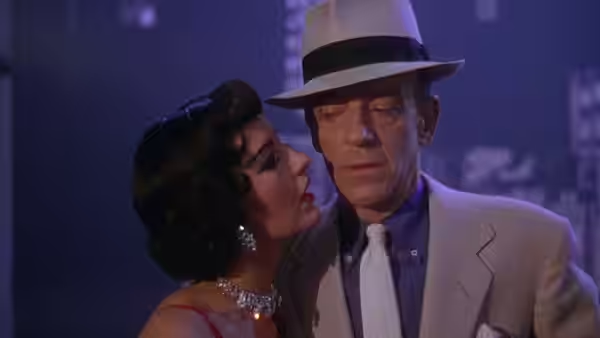
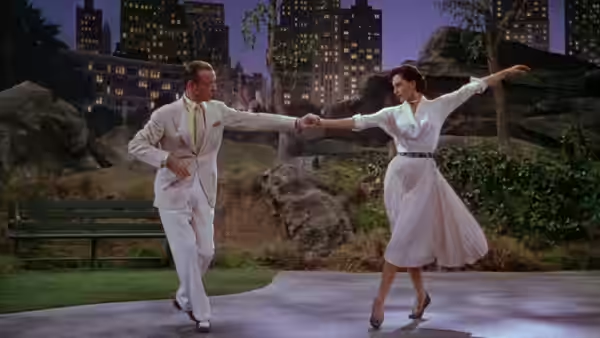
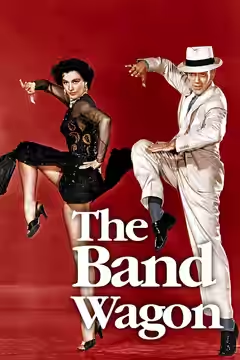
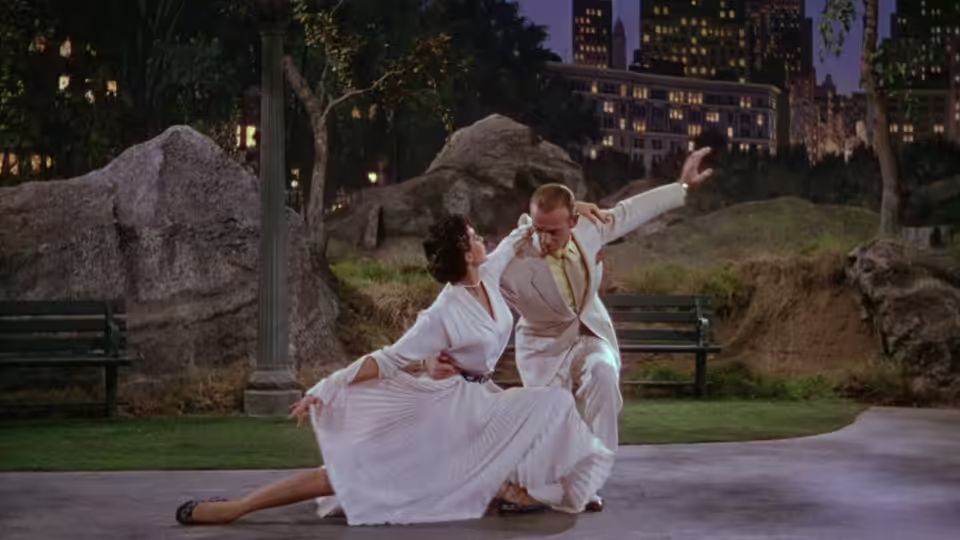
Tony Hunter (Fred Astaire) and Gabrielle Gerard (Cyd Charisse) dance together on an outdoor stage
Film review

The Band Wagon

1953 · Directed by Vincente Minnelli · 1h 52m

In a sentenceFred Astaire has a comeback to make, if the producer can stop improving it

Tony Hunter (Fred Astaire) is preparing a comeback show, with Gabrielle Gerard (Cyd Charisse) alongside him. The production brings him up against Jeffrey Cordova (Jack Buchanan), whose ambitions for the stage extend beyond giving an audience a pleasant evening. Tony needs a show that will put him back before the public; the producer wants something more high-minded. The company has to turn those competing expectations into a production, with Tony’s return depending on whether there is still room for his kind of entertainment in the show taking shape around him.

Plays from YouTube when you press play; nothing loads from them until then.

Fi1m review

Vincente Minnelli’s backstage musical is funny and splendidly staged, with dancing worth giving the evening to. The romance is thin, but Fred Astaire, Cyd Charisse and Jack Buchanan make that a manageable disappointment.

The Band Wagon understands why putting on a show makes useful material for a musical: everyone can disagree about everything and still have to perform together. It is a funny, generously entertaining film, held back by a romance that never becomes particularly convincing. Fred Astaire’s Tony Hunter needs a comeback, and the high-minded ambitions surrounding his show threaten to make a difficult job needlessly complicated. There is enough trouble in that arrangement to keep us interested, though the dancing remains the stronger attraction.

We felt cheered by Fred Astaire’s solo dancing. The precision of his feet is extraordinary, but there is no fuss about the difficulty, and nothing that makes enjoying it feel like an obligation to appreciate technique. He makes the movement look agreeable enough that we briefly forget what it requires. That ease also makes the comeback premise more affecting: the talent is plainly there, whatever trouble the production might have finding a use for it.

Cyd Charisse is a persuasive partner, and the film is right to make so much of watching the pair together. Their dancing gives the relationship a conviction that the romantic writing never quite supplies. We understand why these characters belong in the same show without becoming equally invested in their courtship. This matters when the film asks the offstage relationship to hold our attention, and admiration for the performers cannot entirely cover the shortfall.

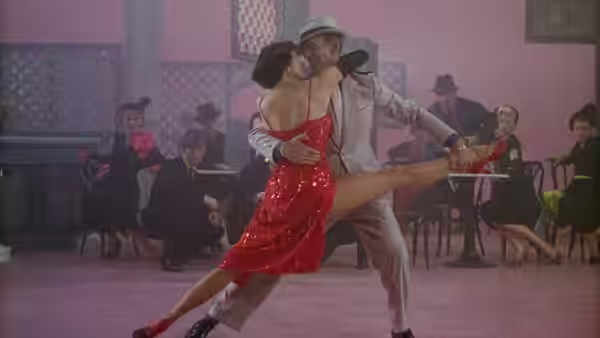
Oliver Smith’s production design deserves much of the credit for making the numbers worth waiting for. The Girl Hunt ballet brings that care together with Mary Ann Nyberg’s costumes, most memorably the red dress worn by Cyd Charisse. Harry Jackson’s photography gives the colour its force without making the dancer incidental to it, while Vincente Minnelli keeps the staging clear despite the competing attractions. There is plenty to look at, but the movement remains the first thing we notice.

Jack Buchanan’s Jeffrey Cordova makes the company’s competing ambitions funny rather than merely tiresome. Adolph Green and Betty Comden give him the high-minded side of the dispute, and his comedy prevents it becoming a flat complaint about people who take theatre seriously. His confidence makes the grand ideas briefly seem plausible, which is important if we are to enjoy the trouble they cause. The premise gives these people something practical to argue about: what sort of show they are supposed to be making.

Albert Akst and George White’s editing is most satisfying within the numbers, where the performances have room to be enjoyed. The return to the plot can feel dutiful, particularly when the romance requires attention it has not quite earned. At 112 minutes, the film occasionally feels longer than its story can comfortably support. We would be reluctant to shorten the dancing to solve that problem.

A backstage musical needs us to care about the show being made, and this one clears that test easily. There is enough pleasure in the dancing, and enough comedy in the attempt to organise it, to make the offstage shortcomings bearable. Give it an evening when the steps matter more than the courtship.

Critical consensus AI synthesised

74
Positive
5
Mixed
3
Negative
1

Most critics favour The Band Wagon, with praise concentrated on Minnelli’s direction, the staging and the dancing of Astaire and Charisse. The enthusiastic reviews admire how carefully the musical’s elements fit together, from its backstage comedy to its production design. The “Girl Hunt” ballet draws particular attention, while Astaire’s technical skill earns approval even from critics less persuaded by the film around him. Buchanan’s comedy also receives praise.

The spread is wide, however, and the reservations centre on the story. Slant Magazine finds it thin and the romance short of chemistry, despite admiring the performances and individual numbers. The Los Angeles Times is more dismissive, judging the film overrated and its plot creaky, while still enjoying several Astaire routines. These objections concern the connective scenes more than the dancing. Two reviews have inaccessible text, so their specific reasoning cannot be established.

Radio Times
★★★★★ · Tony Sloman
100

Sloman gives the musical a strongly enthusiastic verdict, calling it a peak of Astaire’s screen work. He singles out Minnelli’s direction and the film’s production design, as well as Astaire and Charisse’s dancing.

Read the full review →
Empire
1 January 2000 · Kim Newman
90*

Newman calls it a perfect backstage musical, full of wonderful moments. He especially praises Cyd Charisse’s red dress in the “Girl Hunt” ballet.

Read the full review →
The Guardian
11 February 1999 · Derek Malcolm
90*

Malcolm regards The Band Wagon as an increasingly perfect musical and a great achievement by Minnelli. He particularly praises how Minnelli’s precise control makes the film’s many elements mesh seamlessly.

Read the full review →
Time Out
· TM
85*

The available description presents the film as one of Minnelli’s best musicals. It praises the ingenious book and its highbrow-producer setup for Astaire’s comeback show.

Read the full review →
Variety
1 January 1953 · Variety Staff
70*

The review is positive about the musical’s performances and staging. It singles out the “Girl Hunt” ballet as an imaginative highlight and praises Jack Buchanan’s comedy.

Read the full review →
RogerEbert.com
68*

The URL identifies a Great Movies review of the specified film, but the page content is unavailable. The critic’s verdict and any specific praise or complaint cannot be verified.

Read the full review →

Straight answers AI written, from our review

Is The Band Wagon worth watching?
The Band Wagon is well worth watching for its dancing and backstage comedy, and we score it 84. Fred Astaire, Cyd Charisse and Jack Buchanan make the evening generously entertaining, though the thin romance and occasional slackness between numbers mean we recommend it more for the performances than the courtship.

How long is The Band Wagon, and what is it rated?
The Band Wagon runs 1h 52m. It is a comedy and romance film.
Where can I watch The Band Wagon in Iceland?
The Band Wagon is not on any streaming or rental service in Iceland at the moment. It is available in 2 other countries; change your country at the top of the page to see where. Availability is checked daily.
How does The Band Wagon compare to Top Hat?
The Band Wagon offers more backstage comedy than Top Hat, though we give Top Hat the edge for its finest dances and Irving Berlin songs. Both make difficult steps look effortless and have less satisfying plots; we favour The Band Wagon when the arguments over putting on a show appeal more than romantic misunderstandings.
What should I watch after The Band Wagon?
After The Band Wagon, try Top Hat (1935, Fi1m 87): More dancing that makes difficult steps look like the natural response to company. Then Topsy-Turvy (1999, Fi1m 88): Another company struggles to agree, with rehearsals as absorbing as the finished performance; and The Red Shoes (1948, Fi1m 92): For ballet, theatrical obsession and a sharper sense of what performing can cost.

Cast

Awards

Academy Awards, 1954

Nominated
Best Costume Design, Color
Nominated
Best Original Musical Score
Nominated
Best Writing, Original Screenplay

If you liked this, try…

  1. Top Hat (1935, Fi1m 87)More dancing that makes difficult steps look like the natural response to company.

  2. The Young Girls of Rochefort (1967) · not on Fi1m yetFor colourful musical staging and romantic longing expressed through the pleasure of movement.

  3. Topsy-Turvy (1999, Fi1m 88)Another company struggles to agree, with rehearsals as absorbing as the finished performance.

  4. The Red Shoes (1948, Fi1m 92)For ballet, theatrical obsession and a sharper sense of what performing can cost.

  5. Singin' in the Rain (1952, Fi1m 93)Another backstage musical where professional panic provides an excellent excuse to start dancing.