Marco Tullio Giordana’s long family drama earns its time through patient direction and Luigi Lo Cascio’s unforced performance. We recommend it warmly, though its occasional sentimentality presses harder than it needs to.
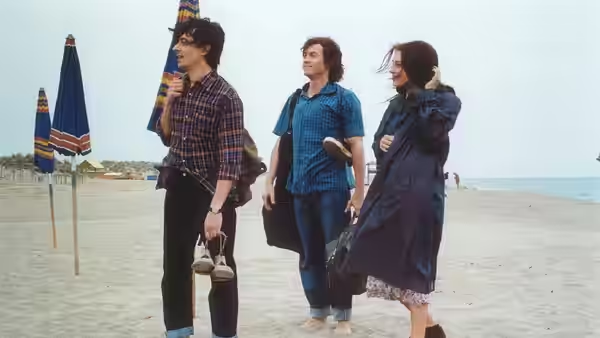
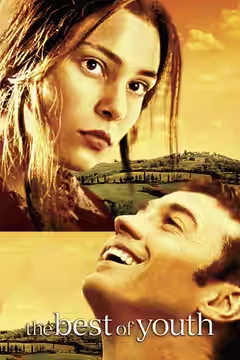
The Best of Youth asks for 367 minutes, and we think it earns them. Marco Tullio Giordana follows a family across decades of Italian history with enough patience to let their domestic difficulties command our attention. The occasional push towards sentimentality is the caveat; for most of its length, this is engrossing, carefully acted drama. Its confidence in the people on screen makes the running time seem a reasonable request, though we would understand anyone wanting to put the kettle on before agreeing.
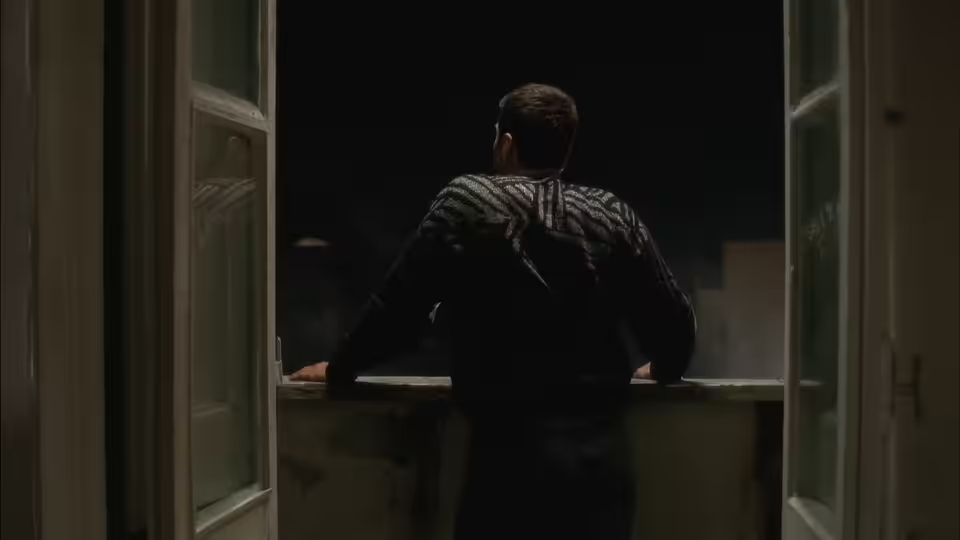
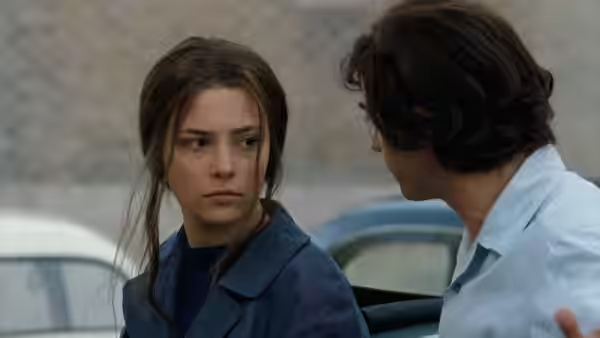
Luigi Lo Cascio, playing Nicola Carati, gives the film the unforced human presence it needs. His performance has none of the conspicuous effort that can make a long character study feel longer, and he leaves us room to decide what we think of the person. We were moved by the close-ups: his face holds our attention without seeming to demand our sympathy. The director gives that quiet acting enough space to register, trusting a response to interest us without having to underline it.
Roberto Forza’s photography is most persuasive at this close distance, where the historical setting briefly matters less than the person occupying the frame. The restraint works because the film has already given us reason to look carefully. Franco Ceraolo’s production design keeps the period surroundings present without making them the chief subject of our attention. We never feel obliged to stop caring about the people in order to appreciate the setting, a small mercy that becomes a substantial one over six hours.
Roberto Missiroli’s editing also deserves credit for how lightly that time passes. The family scenes have room to develop, yet the film rarely feels as though it is waiting for another historical event to provide something to do. Stefano Rulli and Sandro Petraglia give the political questions space in their screenplay without continually requiring the characters to explain them. Their strongest writing allows family disagreements to remain awkward, with enough competing feeling that we can understand why a conversation matters without needing it to settle anything.
The weakness comes when that confidence falters and the drama presses an emotion the actors have already made clear. Its sentimental passages feel unnecessarily insistent beside the quieter work, and we occasionally wanted it to leave a feeling alone. The political thinking is also less searching than the breadth of the story might suggest. Bringing family experience into contact with national history creates plenty of interest, but some of those connections deserve more examination than the screenplay gives them; the affection for the characters can make the film too forgiving.
Those reservations matter, though they did not make us wish for a substantially shorter film. Long family dramas can become dutiful exercises in keeping track of people, and the vivid ensemble here largely prevents that: attention remains a pleasure rather than an administrative task. The length gives the performances time to become familiar without exhausting our curiosity about them. Make time for it, and take a break if needed; there is no special virtue in watching the last stretch while thinking about supper.