D.W. Griffith’s three-hour epic built much of the grammar films still use, and spent it arguing that the Ku Klux Klan saved America. The craft is real and so is the lie, and we cannot pull them apart. We do not recommend it for an evening.
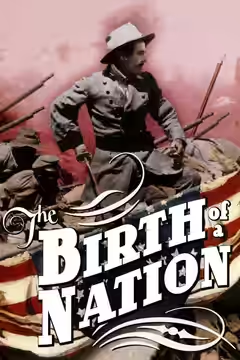
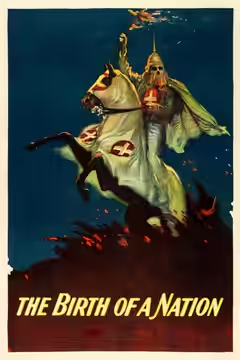
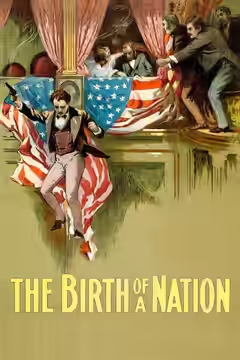
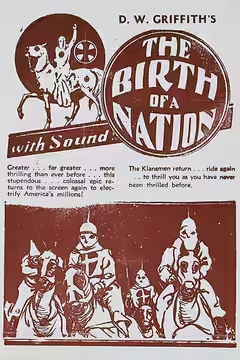
D.W. Griffith’s The Birth of a Nation runs 195 minutes, follows two families through the American Civil War and Reconstruction, and ends with the Ku Klux Klan riding to the rescue. It is taken from Thomas F. Dixon Jr.’s novel The Clansman, with a screenplay by Frank E. Woods, and it was sold under a tagline about the fiery cross of the Ku Klux Klan, so nobody involved was hiding what it was for. It is among the most important films ever made. We cannot recommend it as a way to spend tonight, and the rest of this review is about why both of those sentences are true.
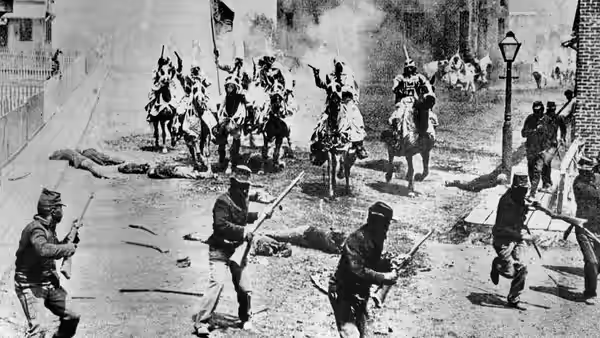
The first half is the war, and much of it is superb. Billy Bitzer puts his camera high on a hill above the battlefield so that two lines of men advance through smoke across the whole width of the frame, then drops down close for Henry B. Walthall’s Ben Cameron ramming a flag into the mouth of a cannon. A mother and her children huddle on a hillside in a tight circle of light; the circle opens and Sherman’s army is crawling across the valley beneath them. Griffith irises in on a detail, holds, and cuts to the thing it explains. Films had done pieces of this before. Nobody had done all of it at once, at this length, and made it hold.
The cutting is the heart of it. Five editors are credited, Griffith among them, alongside Raoul Walsh, Joseph Henabery, James Smith and Rose Smith, and what they worked out here is parallel action: two places, shown in turn, faster and faster, until the audience is in a third place that is pure feeling. Joseph Carl Breil’s score is built to drive that rhythm, and it does.
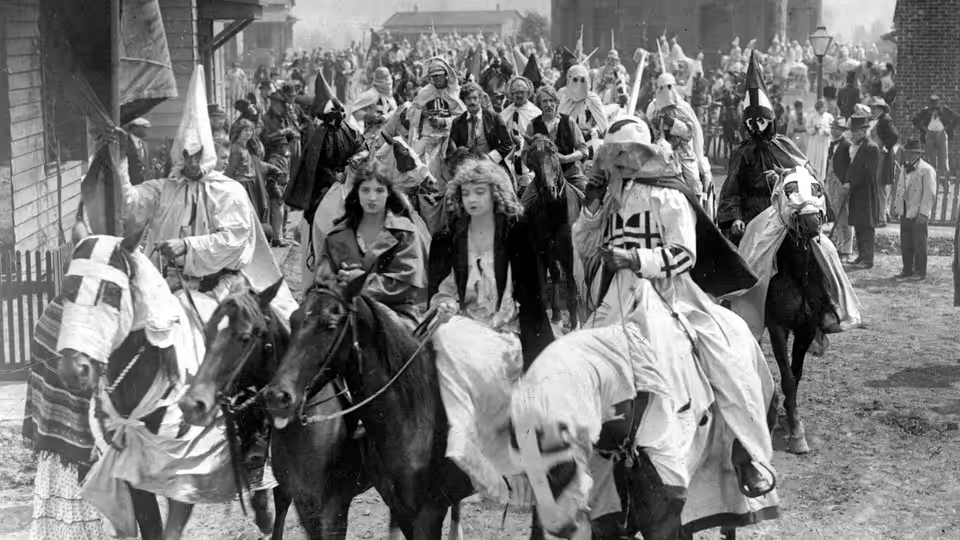
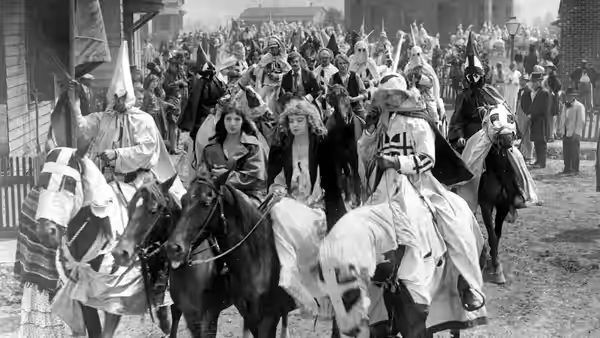
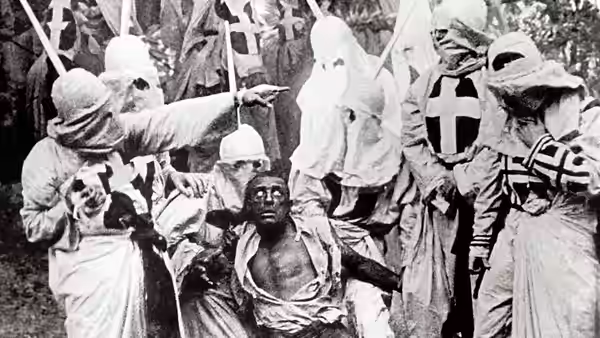
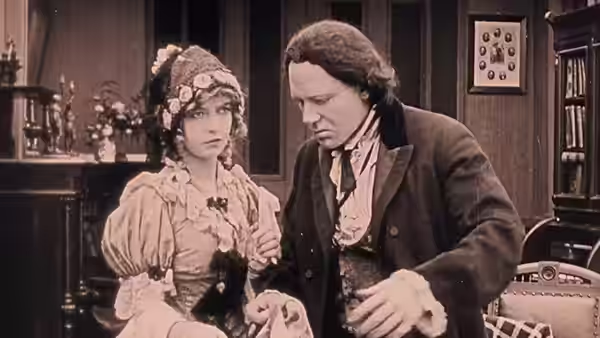
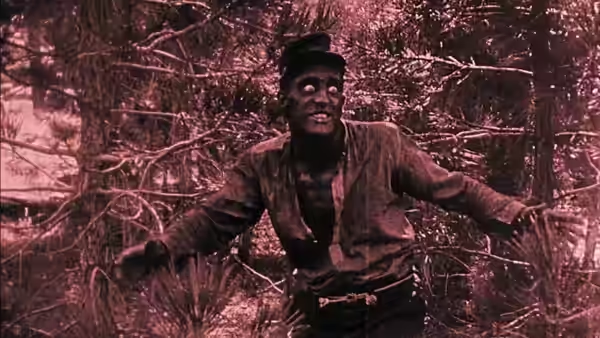
Then comes Reconstruction, and the film tells us what it thinks. Ralph Lewis’s Stoneman fusses with his wig and takes counsel from his housekeeper Lydia (Mary Alden). Silas Lynch (George Siegmann) is installed as Lieutenant Governor and the new legislature is shown eating chicken with its feet on the desks. Gus (Walter Long) is played as an animal. Nearly every black character who matters to the plot is a white actor in make-up, and the black characters who are not villains are servants glad of the old days. We were horrified, and we want to be exact about the cause. It was not the age of the ideas. It was the skill. When the hooded riders gather and the film cuts between them and the people they are riding to save, our pulse went up. We were being made to cheer for the Klan, and the film knew precisely how to do it.
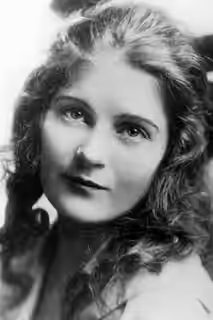
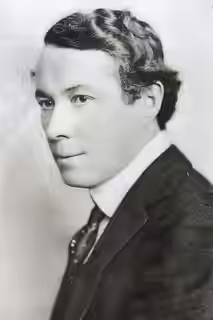
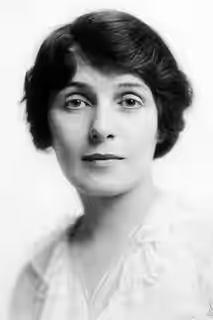
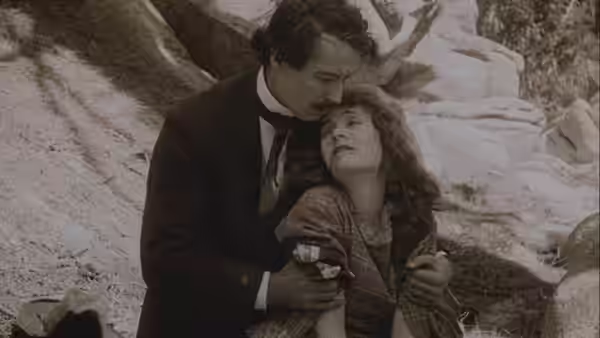
The actors are mostly better than the parts. Mae Marsh gives the one performance that still feels alive, all nerves and sudden bolts of movement, a girl who cannot keep still. Lillian Gish has less to do than her billing suggests and does it beautifully. Walthall plays Ben small and inward, a man who has decided things before he speaks, and it is a relief among so much arm-waving. Miriam Cooper is dignified and underused. Robert Goldstein and Clare West sewed the robes and hoods for the camera, and the film shoots them as a uniform, in ranks.
The reviews so far average out somewhere near the middle, and they get there by marking the craft and the politics on separate sheets and splitting the difference. We do not think that can be done. The editing is not beside the argument; the editing is how the argument is made. Every cut in the last forty minutes exists to make men in hoods feel like a rescue party, and if the cutting were worse the film would be less dangerous and less good in the same measure.
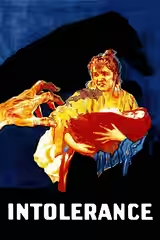
Griffith made Intolerance the following year, longer and stranger and about mercy, and it is the film we would send you to if you want to see what he could do. This one we would send you to only if you study cinema, in which case see it, all 195 minutes with the intertitles, not a reel of famous shots, because the lie lives in the shape of the whole. It carries a U certificate, which tells you something about certificates.